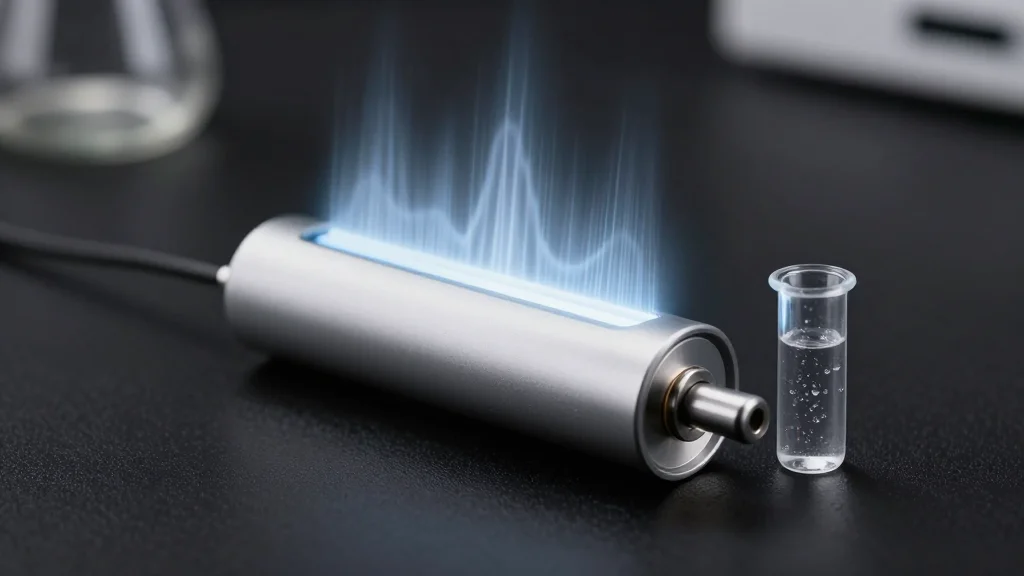
Quantum Device Generates Controllable Phonons, Opening New Path for Communications

Why It Matters
Controllable phonons represent a fundamentally new information carrier that could bypass many of the limitations of photonic and electronic signaling. By leveraging the strong interaction between sound quanta and matter, engineers may design devices that process data with lower energy budgets and higher integration densities. Moreover, the research challenges prevailing assumptions about quantum behavior at near‑absolute zero, suggesting that electron heating can be decoupled from lattice temperature—a insight that could ripple across quantum computing, sensing, and materials science. If the temperature barrier can be lowered, the technology may enable scalable quantum acoustic networks, offering redundancy and security benefits for critical communications infrastructure. The breakthrough also positions Canada’s quantum research ecosystem as a leader in acoustic quantum engineering, potentially attracting funding and industry partnerships.
Key Takeaways
- •McGill researchers demonstrated a device that emits tunable phonons at -459 °F to -452 °F (-272 °C to -269 °C).
- •Michael Hilke highlighted the novelty: “Phonons are hard to generate and harness in a controlled way, so we are exploring new regimes.”
- •The device uses a two‑dimensional crystal channel only a few atoms thick to guide electrons and produce predictable sound quanta.
- •Controlled phonons could complement photonic links, offering low‑power, on‑chip communication pathways.
- •Future work aims to raise operating temperatures and integrate phonon sources with superconducting qubits.
Pulse Analysis
The McGill phonon gadget arrives at a moment when the quantum hardware race is dominated by superconducting qubits and photonic processors. While photons excel at long‑distance transmission, they suffer from coupling inefficiencies when interfacing with solid‑state electronics. Phonons, by contrast, naturally bridge the gap between electronic currents and mechanical motion, offering a direct transduction route that could simplify chip‑scale interconnects. The study’s demonstration of deterministic phonon generation therefore fills a critical missing link in the quantum stack.
Historically, acoustic quantum devices have been limited to passive resonators or bulk acoustic wave filters. This work pushes the frontier by actively generating and shaping phonon waveforms, a capability that could enable quantum acoustic logic gates or even phononic quantum memories. The primary obstacle—cryogenic operation—mirrors the challenges faced by superconducting qubits, suggesting that co‑development of cryogenic infrastructure could yield synergistic benefits. Companies investing in cryogenic platforms may find an additional revenue stream by licensing phonon‑based modules.
Looking ahead, the commercial viability of quantum phononics will hinge on material breakthroughs that allow higher temperature operation and on engineering solutions that integrate acoustic channels with existing CMOS processes. If those hurdles are cleared, we could see a new class of hybrid quantum processors that leverage both light and sound, delivering unprecedented bandwidth and energy efficiency for secure communications, sensing, and distributed quantum computing.
Quantum Device Generates Controllable Phonons, Opening New Path for Communications
Comments
Want to join the conversation?
Loading comments...