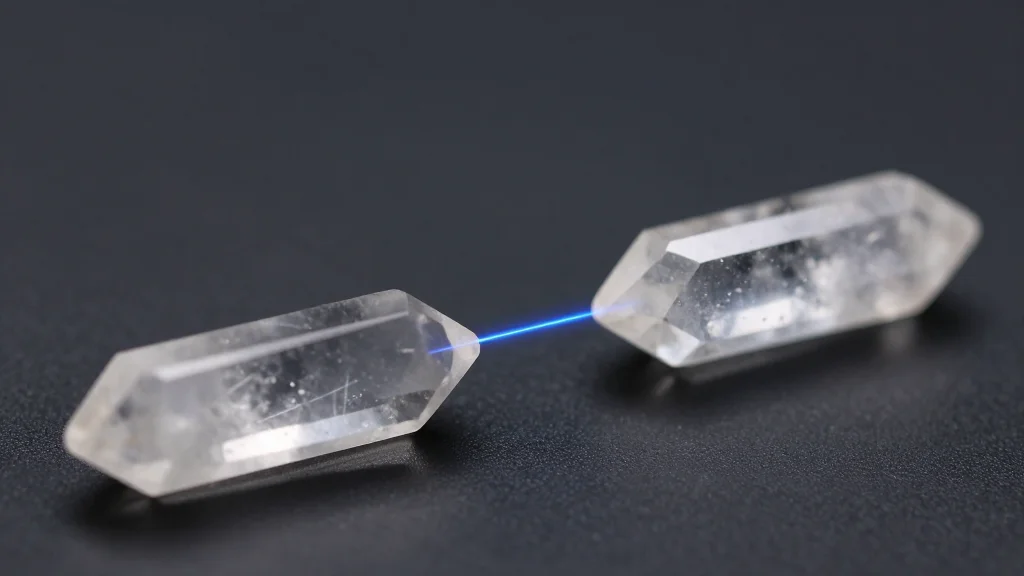
Quantum Pioneers Charles Bennett and Gilles Brassard Win $1 Million Turing Award

Why It Matters
The Turing Award signals that quantum cryptography has moved from theoretical curiosity to a cornerstone of future cybersecurity. With nation‑state actors and criminal groups already harvesting encrypted traffic for future decryption, the BB84 protocol offers a physics‑based defense that cannot be undermined by raw computing power. The award also amplifies the policy debate around quantum technology, as researchers like Brassard use the platform to protest geopolitical issues, reminding stakeholders that scientific progress does not occur in a vacuum. Moreover, the recognition accelerates funding and standard‑setting efforts. Public and private investors see the prize as validation, prompting increased capital for QKD infrastructure, satellite links, and post‑quantum algorithm development. This momentum is crucial for building a resilient digital economy before large‑scale quantum computers become a reality.
Key Takeaways
- •Charles Bennett and Gilles Brassard receive the 2025 ACM Turing Award, sharing a $1 million prize.
- •Their 1984 BB84 protocol introduced quantum key distribution, securing keys via photon polarization.
- •The award highlights the looming threat of "Q‑day," when quantum computers could break RSA and ECC encryption.
- •Brassard will attend the ceremony via Zoom, citing political protest against a "little dictator."
- •Industry and governments are accelerating post‑quantum security investments, with DARPA targeting useful quantum computers by 2033.
Pulse Analysis
The Turing Award for Bennett and Brassard does more than honor past achievements; it reframes the strategic calculus for both the private sector and national security establishments. Historically, cryptographic breakthroughs have been driven by immediate threats—think of the Manhattan Project’s code‑breaking efforts. Today, the threat is speculative yet imminent, and the BB84 protocol offers a rare case where the defense is provably unbreakable regardless of future computational advances. This asymmetry is why governments are now treating quantum‑secure communications as critical infrastructure, akin to power grids or water treatment facilities.
From a market perspective, the award is likely to catalyze a wave of commercial QKD deployments. Companies that have been piloting fiber‑based QKD for niche applications—banking, diplomatic communications, and high‑frequency trading—will find a stronger business case to scale. The $1 million prize, while symbolic, signals to venture capital that the quantum security stack is maturing, potentially unlocking another $5‑10 billion in funding over the next five years. Simultaneously, the political dimension introduced by Brassard’s protest could influence how international scientific collaborations are organized, especially as quantum research becomes a geopolitical lever.
Looking ahead, the real test will be whether the quantum‑cryptography community can transition from point‑to‑point experiments to a globally interoperable network. Standards bodies such as the ITU and NIST are already drafting protocols that incorporate QKD alongside post‑quantum algorithms. The Bennett‑Brassard legacy provides the scientific foundation, but the next decade will be defined by engineering, policy, and market adoption. If the ecosystem coalesces, the world may avoid the catastrophic data exposure that many fear on "Q‑day," turning a once‑theoretical safeguard into the backbone of a quantum‑resilient internet.
Quantum Pioneers Charles Bennett and Gilles Brassard Win $1 Million Turing Award
Comments
Want to join the conversation?
Loading comments...