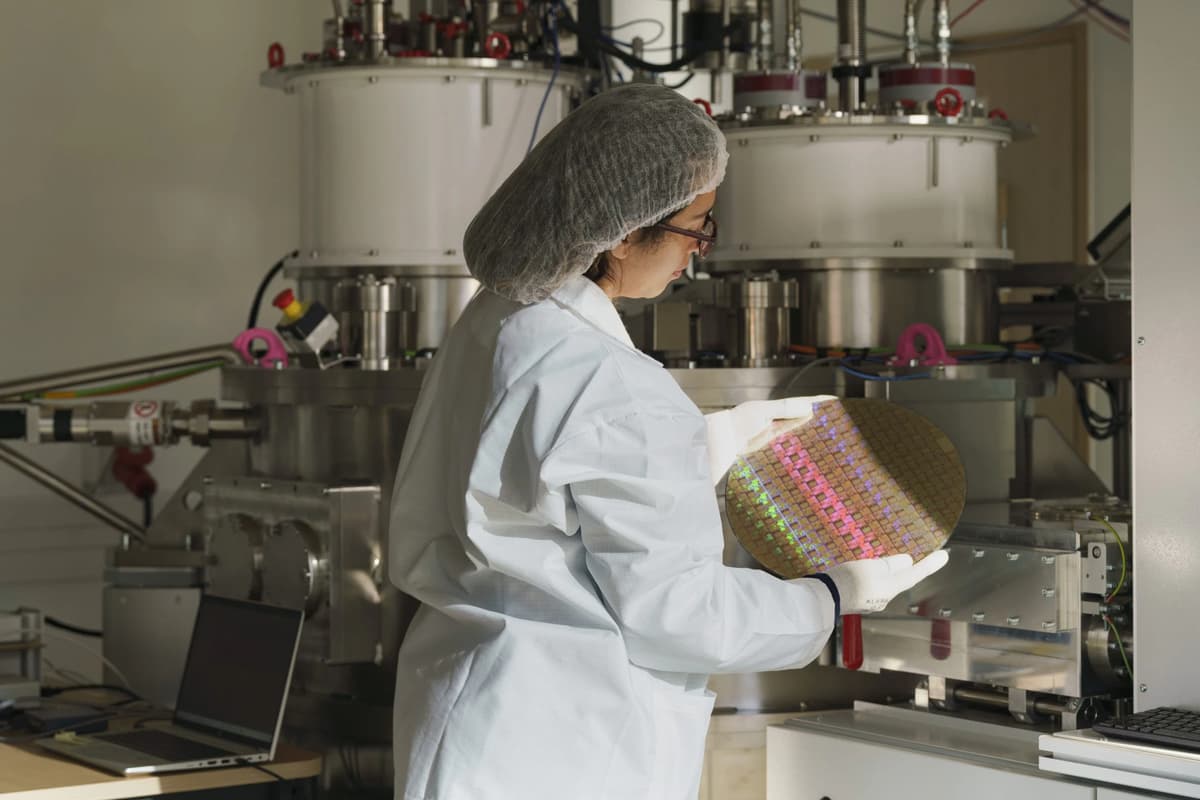
Quantum Startup Quobly Raises €115m Backed by STMicroelectronics
Companies Mentioned
Why It Matters
Scaling silicon‑based qubits with existing semiconductor fabs could dramatically lower quantum hardware costs and accelerate commercial adoption across AI, finance and pharma. The sizable Series A signals that Europe is positioning itself as a competitive hub in the global quantum race.
Key Takeaways
- •€115 million Series A funds industrial-scale silicon qubit production.
- •Partnership with STMicroelectronics moves chips from pilot to fab.
- •First cloud quantum computer targeted for release by end‑2024.
- •Funding joins European megafunds, boosting continent’s quantum ecosystem.
Pulse Analysis
Silicon‑based qubits have emerged as a pragmatic path toward scalable quantum computers because they can be fabricated in existing semiconductor fabs. By leveraging the same lithography and wafer‑processing tools that drive the microchip industry, startups like Quobly hope to achieve higher yields, lower defect rates, and cost efficiencies that traditional superconducting or trapped‑ion platforms struggle to match. The French firm’s approach traps electrons in silicon transistors, allowing it to piggy‑back on decades of Moore’s Law investments. If the transition from research‑grade lines to high‑volume manufacturing succeeds, the barrier to mass‑producing millions of qubits could fall dramatically.
The €115 million Series A that Quobly closed this week adds to a flurry of European megafunds, marking the continent’s deepening commitment to quantum hardware. Alongside Oxford Quantum Circuits’ £260 million ($350 million) Series C and Quantum Motion’s $160 million raise, the capital influx signals confidence that Europe can rival the United States and China in delivering commercial‑grade quantum machines. Public actors such as Bpifrance and the European Innovation Council are playing a catalytic role, while corporate investors like STMicroelectronics provide not only money but also a direct pathway to fab capacity.
From a market perspective, Quobly’s roadmap—cloud access to a quantum computer by the end of 2024 and on‑premise deployments in 2027—targets early adopters in AI model training, risk analytics, and drug discovery. By offering quantum resources through familiar cloud interfaces, the startup lowers the integration hurdle for enterprises that lack in‑house expertise. Should the silicon‑qubit supply chain scale as planned, pricing could become competitive enough to unlock use cases beyond niche research, potentially reshaping competitive dynamics in sectors that rely on massive computational power.
Quantum startup Quobly raises €115m backed by STMicroelectronics
Comments
Want to join the conversation?
Loading comments...