QuantWare Secures $178 Million Series B to Build 10,000‑Qubit Processors

Companies Mentioned
Why It Matters
QuantWare’s financing and manufacturing plan could compress the timeline for practical quantum advantage by providing a reliable supply of high‑qubit‑count chips. An open‑architecture foundry lowers barriers for startups and research labs, fostering a more competitive and innovative market. Moreover, the involvement of Intel Capital and a U.S. intelligence venture arm signals that both commercial and national‑security stakeholders view large‑scale quantum hardware as a strategic priority. If QuantWare delivers on its promise, the quantum industry may transition from a handful of vertically integrated players to a diversified supply chain, mirroring the semiconductor sector’s evolution. This shift would enable faster iteration, lower costs, and broader access to quantum acceleration, potentially unlocking new applications in cryptography, optimization and simulation.
Key Takeaways
- •QuantWare raised $178 million in a Series B round led by Intel Capital and In‑Q‑Tel.
- •The funding targets the VIO‑40K 10,000‑qubit processor and a new KiloFab quantum chip fab.
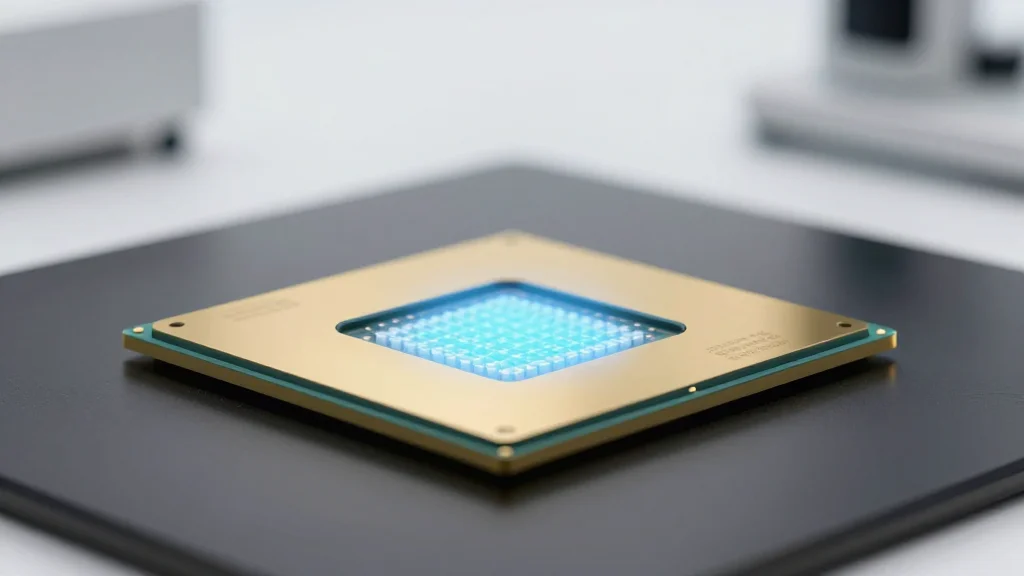
- •VIO‑40K uses 3‑D chiplet stacking to support 10,000 qubits and 40,000 I/O lines on a single cryostat.
- •QuantWare has shipped processors to over 50 customers across 20 countries.
- •KiloFab aims to increase production capacity by 20×, enabling industrial‑scale quantum chip manufacturing.
Pulse Analysis
QuantWare’s move to a foundry model could be the missing piece that transforms quantum computing from a research curiosity into a mass‑produced technology. The semiconductor industry learned that specialization—design houses separate from manufacturers—drives economies of scale and rapid innovation. By replicating that model, QuantWare may unlock similar efficiencies for quantum chips, where the current bottleneck is not just fabrication yield but also the sheer physical footprint of routing infrastructure. The 3‑D chiplet approach directly addresses the exponential routing penalty that has capped 2‑D designs at a few hundred qubits.
The strategic backing from Intel Capital suggests that traditional chipmakers see quantum as the next frontier for their lithography and process expertise. Intel’s own quantum efforts have struggled to achieve the qubit counts of IBM and Google, but a partnership with a dedicated quantum fab could give it a foothold in a market that will likely exceed $10 billion by the early 2030s. In‑Q‑Tel’s participation adds a layer of geopolitical relevance; a domestically sourced, high‑volume quantum chip supply could reduce reliance on foreign fabs for critical defense applications.
However, QuantWare faces significant challenges. Scaling from pilot runs to a full‑capacity fab will require mastering superconducting materials at volumes never attempted before. Yield losses at the 10,000‑qubit scale could erode cost advantages, and the open‑architecture promise hinges on the ecosystem’s willingness to adopt a common interface. If major players like IBM or Google decide to lock in their own supply chains, QuantWare may find its market limited to niche or emerging players. The next 12‑18 months will be a litmus test: successful wafer shipments and a functional design‑toolchain could cement the foundry model, while delays or quality issues could reinforce the dominance of vertically integrated giants.
QuantWare Secures $178 Million Series B to Build 10,000‑Qubit Processors
Comments
Want to join the conversation?
Loading comments...