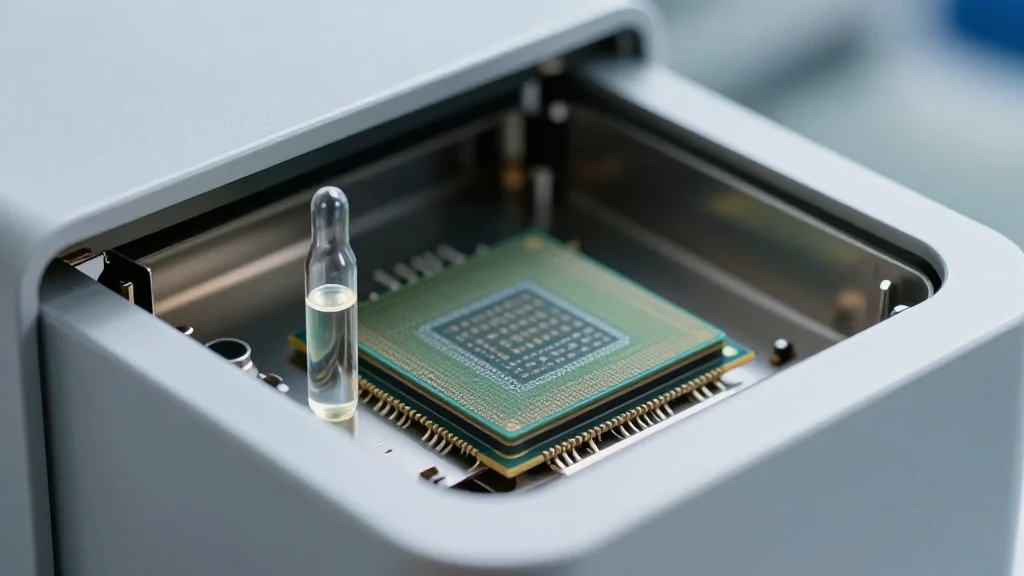
Researchers Encode Full Hepatitis D Genome on IBM Quantum System One

Companies Mentioned
Why It Matters
Encoding an entire viral genome on a quantum processor validates that quantum computers can handle biologically realistic data, a prerequisite for tackling the massive combinatorial problems of pangenomics. By demonstrating a concrete workflow—from data encoding to algorithmic processing—the project bridges a gap that has kept quantum computing largely theoretical for life‑science applications. If the approach scales, it could dramatically reduce the time required for genome assembly, variant calling, and disease‑mutation mapping, accelerating drug discovery and public‑health responses to emerging pathogens. Moreover, the collaboration signals a shift in research funding toward quantum‑enabled biology. Wellcome Leap’s investment in the Q4Bio Challenge reflects confidence that quantum technologies will soon become a strategic asset for biomedical research, prompting other funders and pharmaceutical companies to explore similar partnerships. The resulting ecosystem could foster a new class of quantum‑bioinformatics tools, reshaping the competitive landscape of genomics and personalized medicine.
Key Takeaways
- •Wellcome Sanger Institute, Oxford, Cambridge, Melbourne and Kyiv Academic University collaborated on the project
- •Complete Hepatitis D virus genome loaded onto IBM Quantum System One’s 156‑qubit Heron processor
- •Work conducted under the Wellcome Leap‑funded Q4Bio Challenge
- •Demonstrated a viable method for encoding DNA sequences into quantum circuits
- •Goal to develop a cloud service offering quantum, classical, or hybrid genomic analysis
Pulse Analysis
The successful encoding of a full viral genome on IBM’s Heron processor is less a headline about raw qubit counts and more a proof that quantum hardware can be interfaced with real‑world biological data pipelines. Historically, quantum computing breakthroughs have been demonstrated on abstract problems—factoring, optimization, or chemistry simulations—where the input can be handcrafted. Translating a naturally occurring DNA sequence into a quantum circuit forces engineers to confront noise, decoherence, and limited qubit connectivity in a way that mirrors actual scientific workloads. This shift suggests that the next wave of quantum advantage will be defined by interdisciplinary engineering rather than pure physics.
From a market perspective, the partnership illustrates how quantum vendors are positioning themselves as service providers for niche, high‑value domains. IBM’s Quantum System One is marketed as an enterprise‑grade platform, and embedding a genomics workflow directly into its offering could attract biotech firms seeking computational edge. The involvement of major academic institutions adds credibility and creates a pipeline of talent familiar with both quantum theory and bioinformatics, potentially accelerating adoption. Competitors such as Google and Rigetti will likely respond with their own bio‑focused demos, intensifying a nascent race for quantum‑enabled drug discovery.
Looking ahead, the key challenge will be scaling from a 1.7‑kilobase viral genome to the multi‑megabase human chromosomes that underpin most clinical genomics. This will demand not only more qubits but robust error‑correction schemes and algorithmic breakthroughs that can exploit quantum parallelism without being drowned out by hardware noise. If the consortium can deliver a usable cloud service within the next 12‑18 months, it could set a de‑facto standard for quantum bioinformatics, compelling the broader life‑science community to invest in quantum‑ready data architectures. The ripple effect may be a new tier of computational biology where quantum and classical resources are orchestrated seamlessly, reshaping the economics of genomic research.
Researchers Encode Full Hepatitis D Genome on IBM Quantum System One
Comments
Want to join the conversation?
Loading comments...