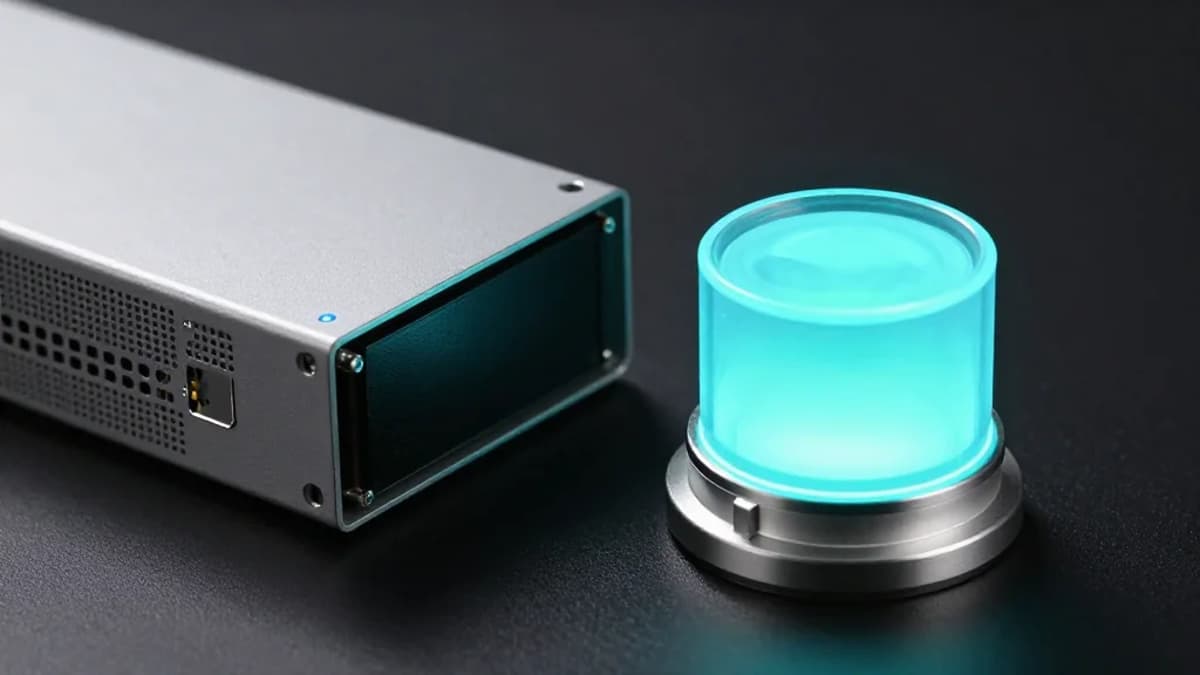
RIKEN and IBM Demonstrate Quantum-Centric Supercomputing at Scale
•March 12, 2026
0
Why It Matters
The breakthrough shows that existing billion‑dollar HPC assets can be leveraged for quantum advantage, accelerating material and drug discovery while reducing idle compute costs.
Key Takeaways
- •Fugaku and IBM Heron performed closed-loop hybrid workflow
- •Simulated Fe2S2(SH)4²⁻ with unprecedented quantum accuracy
- •SQD algorithm split tasks between quantum and classical resources
- •Task-assignment system keeps billion‑dollar supercomputer fully utilized
- •Model ready for cloud HPC and future GPU integration
Pulse Analysis
The collaboration between Japan’s RIKEN and IBM marks a turning point for quantum‑centric supercomputing, a paradigm that fuses the raw throughput of pre‑exascale machines with the probabilistic power of quantum processors. By linking Fugaku’s 158,976 nodes and 7.6 million cores to an on‑premises IBM Quantum Heron QPU, the team demonstrated that a classical mainframe can operate continuously alongside a quantum device without the idle periods that have hampered earlier hybrid attempts. This seamless, closed‑loop workflow proves that the economic barrier of under‑utilized HPC assets can be overcome, opening a viable path for large‑scale quantum advantage.
The experiment hinged on the Sample‑based Quantum Diagonalization (SQD) algorithm, which delegates the combinatorial sampling of electron configurations to the quantum processor while the classical supercomputer performs the heavy linear‑algebraic diagonalization. A bespoke task‑assignment engine orchestrated data exchange in real time, ensuring that Fugaku’s billion‑dollar infrastructure remained fully engaged as the Heron chip tackled the most computationally intensive sub‑problem. This division of labor not only reduced latency but also delivered the most accurate electronic‑structure calculation to date for the iron‑sulfur cluster [Fe₂S₂(SH)₄]²⁻, rivaling top‑tier classical methods.
From a commercial perspective, the scalable architecture—compatible with cloud‑based HPC and poised for GPU augmentation—signals that quantum‑enhanced simulations could enter production pipelines within months. Industries such as pharmaceuticals, renewable energy, and advanced materials stand to accelerate discovery cycles by accessing quantum‑level precision on existing supercomputing investments. As IBM and RIKEN roadmap further integration of GPUs and explore broader QPU families, the market is likely to see a surge in hybrid service offerings, driving new revenue streams for cloud providers and reshaping the competitive landscape of high‑performance computing.
RIKEN and IBM Demonstrate Quantum-Centric Supercomputing at Scale
0
Comments
Want to join the conversation?
Loading comments...