Swiss Team Achieves Near‑Perfect Quantum Random Number Generation

Why It Matters
True randomness is the bedrock of modern cryptography; any bias can be leveraged to break encryption or compromise digital signatures. By delivering a certified, bias‑free source, the ETH Zurich QRNG removes a hidden vulnerability that has plagued both hardware and software random number generators. Beyond security, the ability to generate flawless random sequences enhances scientific simulations that depend on stochastic sampling, reducing error margins in fields ranging from climate science to pharmaceuticals. The breakthrough also signals a maturation of quantum engineering. Moving from proof‑of‑concept photon experiments to a robust, scalable architecture demonstrates that quantum hardware can address practical, non‑theoretical problems. This could accelerate investment in quantum‑ready chips and spur a new wave of standards for randomness certification, influencing regulators and industry consortia worldwide.
Key Takeaways
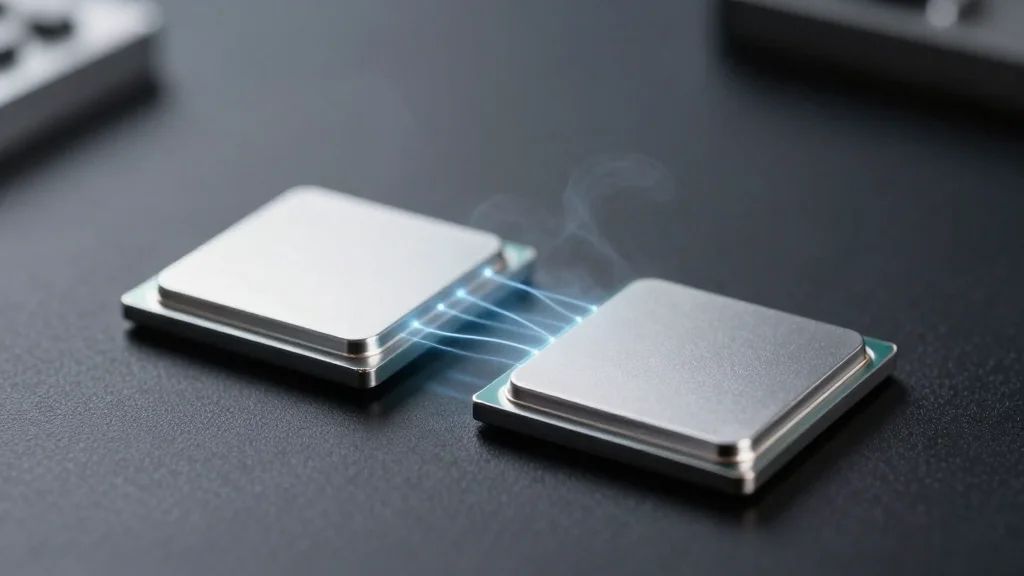
- •ETH Zurich built a QRNG using two cryogenic qubit chips linked by a 30‑meter microwave guide.
- •The system produces certified, bias‑free random bits that pass all NIST and Dieharder tests.
- •Andreas Wallraff and Renato Renner emphasized the elimination of systematic errors present in prior RNGs.
- •Certified randomness strengthens encryption keys, protecting against side‑channel attacks.
- •Field trials and a semiconductor partnership are planned for 2027 to commercialize the technology.
Pulse Analysis
The ETH Zurich QRNG marks a pivotal shift from "good enough" randomness to provable entropy, a distinction that could reshape the security landscape. Historically, random number generation has been a weak link—software PRNGs are deterministic, and hardware RNGs, even those based on quantum phenomena, have suffered from subtle biases that attackers can exploit. By anchoring randomness in entangled microwave photons and providing a mathematical certification, the Swiss team removes the guesswork that has long haunted auditors and regulators.
From a market perspective, the timing is fortuitous. As governments draft post‑quantum cryptography standards, the demand for high‑quality entropy sources will surge. Vendors that can embed certified QRNGs into chips will gain a competitive edge, potentially commanding premium pricing for security‑critical devices. This could also catalyze a new class of standards bodies focused on randomness certification, similar to how FIPS 140‑2 governs cryptographic modules today.
Looking ahead, the biggest challenge will be integration. Cryogenic operation is currently a barrier to mass adoption, but the rapid progress in superconducting electronics and cryocooler technology suggests a path forward. If the upcoming ASIC partnership succeeds, we may see QRNGs become as ubiquitous as TPM chips within five years. Such diffusion would not only harden the digital ecosystem against quantum attacks but also democratize access to high‑quality randomness for scientific research, leveling the playing field for smaller labs and startups.
In sum, the near‑perfect QRNG is more than a laboratory curiosity; it is a foundational technology that could underpin the next generation of secure, trustworthy computing.
Swiss Team Achieves Near‑Perfect Quantum Random Number Generation
Comments
Want to join the conversation?
Loading comments...