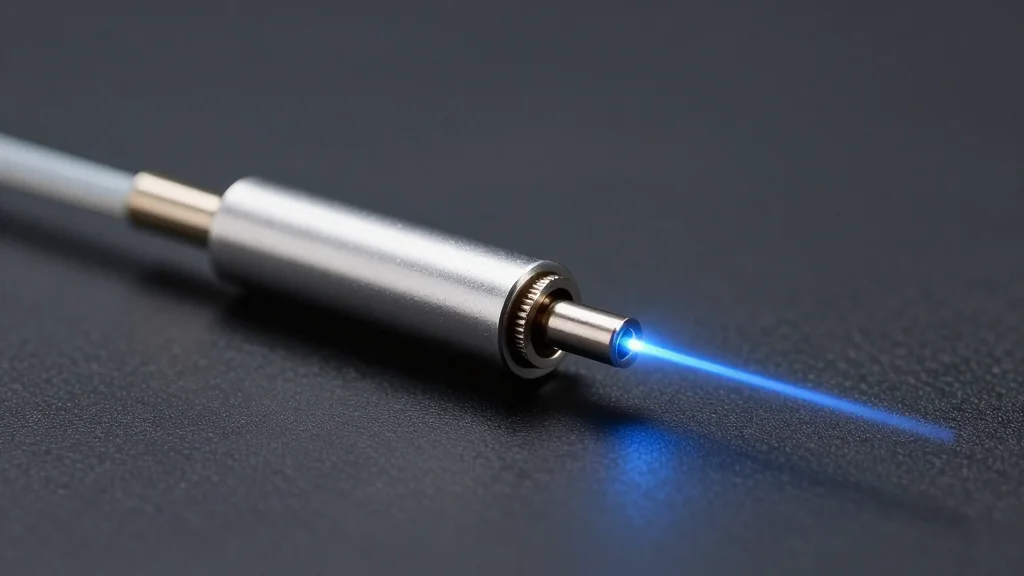
Ternary QKD Cuts Eavesdropping Chance to 54%, Boosts Security

Why It Matters
The reduction of eavesdropping probability from 85% to 54% represents a fundamental shift in the security guarantees of quantum key distribution. By expanding the state space to three polarisation modes, the protocol introduces a level of uncertainty that binary systems cannot match, directly addressing a known vulnerability in current quantum‑safe networks. This advancement could enable governments and enterprises to meet stricter data‑protection regulations without sacrificing bandwidth, accelerating the rollout of quantum‑resistant infrastructure. Beyond immediate security benefits, the ternary approach showcases how modest changes to quantum encoding can yield outsized gains, encouraging further research into multi‑state protocols. As the quantum communications market matures, solutions that balance security, efficiency, and hardware compatibility will dominate, and this work positions its creators at the forefront of that evolution.
Key Takeaways
- •Ternary QKD protocol reduces eavesdropping success probability to 54% from ~85% in binary systems.
- •Maintains an efficiency of 0.30 bits per photon, comparable to BB84.
- •Uses three polarisation states (horizontal, vertical, diagonal) and groups of three photons with random timing.
- •Developed by a consortium led by Ahmed Halawani at the Institute of Quantum Technologies and Advanced Computing, in collaboration with IMSIU, King Khalid University and Shanghai University.
- •Field trials over metropolitan fiber and satellite links planned for later 2026.
Pulse Analysis
The ternary protocol’s security advantage stems from a classic information‑theoretic principle: increasing the alphabet size raises the entropy an eavesdropper must resolve. In binary QKD, an interceptor faces a 50/50 guess for each photon, but the protocol’s structure and timing randomization effectively multiplies the decision space, pushing the optimal attack success down to just over half. This is a notable improvement, yet it is not a panacea—54% success still exceeds the ideal of near‑zero leakage. Future work will need to combine ternary encoding with decoy‑state methods and advanced error correction to push the bound further.
From a market perspective, the announcement arrives at a time when the quantum communications sector is poised for rapid commercialization. Vendors are racing to certify hardware that can interoperate across national borders, and regulatory bodies are drafting standards that will soon require quantifiable security metrics. A protocol that demonstrably halves the eavesdropping probability while keeping the bit‑rate stable offers a clear value proposition: higher security without the need for costly upgrades to photon sources or detectors. This could lower the total cost of ownership for telecom operators and make quantum‑safe links more attractive to enterprises wary of legacy encryption’s future viability.
Looking ahead, the real test will be integration. The three‑photon grouping introduces synchronization challenges, especially over long distances where dispersion and loss are significant. If the research team can prove that the protocol tolerates realistic channel impairments and can be retrofitted onto existing QKD hardware, it may set a new baseline for security. Conversely, if the added complexity proves prohibitive, the industry may revert to incremental improvements on binary schemes. Either outcome will shape the next wave of investments in quantum networking infrastructure.
Ternary QKD Cuts Eavesdropping Chance to 54%, Boosts Security
Comments
Want to join the conversation?
Loading comments...