The Classical Advances Needed to Make Quantum Computers Tick

Companies Mentioned
Why It Matters
Without scalable classical support, quantum devices cannot achieve the speed or reliability needed for commercial workloads, making the classical‑quantum interface a critical bottleneck for the entire quantum computing market.
Key Takeaways
- •Nvidia released AI models to speed quantum calibration and decoding.
- •Q-CTRL’s autonomous calibration reduces manual tuning from weeks to hours.
- •Real‑time error decoding relies on FPGA/ASIC hardware for microsecond latency.
- •AI decoders promise 2× speed but GPU latency remains a hurdle.
- •Classical infrastructure costs will dominate as qubit counts reach thousands.
Pulse Analysis
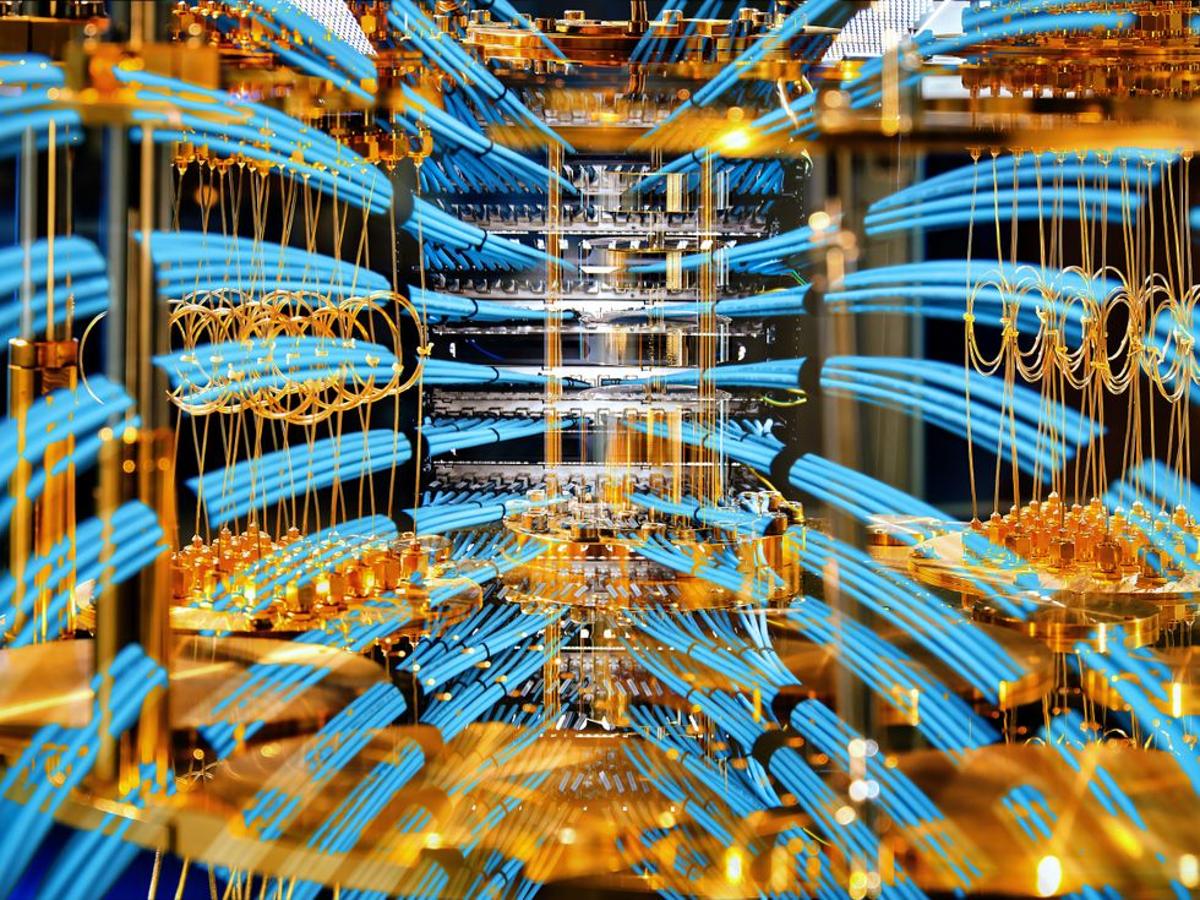
The quantum‑classical partnership is becoming the defining architecture of next‑generation computing. While qubits promise exponential speedups for specific problems, they remain fragile and require constant calibration and error correction—tasks that are fundamentally classical. As the industry pushes toward machines with hundreds or thousands of qubits, the volume of calibration data, syndrome measurements, and control signals will explode, demanding dedicated classical processors that can operate at microsecond or even nanosecond latencies. This shift reframes quantum computers not as standalone devices but as hybrid systems where classical compute power is as essential as the quantum core.
To address this challenge, leading firms are deploying a mix of AI, specialized silicon and automation. Nvidia’s recent AI models analyze calibration graphs and perform rapid inference to adjust qubit parameters, delivering up to a two‑fold speed increase in the calibration loop. Q‑CTRL’s autonomous calibration software replaces weeks‑long manual tuning with iterative, data‑driven adjustments, while IBM and other players are integrating FPGA and ASIC decoders that can process error‑syndrome data within the sub‑microsecond windows required for real‑time correction. The trade‑off is clear: AI‑driven approaches offer flexibility and pattern‑recognition power, but GPU latency can still be a bottleneck, prompting a continued focus on low‑latency ASIC designs.
Looking ahead, the economics of quantum scaling will be dominated by the cost and performance of the supporting classical stack. As qubit counts approach the thousand‑qubit threshold, current calibration and decoding pipelines will become untenable, forcing a redesign of both hardware and software layers. Investors and technology leaders are therefore betting on a new generation of quantum‑centric supercomputers that co‑locate high‑throughput classical processors with quantum chips, ensuring that the classical side can keep pace with the rapid evolution of quantum hardware. This convergence will shape the next wave of venture capital, talent acquisition, and standards development across the quantum ecosystem.
The Classical Advances Needed to Make Quantum Computers Tick
Comments
Want to join the conversation?
Loading comments...