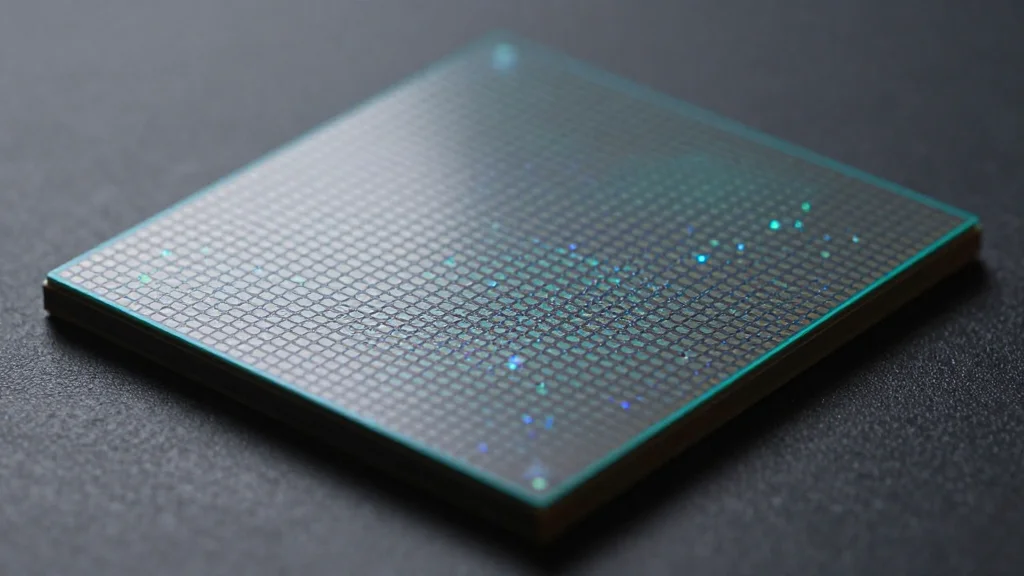
Tohoku University AI System Automates Quantum‑Dot Voltage Tuning, Boosting Qubit Scaling

Why It Matters
Automating quantum‑dot voltage tuning tackles a practical scaling challenge that has long limited semiconductor qubit research. By removing the manual bottleneck, the AI method can accelerate experimental cycles, lower development costs, and bring silicon‑based quantum processors closer to commercial viability. The breakthrough also demonstrates how machine‑learning tools can be embedded directly into quantum‑hardware workflows, a trend likely to spread across other qubit platforms. If adopted broadly, the technique could shorten the time‑to‑market for quantum‑dot chips, enabling faster iteration on error‑correction schemes and larger qubit counts. This, in turn, may shift investment toward semiconductor‑based quantum strategies, influencing the competitive dynamics among hardware vendors and national research programs.
Key Takeaways
- •Tohoku University team uses a U‑Net AI model to extract charge‑transition lines from quantum‑dot diagrams
- •Method combines Hough transform and clustering to define virtual gates automatically
- •Published in *Scientific Reports*, the workflow replaces manual tuning that can take hours per device
- •AI automation could cut calibration time to minutes, easing a major bottleneck for scaling spin qubits
- •Potential for integration into wafer‑level testing and real‑time control systems used by industry
Pulse Analysis
The AI‑driven tuning system arrives at a moment when semiconductor spin qubits are vying with superconducting and photonic approaches for dominance in the quantum‑computing race. Historically, the promise of silicon‑based qubits has been hampered by the sheer labor required to configure each quantum dot, a problem that has kept experimental arrays small. By automating the charge‑transition detection step, the Tohoku team not only solves a technical pain point but also creates a template for AI‑assisted hardware calibration that could be replicated across other platforms.
From a market perspective, the breakthrough could tilt the cost‑benefit analysis in favor of silicon. Companies such as Intel and GlobalFoundries have already invested heavily in CMOS‑compatible quantum research; an AI tool that reduces engineering overhead directly improves the economics of scaling. Moreover, the method's reliance on open‑source image‑processing techniques suggests a low barrier to adoption, potentially accelerating a wave of software‑hardware co‑design in the quantum ecosystem.
Looking ahead, the real test will be the integration of this AI pipeline into production‑grade control electronics. If the system can operate in real time on cryogenic hardware, it could enable adaptive tuning during algorithm execution, a capability that would dramatically improve qubit yield and stability. The next milestones—demonstrating closed‑loop voltage adjustment and scaling to multi‑dot arrays—will determine whether this academic proof‑of‑concept becomes a cornerstone of commercial quantum‑dot manufacturing.
Tohoku University AI System Automates Quantum‑Dot Voltage Tuning, Boosting Qubit Scaling
Comments
Want to join the conversation?
Loading comments...