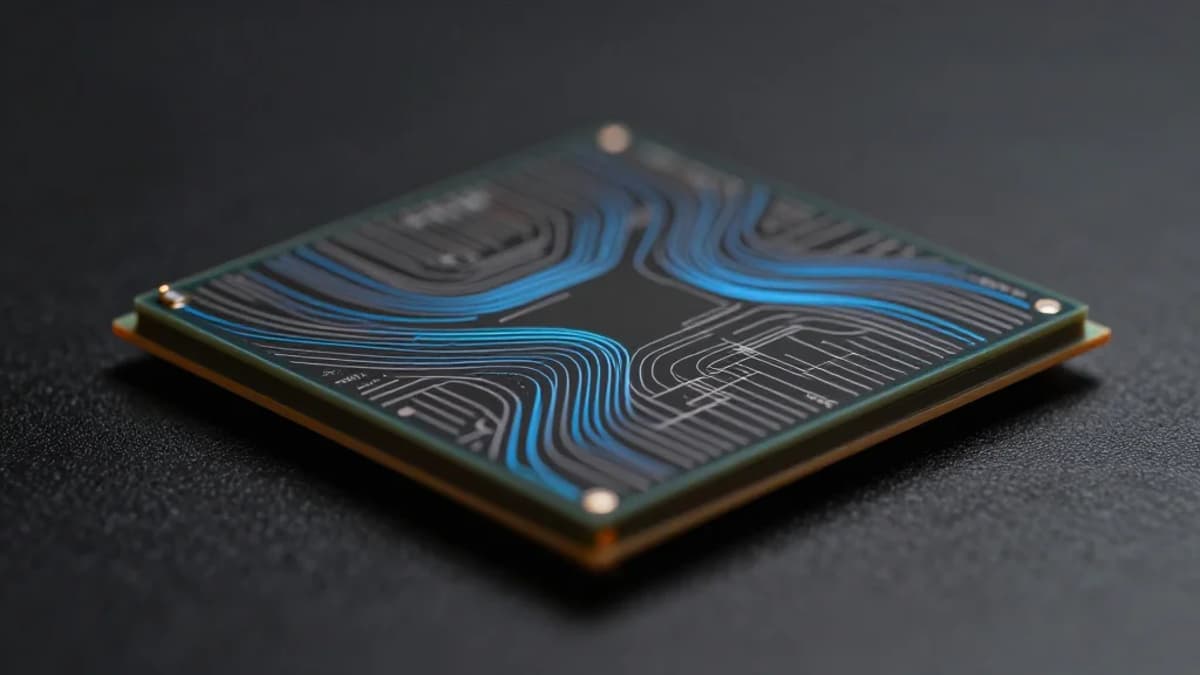
Tower Semiconductor and Xanadu Industrialize Silicon Photonic Quantum Stack
•February 20, 2026
0
Why It Matters
Moving photonic quantum hardware into a commercial foundry accelerates fault‑tolerant quantum computing and creates a scalable supply chain, reshaping cloud quantum services and telecom infrastructure.
Key Takeaways
- •Tower provides high‑volume 200 mm silicon photonics foundry
- •Xanadu’s photonic circuits target fault‑tolerant quantum computing
- •Ultra‑low‑loss SiN waveguides enable thousands of qubits
- •Dedicated production flow ensures industrial‑grade yield and tolerances
- •Photonic modules compatible with telecom and data‑center infrastructure
Pulse Analysis
The race to practical quantum computers has increasingly turned to silicon photonics as a scalable, room‑temperature platform. Unlike superconducting qubits that require cryogenic infrastructure, photonic qubits can be generated, routed, and measured using mature optical components. Tower Semiconductor’s PH18 platform, built on a 200 mm wafer line, provides the high‑volume manufacturing backbone that many startups lack. By partnering with Xanadu, a leader in measurement‑based quantum computing, Tower is positioning its foundry to become a cornerstone of the emerging quantum‑photonic supply chain, bridging the gap between academic prototypes and commercial products.
The technical core of the collaboration centers on ultra‑low‑loss silicon nitride waveguides and integrated photodiodes that meet the stringent loss budgets of measurement‑based architectures. Xanadu’s designs require entanglement of thousands of photons, demanding waveguide propagation losses well below 0.1 dB/cm and precise phase control. Tower’s established process flow has been adapted to accommodate a custom material stack, ensuring compatibility with standard lithography while preserving optical performance. This dedicated production route promises industrial‑grade yields, tighter tolerances, and repeatable performance—critical factors for scaling quantum processors from a few dozen to millions of qubits.
Commercializing photonic quantum modules opens new revenue streams for both semiconductor foundries and cloud service providers. The ability to integrate quantum photonic chips with existing telecom and data‑center infrastructure reduces deployment costs and accelerates adoption of quantum‑enhanced services such as secure communications and optimization. As rivals like Intel and IBM invest in their own photonic initiatives, Tower’s early‑stage partnership gives it a competitive edge in the nascent quantum‑hardware market. Continued success could spur further ecosystem development, including design‑tool ecosystems, standardized packaging, and volume‑priced quantum processors for enterprise customers.
Tower Semiconductor and Xanadu Industrialize Silicon Photonic Quantum Stack
0
Comments
Want to join the conversation?
Loading comments...