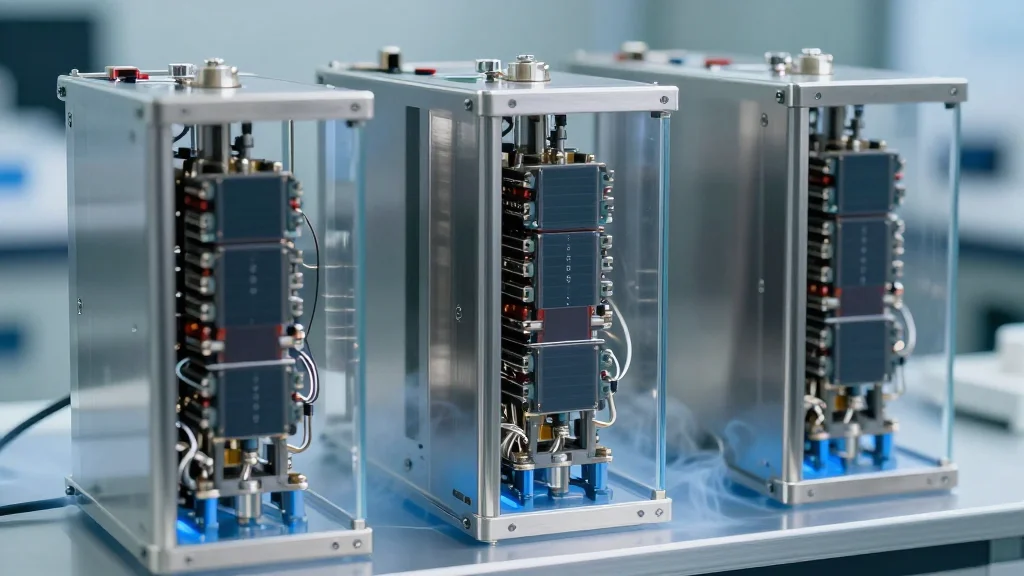
TreQ Deploys Open-Architecture Quantum Computing Testbed in Oxfordshire, UK
Why It Matters
The testbed demonstrates a scalable, vendor‑agnostic approach that lowers capital risk and speeds benchmarking, crucial for accelerating quantum‑hardware commercialization. It also reinforces the UK’s strategic push to become a global hub for quantum innovation.
Key Takeaways
- •TreQ’s testbed supports eight configurations in three‑rack footprint
- •Integrates Rigetti Novera QPU and QuantWare superconducting processors
- •Uses open‑source interface to avoid vendor lock‑in across modalities
- •Enables side‑by‑side benchmarking of multi‑vendor quantum hardware
- •Extends capital lifespan by allowing software‑reconfigurable swaps
Pulse Analysis
The emergence of open‑architecture quantum platforms marks a turning point for the industry, shifting from proprietary black‑box solutions to interchangeable, standards‑based ecosystems. TreQ’s OAQ Testbed, deployed in Oxfordshire, embodies this shift by providing a modular chassis where processors, control stacks and software layers can be swapped via software commands. This flexibility not only accelerates hardware evaluation but also aligns with broader governmental initiatives, such as Innovate UK’s Quantum Mission Pilot, which seeks to de‑risk investment and foster collaborative R&D across the supply chain.
Technically, the testbed integrates a heterogeneous mix of leading‑edge components: Rigetti’s Novera quantum processing unit, QuantWare’s superconducting chips, and a Maybell cryostat housing the hardware. Control is handled by Quantum Machines and Qblox platforms, while Q‑CTRL’s autonomous workflows and Qruise’s AI‑driven digital twins manage calibration and performance monitoring. By exposing standardized low‑level interfaces, the system enables researchers to benchmark disparate QPUs side‑by‑side, dramatically shortening the time needed to assess fidelity, error rates and scaling potential. The software‑reconfigurable architecture eliminates the need for physical recabling or thermal cycling, preserving delicate cryogenic environments and reducing operational downtime.
From a market perspective, TreQ’s open‑source specification could reshape procurement strategies, encouraging enterprises to adopt capital‑efficient, future‑proof quantum infrastructure. The UK’s commitment to quantum leadership gains a tangible asset that showcases the nation’s capability to host multi‑vendor testbeds, attracting both domestic startups and global players. As hybrid quantum‑classical applications mature, such adaptable platforms will be essential for rapid prototyping, cross‑technology validation, and ultimately, the commercialization of quantum advantage across sectors ranging from finance to materials science.
TreQ Deploys Open-Architecture Quantum Computing Testbed in Oxfordshire, UK
Comments
Want to join the conversation?
Loading comments...