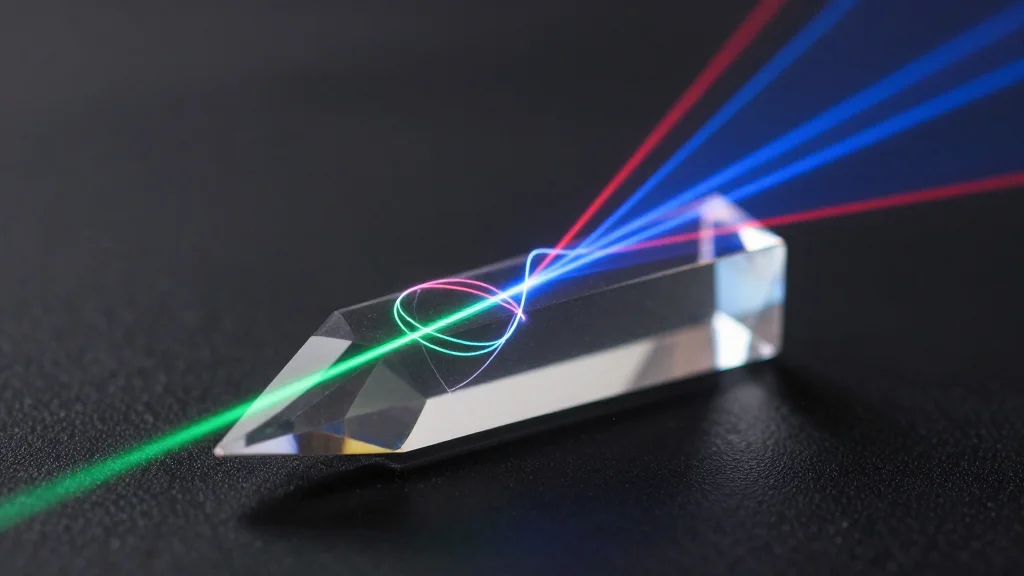
TU Delft Physicists Demonstrate 37‑Dimensional GHZ Paradox, Tightening Quantum Contextuality Limits

Why It Matters
The experiment sharpens the empirical boundary between quantum mechanics and classical hidden‑variable theories, confirming that even with the fewest possible measurement contexts, quantum predictions remain irreconcilable with noncontextual models. This deepens our understanding of contextuality, a resource believed to power quantum advantage in computation and communication. Moreover, the scalable high‑dimensional photonic platform demonstrated here could accelerate the development of quantum technologies that exploit large Hilbert spaces, such as high‑capacity quantum key distribution and error‑resilient quantum processors. By proving that a three‑context GHZ paradox is both sufficient and necessary, the study also provides a benchmark for future theoretical work seeking the most efficient demonstrations of quantum nonclassicality. The ability to implement such tests in a relatively compact optical setup suggests that experimental verification of foundational quantum principles can keep pace with the rapid engineering of quantum hardware.
Key Takeaways
- •Zhenghao Liu's team at Technical University of Denmark realized a three‑context GHZ paradox in a 37‑dimensional optical system.
- •Graph‑theoretic analysis proved three measurement contexts are the minimal requirement, improving on prior four‑context constructions.
- •Experiment used pulsed fiber laser, modulators, fiber‑ring convolution, and homodyne detection at a 10 kHz cycle.
- •Average detection probability for exclusive events was 1.74 %, indicating high orthogonality in the platform.
- •Results align with quantum predictions and reject all noncontextual hidden‑variable models, reinforcing contextuality as a quantum resource.
Pulse Analysis
The breakthrough underscores a shift from abstract proofs of contextuality toward concrete, scalable demonstrations that can be integrated into emerging quantum hardware. Historically, GHZ paradoxes have been confined to low‑dimensional, multi‑qubit systems that are difficult to scale. By moving the test to a 37‑dimensional photonic platform, Liu's group demonstrates that high‑dimensional contextuality can be probed with relatively modest optical components, a trend that could democratize foundational quantum experiments.
From a market perspective, the ability to harness high‑dimensional Hilbert spaces efficiently is attracting interest from quantum communication firms seeking to increase channel capacity without proportionally increasing hardware complexity. The low cross‑detection rate achieved (1.74 %) suggests that the platform can maintain the stringent error thresholds required for practical quantum key distribution, where orthogonality translates directly into security guarantees.
Looking ahead, the minimal‑context GHZ construction may become a standard benchmark for quantum processors aiming to certify genuine quantum behavior. As companies race to demonstrate quantum advantage, a concise, experimentally verified test of contextuality could serve as a low‑overhead certification tool, complementing more resource‑intensive benchmarks like random circuit sampling. The experiment thus bridges foundational physics and commercial quantum technology, setting the stage for a new class of applications that leverage the strongest forms of quantum nonclassicality.
TU Delft Physicists Demonstrate 37‑Dimensional GHZ Paradox, Tightening Quantum Contextuality Limits
Comments
Want to join the conversation?
Loading comments...