USTC Unveils First 14.5‑km Bell‑Verified Quantum Repeater in Hefei

Why It Matters
The ability to certify Bell‑nonlocality across a 14.5‑km fiber link proves that quantum entanglement can survive real‑world telecom conditions, a prerequisite for secure quantum key distribution at city scale. By eliminating the need for active phase stabilization, the protocol reduces operational complexity, making it attractive to telecom carriers that could embed quantum repeaters in existing infrastructure. Beyond security, a robust quantum‑repeater network enables distributed quantum computing, where distant quantum processors share entangled resources to solve problems beyond the reach of any single device. The Hefei experiment therefore sets a technical foundation for both commercial and scientific applications, positioning China as a leader in the nascent quantum‑network market.
Key Takeaways
- •USTC’s XingHan 2.0 linked three nodes over 14.5 km of commercial fiber
- •First metropolitan‑scale repeater to pass a Bell‑nonlocality test
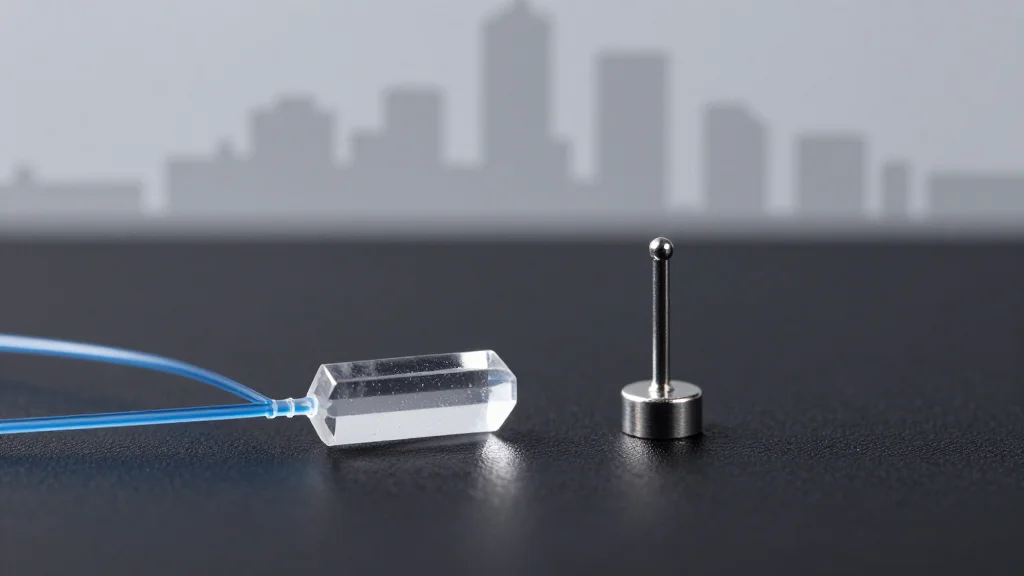
- •Uses 151Eu³⁺:Y₂SiO₂ crystals at ~3 K as quantum memories
- •Protocol MQR‑TM combines speed of SPI with phase robustness of TPI
- •Demonstrates autonomous operation without fiber‑channel phase stabilization
Pulse Analysis
The Hefei demonstration arrives at a moment when several nations are investing heavily in quantum‑network infrastructure. Europe’s Quantum Internet Alliance and the U.S. Department of Energy’s quantum‑network roadmap both target city‑scale links within the next five years. USTC’s approach—leveraging time‑bin entanglement and solid‑state memories—offers a distinct engineering trade‑off: it sacrifices some raw speed for robustness, a balance that could prove decisive for early commercial rollouts where reliability outweighs throughput.
Historically, quantum‑repeater research has been dominated by laboratory‑only proofs of concept, often relying on active phase‑locking systems that are impractical outside controlled environments. By sidestepping that requirement, USTC reduces the barrier to entry for telecom operators, who can now consider quantum repeaters as an add‑on to existing fiber plants. This could accelerate the formation of hybrid classical‑quantum networks, creating new revenue streams for carriers and fostering a market for quantum‑memory modules.
Future competition will likely focus on extending memory coherence times, integrating error‑correction protocols, and scaling node counts without exponential cost growth. If USTC can demonstrate a 20‑km or longer link with comparable Bell‑test fidelity, it would force other research groups to adopt similar architectures or risk falling behind. The next milestone—inter‑city quantum links—will test whether the Hefei model can survive the added complexity of heterogeneous fiber routes and variable environmental conditions. Success would not only validate the technical roadmap but also signal to investors that a commercial quantum‑internet ecosystem is within reach.
USTC Unveils First 14.5‑km Bell‑Verified Quantum Repeater in Hefei
Comments
Want to join the conversation?
Loading comments...