X-Ray Data Confirms Niobium Hydrides Limit Qubit Stability

Key Takeaways
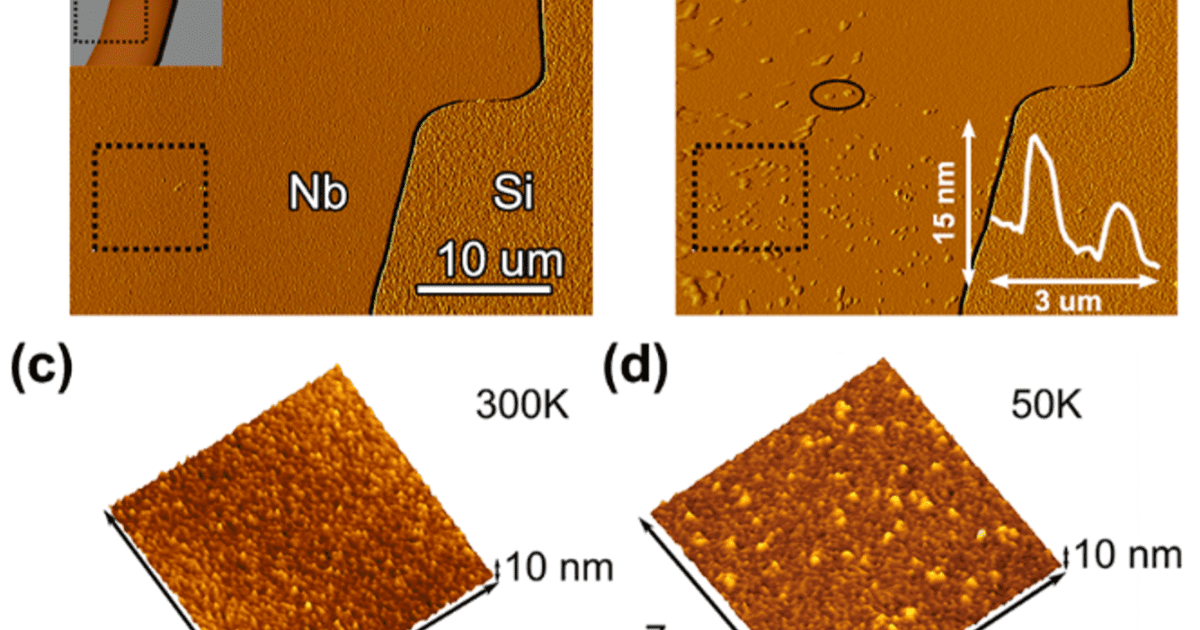
- •Niobium hydrides form during cooldown, creating surface “hills” on qubits.
- •Hydride defects directly contribute to quantum decoherence and reduced coherence time.
- •AFM, XRD, and TOF‑SIMS confirmed hydride composition and formation mechanism.
- •Controlling hydrogen exposure in fabrication may suppress hydride formation.
- •Findings apply to superconducting sensors, potentially enhancing their sensitivity.
Pulse Analysis
Superconducting qubits, built from thin films of niobium, are the workhorse of most near‑term quantum computers. Their performance hinges on coherence time—the interval a qubit can retain quantum information before decoherence erases it. While advances in lithography and surface passivation have steadily extended coherence, the underlying microscopic sources of noise remain a moving target. The recent discovery that niobium hydrides form during the rapid temperature drop to 2 K adds a concrete, previously hidden culprit to the decoherence ledger.
The Fermilab team, in collaboration with Rigetti Computing, employed atomic‑force microscopy to visualize nanoscale “hills” that appeared only at cryogenic temperatures. Complementary X‑ray diffraction patterns matched known niobium‑hydride crystal phases, and time‑of‑flight secondary ion mass spectrometry detected a spike in hydrogen concentration at the same locations. By triangulating these data, the researchers proved that the hills are not surface contaminants but crystalline hydrides that introduce two‑level system noise. This multi‑technique validation gives manufacturers a clear target for process control.
Eliminating hydride formation could translate into measurable gains in qubit fidelity, enabling deeper quantum circuits for chemistry simulations, cryptographic algorithms, and error‑corrected architectures. Practical routes include tighter control of residual gases during sputtering, low‑temperature anneals to outgas hydrogen, or deliberate doping with hydrogen‑absorbing elements. Beyond computing, superconducting quantum sensors that rely on ultra‑low noise will also benefit, sharpening measurements of magnetic and gravitational fields. As the industry races toward fault‑tolerant machines, material‑level insights such as this are poised to become a competitive differentiator.
X-Ray Data Confirms Niobium Hydrides Limit Qubit Stability
Comments
Want to join the conversation?