Why It Matters
If the on‑chip cooling approach proves viable, it could dramatically shrink the size, power, and complexity of trapped‑ion quantum computers, accelerating their path to practical, large‑scale devices. This advancement is timely as the quantum industry seeks scalable architectures, and it may also impact related fields like atomic clocks, quantum sensing, and nanoscale manipulation.
Key Takeaways
- •MIT integrates photonic chips for ion cooling, tenfold improvement.
- •On-chip lasers reduce vibration, power, and system size.
- •Localized cooling could lower ion temperatures from 3K to 0.3K.
- •Approach may ease scalability challenges for trapped‑ion quantum computers.
- •Photonic antennas enable precise control, opening new quantum modalities.
Pulse Analysis
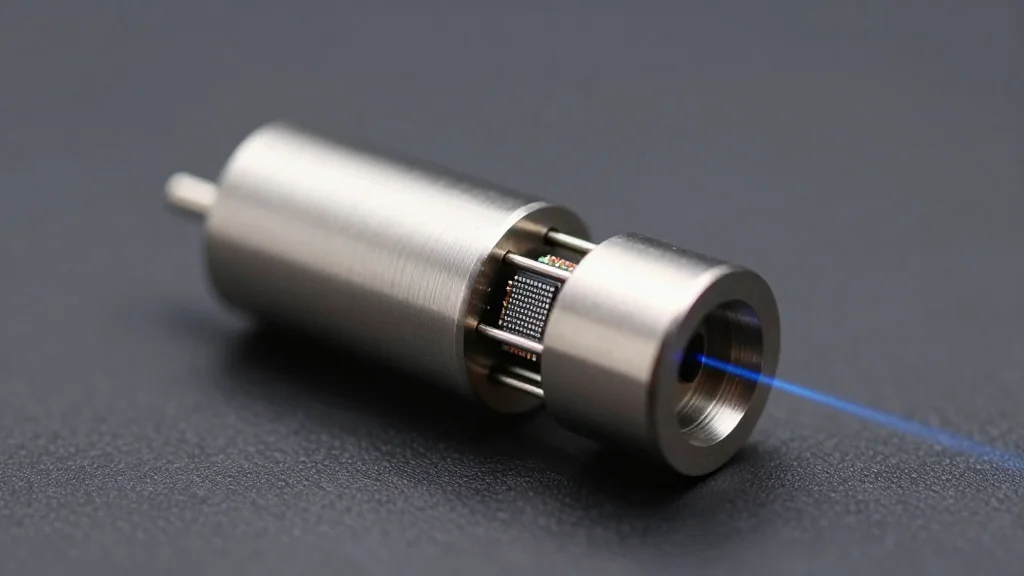
The latest MIT paper reveals a radical redesign of trapped‑ion quantum hardware. Instead of bulky external lasers, the team fabricates photonic chips that launch two tightly controlled light beams directly above each ion. These on‑chip optical fields generate polarized‑gradient cooling, delivering roughly ten times the cooling efficiency of conventional laser cooling. By embedding the light source within the chip, the system sidesteps alignment drift and reduces the footprint of the cooling apparatus, a change the hosts describe as “lasers coming from inside the chip.”
This architectural shift tackles two long‑standing bottlenecks. First, vibrations transmitted through large free‑space optics have plagued ion stability; on‑chip delivery eliminates most mechanical coupling, sharpening qubit coherence. Second, power consumption drops dramatically because the photonic antennas operate at far lower intensities than external lasers, cutting heat load on the cryogenic environment. The authors estimate ion temperatures could fall from about 3 kelvin to 0.3 kelvin, a ten‑fold reduction that improves gate fidelity and eases the vacuum‑chamber constraints that limit current trapped‑ion arrays. In short, localized cooling makes larger ion registers more realistic.
Beyond immediate performance gains, the MIT approach reshapes the scalability narrative for trapped‑ion quantum computers. By treating each ion as a miniature cryostat, engineers can envision modular chips where dozens of ions are cooled and controlled independently, reducing the need for a single massive laser suite. This modularity aligns trapped ions with competing modalities such as neutral‑atom arrays and superconducting circuits, reinforcing the idea that no single platform will dominate the quantum race. As step‑function breakthroughs like this emerge, investors and researchers alike must keep an open mind toward hybrid designs that blend photonics, cryogenics, and advanced control electronics.
Episode Description
In Episode 138, Patrick and Ciprian explore how MIT’s new photonic chip approach promises to pave the way for more scalable, energy-efficient trapped ion quantum computers. The team discuss why controlling ions with integrated photonics could dramatically lower costs, boost qubit stability, and solve long-standing scalability hurdles. They also break down how these tiny antennas routing light directly to the trapped ions remove the need for bulky external lasers, opening the door to compact, room-temperature quantum systems, potentially revolutionizing everything from nanotech to medicine.
Comments
Want to join the conversation?
Loading comments...