Why It Matters
Understanding Quantware’s approach reveals how standardization and vertical integration can break the current bottleneck of qubit scaling, making quantum computers more affordable and practical. As the industry moves from experimental prototypes to mass‑produced systems, these cost and performance breakthroughs are critical for unlocking real‑world applications of quantum computing.
Key Takeaways
- •Quantware aims to be the Intel of quantum computing
- •Vertical I/O reduces routing space, boosting qubit density
- •Inter‑chip fidelity matches on‑chip fidelity, preserving performance
- •VAL40K system targets $55 million price, tenfold per‑qubit cost drop
- •Scaling to 10,000 qubits needs ~10 × 20 m control area
Pulse Analysis
The episode frames Quantware’s strategy as the "Intel of quantum," borrowing the semiconductor playbook that moved from vertically integrated mainframes to a standardized CPU architecture. By offering a commercial quantum processor platform, Quantware hopes to create economies of scale that drive down the per‑qubit price, a prerequisite for useful quantum applications. The host and CEO stress that without mass‑produced hardware, quantum computers will remain niche, expensive experiments. Their roadmap targets a VAL40K system priced at roughly $55 million—about ten times cheaper per qubit than current offerings—signaling a shift toward affordable quantum infrastructure.
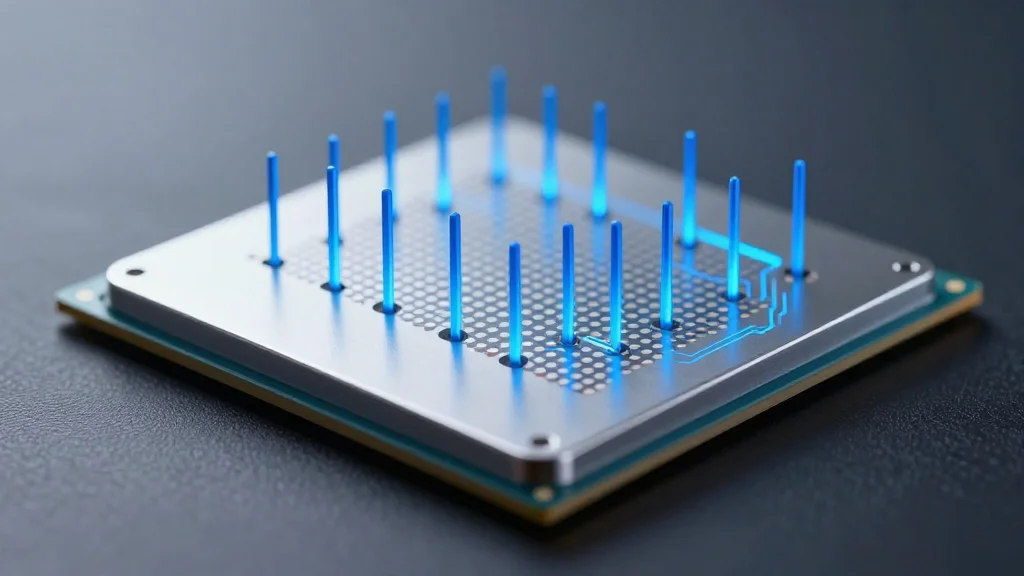
Quantware’s core innovation is Vertical I/O (VIO), which brings signal routing out of the chip plane and up through the top surface. This eliminates the two‑dimensional wiring that currently consumes about 95 % of chip real estate, allowing arrays such as the VAR40K to achieve densities a hundred times greater than competing designs. Because VIO maintains inter‑chip fidelity equal to on‑chip fidelity, scaling to thousands of qubits does not degrade error rates. The architecture also reduces crosstalk and improves microwave hygiene, delivering higher compute‑per‑watt performance essential for fault‑tolerant quantum algorithms.
The discussion turns to commercialization. Quantware plans to ship the VAL40K platform by 2028, delivering up to 10,000 qubits per cryostat and supporting roughly 40,000 I/O lines. Physical footprint for control hardware is modest—about a 10 × 20 meter area—so space is not the limiting factor. The real challenge is cost; moving from FPGA‑based controllers to ASICs could require a $100 million tape‑out but promises per‑qubit price reductions as volume rises. By treating quantum hardware as a mass‑produced commodity, Quantware hopes to accelerate the industry’s cost curve and make large‑scale quantum computers financially viable.
Episode Description
I spoke with Matt Rijlaarsdam, CEO and Co-Founder of QuantWare, about trying to be the Intel of quantum, mass production versus custom foundry and packaging services, the advantages of a 3D chip architecture, a bold claim about “exponentially more compute power per watt and per dollar,” the upper...
Comments
Want to join the conversation?
Loading comments...