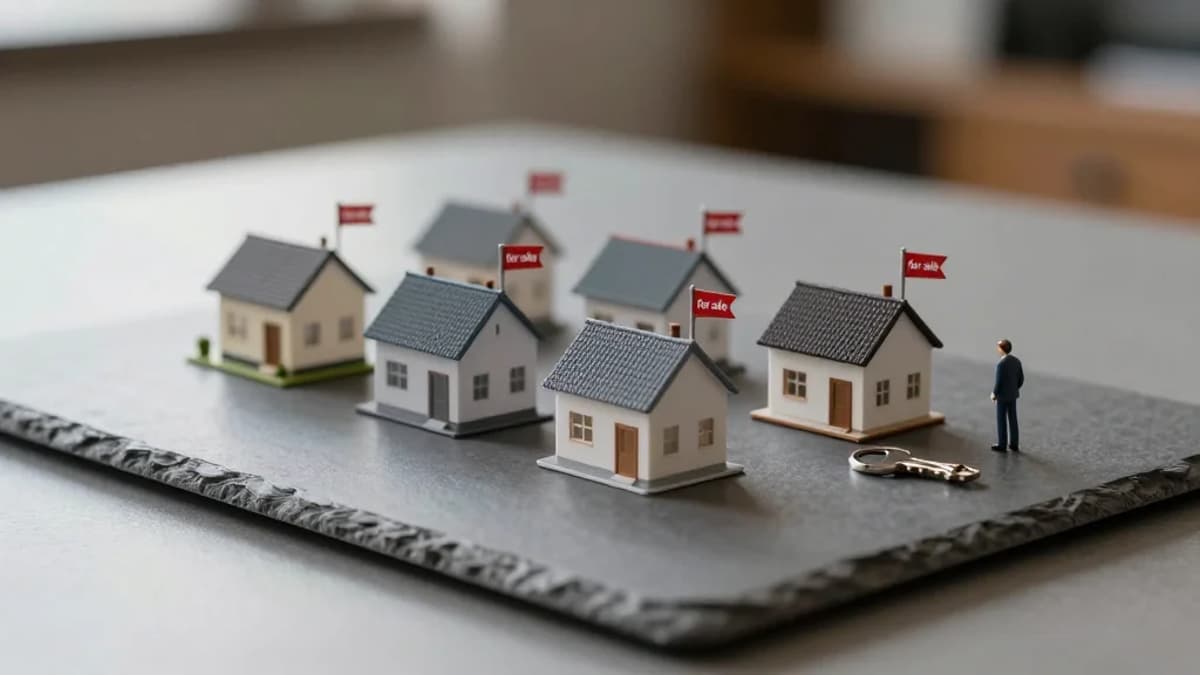
It’s a Buyer’s Market: America Has 44% More Home Sellers Than Buyers—A Near-Record Gap
•February 23, 2026
0
Why It Matters
The surplus of sellers gives active buyers significant negotiating power, reshaping price dynamics and prompting sellers to adjust strategies amid lingering economic uncertainty.
Key Takeaways
- •44% more sellers than buyers in Jan 2026
- •Buyers' market active since May 2024
- •Only five metros remain seller's markets
- •South leads strongest buyer's markets
- •Homebuyer count hits record low
Pulse Analysis
The current buyer’s market reflects a confluence of macro‑economic pressures and shifting demographics. Elevated mortgage rates, persistent inflation, and recent layoffs have dampened demand, while a surge in new construction—particularly in the Sun Belt—has flooded the market with inventory. Redfin’s methodology, which blends MLS active listings with proprietary buyer‑timeline data, shows that the surplus of sellers now exceeds 600,000 units, granting buyers leverage that was rare in the post‑pandemic boom.
Regional disparities are stark. The South and West, where permitting activity outpaces the Midwest and Northeast, host the most pronounced buyer’s markets, with Miami exhibiting a 159% seller surplus. Conversely, only five metros—mostly in the Northeast—remain seller’s markets, where limited inventory and modest rate declines have spurred price gains, as seen in Milwaukee’s 11% year‑over‑year median price rise. These pockets of seller strength underscore how localized supply constraints can still drive competitive bidding despite national oversupply.
For industry participants, the implications are multifaceted. Buyers can negotiate lower prices, request concessions, or opt for newer builds, while sellers may need to price more aggressively, consider delisting, or invest in home improvements to attract offers. Builders, meanwhile, must calibrate output to avoid exacerbating oversupply, especially in markets already saturated. Monitoring inventory trends, buyer sentiment, and rate movements will be crucial as the market edges toward equilibrium, potentially shifting the balance of power in the coming quarters.
It’s a Buyer’s Market: America Has 44% More Home Sellers Than Buyers—a Near-Record Gap
0
Comments
Want to join the conversation?
Loading comments...