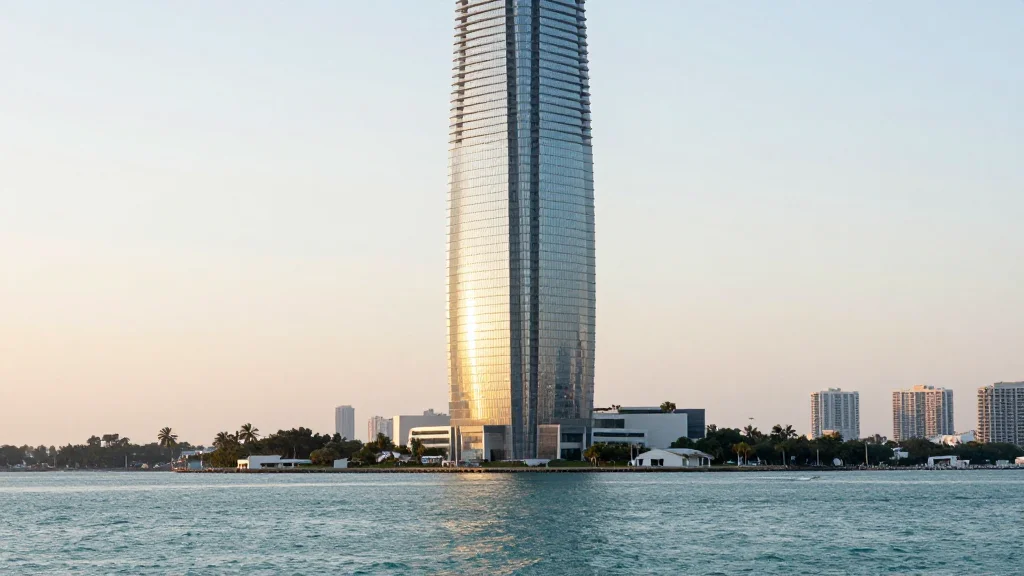
Miami Mandarin Oriental Luxury Project Secures $1 B Funding Amid Wealth Boom

Why It Matters
The $1 billion Mandarin Oriental development illustrates how luxury hospitality can serve as a catalyst for large‑scale real‑estate investment, especially when backed by strong domestic wealth. By converting a historic hotel site into a mixed‑use tower, Swire is tapping into Miami’s growing pool of high‑net‑worth individuals who prefer branded residences that combine hotel services with private ownership. This model could reshape investment strategies, prompting funds to allocate more capital toward premium, brand‑linked projects that promise both rental yields and capital appreciation. Moreover, the shift from international to domestic buyers reduces exposure to currency risk and geopolitical uncertainty, making such projects more attractive to U.S.‑based institutional investors. The success of pre‑selling over half the units before construction also demonstrates the power of brand equity in de‑risking large developments, a lesson that could influence how developers structure financing and marketing for future luxury assets.
Key Takeaways
- •$1 billion financing secured for new Mandarin Oriental hotel and residential tower in Miami.
- •Two‑bedroom condos start at US$6.6 million; two penthouses sold for US$50 million each.
- •Swire Properties has already generated US$1.3 billion in sales from about half the units.
- •Domestic U.S. buyers now represent roughly 65% of purchasers, up from a historically Latin‑American base.
- •Project slated for completion in 2030, positioning the hotel as Mandarin Oriental’s North American flagship.
Pulse Analysis
Swire’s $1 billion injection into Miami marks a decisive pivot toward brand‑centric luxury development, a segment that has outperformed traditional office and retail assets over the past decade. The company’s ability to lock in $1.3 billion in sales before breaking ground reflects a deep reservoir of buyer confidence in the Mandarin Oriental name and the broader narrative of wealth concentration in the United States. This confidence is amplified by the shift to domestic capital, which mitigates foreign exchange volatility and aligns investor timelines with U.S. economic cycles.
Historically, Miami’s high‑end market has been driven by foreign capital, particularly from Latin America. The new buyer mix—65% domestic—signals a maturation of the local ultra‑wealthy class, likely fueled by tech, finance, and entertainment sectors that have proliferated in Florida. For real‑estate investors, this transition reduces reliance on cross‑border financing and opens the door for more predictable cash‑flow modeling. It also suggests that future luxury projects may prioritize domestic marketing channels and amenities that cater to American lifestyle preferences.
Looking ahead, the success of this development could set a template for other legacy hotel sites worldwide. Developers may increasingly pursue mixed‑use, branded‑residence models that blend hospitality services with private ownership, leveraging pre‑sales to secure financing and lower construction risk. As the market watches the Mandarin Oriental’s performance post‑completion, its occupancy rates, average daily rates, and resale values will become key data points that inform the next wave of luxury‑asset allocation across the sector.
Miami Mandarin Oriental Luxury Project Secures $1 B Funding Amid Wealth Boom
Comments
Want to join the conversation?
Loading comments...