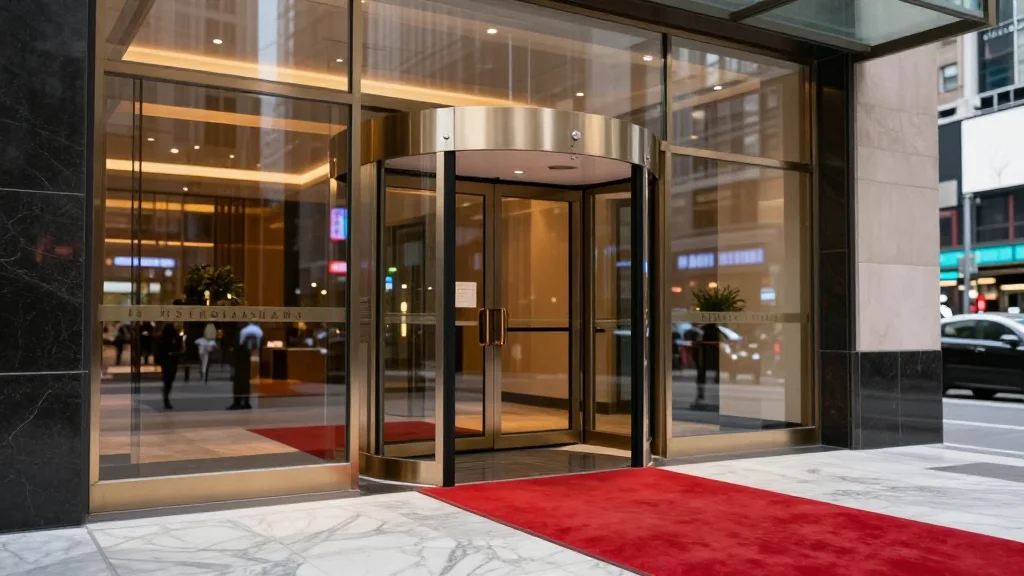
Millennium Premier Hotel NY Times Square Reopens, Adding Premium Hospitality Real Estate

Why It Matters
The reopening of the Millennium Premier Hotel illustrates how targeted capital investment can revitalize a boutique asset in a hyper‑competitive market, offering a template for real‑estate investors seeking to enhance asset performance through renovation. By upgrading guest experience and adding premium amenities, MHR aims to boost RevPAR and overall valuation, reinforcing the case for active asset management in hospitality real estate. For investors, the deal signals confidence in Manhattan’s long‑term demand fundamentals despite recent macro‑economic headwinds. The property’s prime location, combined with a refreshed brand proposition, may attract institutional capital looking for stable, inflation‑hedged returns in a sector historically resilient to economic cycles.
Key Takeaways
- •Millennium Premier Hotel New York Times Square reopened on June 1, 2026 after a full renovation.
- •The property features 124 refreshed guest rooms and redesigned public spaces, including a new welcome lounge.
- •MHR operates over 145 hotels worldwide; the renovation is part of its urban‑gateway investment strategy.
- •Senior executives Vikram Sardana and Shah Adil highlighted the renovation’s role in boosting asset value and market presence.
- •A Club Lounge is slated to open in early October 2026, adding a premium revenue stream.
Pulse Analysis
MHR’s decision to pour capital into a boutique Manhattan hotel reflects a broader shift among hospitality owners toward asset‑level upgrades rather than new builds, especially in markets where land is scarce and acquisition costs are prohibitive. The renovation aligns with a post‑pandemic recovery narrative that emphasizes experience‑driven travel, where guests are willing to pay a premium for design, space, and personalized service. By integrating loyalty incentives like the MyMillennium points boost, MHR is also tapping into data‑driven revenue management, encouraging repeat stays that improve occupancy stability.
Historically, Manhattan hotel renovations have yielded a 10‑15% uplift in RevPAR within 12‑18 months, driven by higher ADRs and improved brand perception. MHR’s timing appears calculated: the U.S. economy is experiencing modest inflation at 3.8%, and investors are seeking real‑estate assets that can act as inflation hedges. Hotels, with their ability to adjust room rates in line with CPI, fit that profile. The upcoming Club Lounge will likely serve as a high‑margin ancillary offering, further insulating the asset from price‑sensitive demand fluctuations.
Looking forward, the success of this renovation will be measured by occupancy trends, ADR growth, and the performance of the loyalty program. If MHR can demonstrate a sustained uplift, it may accelerate similar projects across its U.S. portfolio, potentially sparking a wave of boutique hotel refurbishments in other gateway cities. For capital‑seeking investors, the case study reinforces the value of active asset management and strategic reinvestment in high‑visibility urban properties.
Millennium Premier Hotel NY Times Square Reopens, Adding Premium Hospitality Real Estate
Comments
Want to join the conversation?
Loading comments...