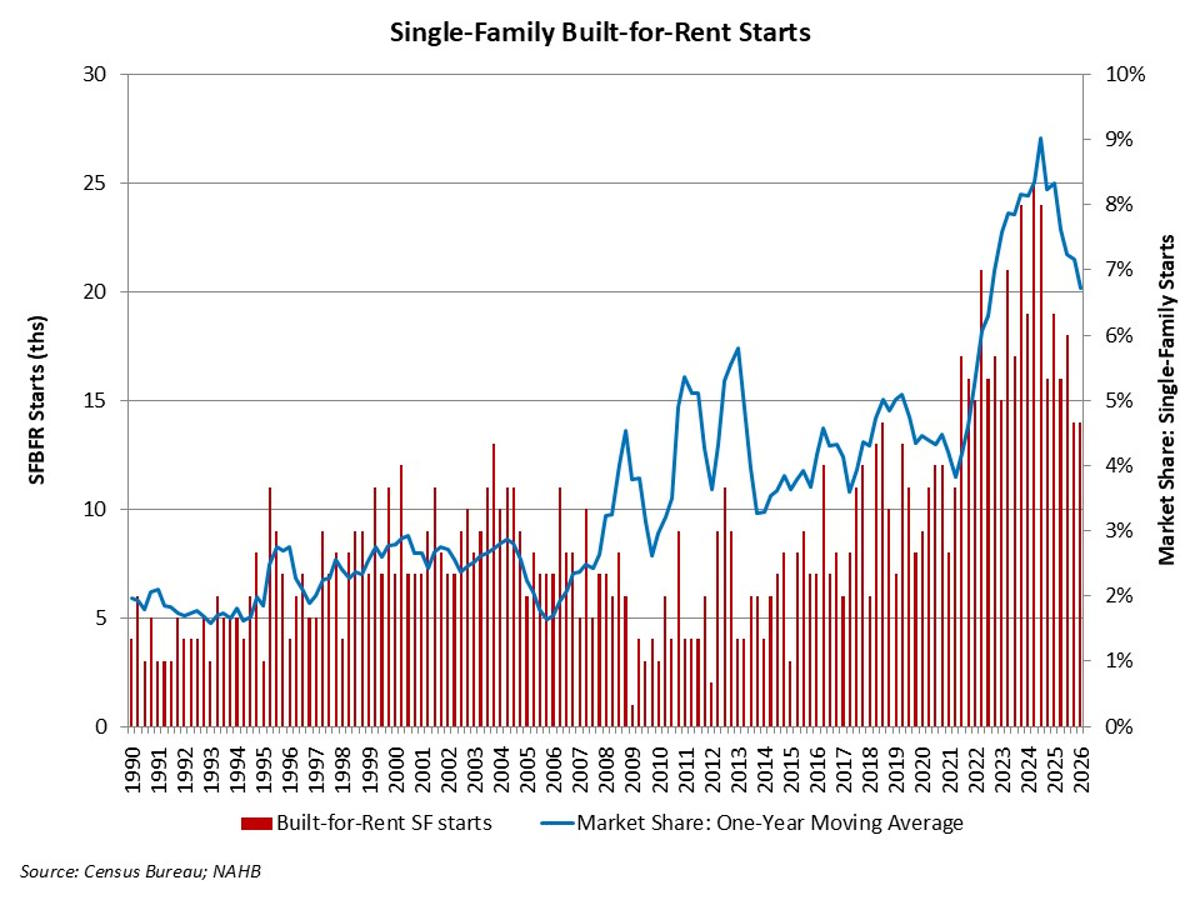
Single-Family Built-to-Rent Slowed at Start of 2026
Why It Matters
The slowdown curtails a growing source of affordable rental inventory, and the legislative outcome directly influences capital availability for future BTR development.
Key Takeaways
- •Q1 2026 BTR starts fell to 14,000, 5k less YoY.
- •Four‑quarter BTR starts dropped 26% to 62,000 units.
- •Senate bill would have forced sale of BTR units within seven years.
- •House amendment removed anti‑supply provision, easing investor concerns.
- •BTR market share just under 7%, well above 2.7% historic average.
Pulse Analysis
The early‑2026 dip in single‑family built‑to‑rent construction underscores how tightly financing conditions now dictate development pipelines. Higher borrowing costs have squeezed profit margins for institutional investors, while an expanding multifamily pipeline offers a competing supply of rental units. Together with lingering policy ambiguity, these factors prompted a measurable contraction in quarterly starts, reversing a multi‑year growth trajectory that had helped offset affordability pressures in the for‑sale market.
Legislative action added another layer of uncertainty. The Senate’s original amendment would have required newly built BTR homes financed by institutions to be sold to private owners within seven years, a rule projected to jeopardize roughly 40,000 units each year. Such a constraint would have drained capital from a sector already grappling with tighter credit. The House’s revision eliminated the anti‑supply clause, restoring confidence among developers and signaling that policymakers recognize the strategic role of BTR in the broader housing ecosystem.
Looking ahead, the BTR segment, though still modest, now commands just under 7% of new single‑family starts—well above its long‑term historical average of 2.7%. This elevated share suggests the market has found a niche amid persistent affordability challenges and shifting consumer preferences for more space. However, near‑term construction will likely remain subdued until financing costs ease and policy signals stabilize, keeping investors vigilant about the balance between supply growth and economic headwinds.
Single-Family Built-to-Rent Slowed at Start of 2026
Comments
Want to join the conversation?
Loading comments...