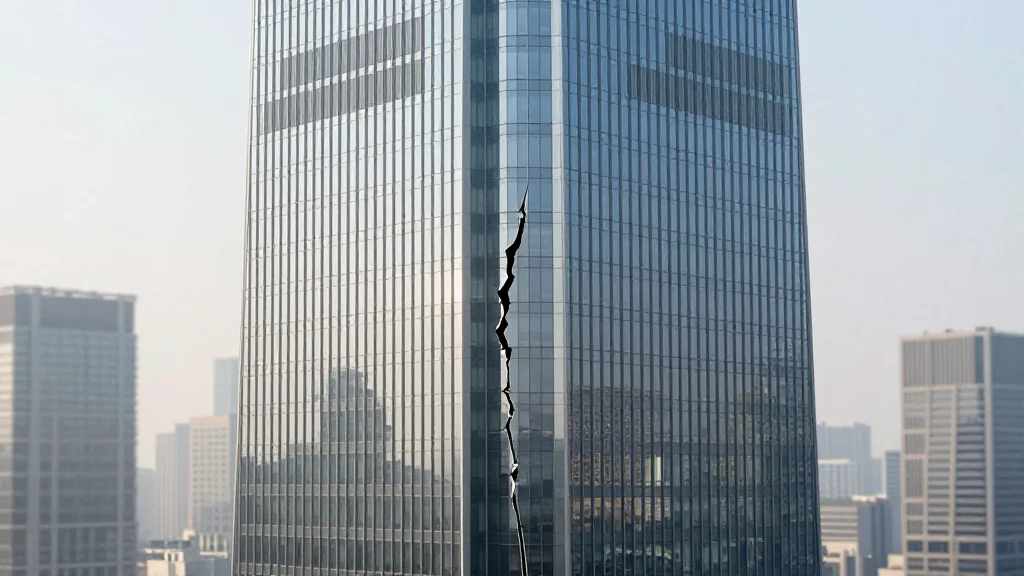
US Lenders Write Down Up to 85% on Distressed Commercial‑Real‑Estate Loans

Companies Mentioned
Why It Matters
The aggressive write‑downs mark a turning point for commercial‑real‑estate finance, ending a period where lenders avoided confronting loan defaults. By recognizing losses, banks can clean up balance sheets, potentially restoring confidence among investors and allowing capital to flow into healthier projects. At the same time, the move tightens credit for borrowers still dependent on refinancing, raising the risk of further defaults in sectors such as office and multifamily housing. For investors, the influx of distressed assets at steep discounts creates a new arena for value‑oriented strategies, but also heightens the importance of due diligence as property valuations remain volatile. Policymakers may need to monitor the fallout to ensure that credit contraction does not exacerbate broader economic slowdown, especially in regions heavily exposed to office‑space overbuilding.
Key Takeaways
- •Goldman Sachs, Deutsche Bank and others are writing down up to 85% on distressed CRE loans.
- •More than $130 billion of U.S. commercial‑real‑estate debt is classified as distressed.
- •Office CMBS delinquency rates have risen above 12%, surpassing crisis‑era levels.
- •Ready Capital aims to sell $1.5 billion of legacy loans, including a 30%‑discount apartment pool.
- •Netflix is negotiating to buy the Radford Studio Center at a fraction of its $1.85 billion 2021 price.
Pulse Analysis
The current wave of loan write‑downs reflects a broader shift from a balance‑sheet‑preserving mindset to one focused on risk mitigation. Historically, banks have been reluctant to acknowledge large CRE losses, preferring to extend maturities in hopes of a market rebound. The pandemic accelerated structural changes—remote work, oversupply of office space, and higher interest rates—that made the “extend‑and‑pretend” strategy untenable. By finally taking the hit, lenders can reallocate capital toward emerging opportunities, such as life‑science labs, data centers, and logistics facilities that have shown resilience.
However, the transition carries short‑term pain. As lenders pursue foreclosures and forced sales, property prices could dip further, especially in overbuilt office markets. This creates a feedback loop: lower prices increase loan‑to‑value gaps, prompting more write‑downs. The key for the market will be the speed at which new capital—both domestic and foreign—steps in to purchase distressed assets. If investors can absorb the supply without driving prices down to unsustainable levels, the sector may stabilize within a year. Conversely, a prolonged credit crunch could delay recovery, extending the period of low transaction volume and heightened default risk.
Regulators and policymakers will likely watch the situation closely. While forced losses improve transparency, they also raise concerns about systemic risk if a wave of defaults spreads to smaller regional banks. Targeted measures, such as easing capital requirements for high‑quality CRE loans or providing liquidity facilities for distressed borrowers, could smooth the adjustment. Ultimately, the market’s ability to reset valuations and re‑price risk will determine whether the current turmoil becomes a catalyst for a healthier, more diversified CRE landscape or a prolonged drag on economic growth.
US Lenders Write Down Up to 85% on Distressed Commercial‑Real‑Estate Loans
Comments
Want to join the conversation?
Loading comments...