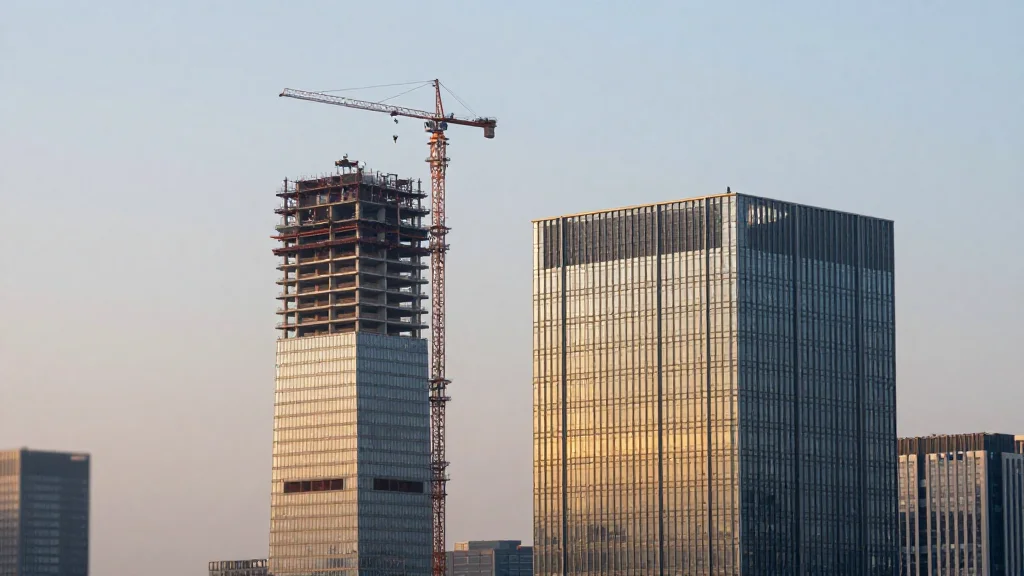
U.S. Office Construction Hits 14‑Year Low as Tenant Concessions Surge

Companies Mentioned
Why It Matters
The plunge in office construction signals a fundamental shift in commercial real estate supply dynamics, forcing investors to reassess exposure to new‑development risk. Elevated tenant‑improvement allowances indicate that landlords are willing to sacrifice rent growth to retain occupancy, a trend that could compress net operating incomes for existing assets. Moreover, the concentration of new builds in Sunbelt metros creates regional supply gluts that may depress local rent trajectories, while the flight‑to‑quality reinforces the premium on well‑located, amenity‑rich properties. Together, these forces reshape valuation models and capital allocation strategies for office‑focused funds. For capital providers, the data suggest tighter underwriting standards for speculative office projects and a heightened focus on tenant credit quality. The modest vacancy improvement, paired with continued concession spending, also raises questions about the durability of the current leasing momentum. Stakeholders will need to balance the short‑term relief from lower vacancy against the long‑term implications of a constrained development pipeline and the evolving hybrid‑work paradigm.
Key Takeaways
- •Office construction under way drops to 17.2 M sq ft, the lowest level in 14 years.
- •Tenant‑improvement allowances are about 75% higher than pre‑pandemic levels.
- •Leasing volume rose 7.5% YoY while vacancy slipped to 20.2% in Q1 2026.
- •Four‑ and five‑star buildings captured >50% of Q1 leasing activity.
- •Sunbelt metros (Dallas, Miami, San Diego) account for >50% of under‑construction office space.
Pulse Analysis
The Newmark report underscores a market that is no longer driven by new supply but by the economics of retaining existing tenants. Historically, office cycles have been marked by periods of aggressive development followed by a lagged correction. This time, the correction arrived early, with developers pulling back as vacancy peaked above 20%. The result is a supply‑side shock that, paradoxically, may protect existing assets from further vacancy erosion, provided landlords can continue to subsidize deals with concessions.
From an investment standpoint, the premium on high‑quality assets is likely to persist. Capital will chase buildings that can command higher rents with fewer concessions, reinforcing the concentration of investment in core markets and premium properties. Meanwhile, developers in oversupplied Sunbelt corridors may face heightened financing costs and longer lease-up periods, prompting a strategic pivot toward adaptive reuse or mixed‑use conversions.
Looking forward, the key variable will be employer demand for space. If hybrid work solidifies, average space per employee may continue to shrink, keeping lease sizes modest and sustaining the need for tenant improvements. Conversely, a shift back to more traditional office usage could revive rent growth, but only after the concession cycle unwinds. Investors should therefore monitor concession trends, vacancy trajectories in Sunbelt markets, and the pace of high‑quality asset absorption as leading indicators of the sector’s next inflection point.
U.S. Office Construction Hits 14‑Year Low as Tenant Concessions Surge
Comments
Want to join the conversation?
Loading comments...