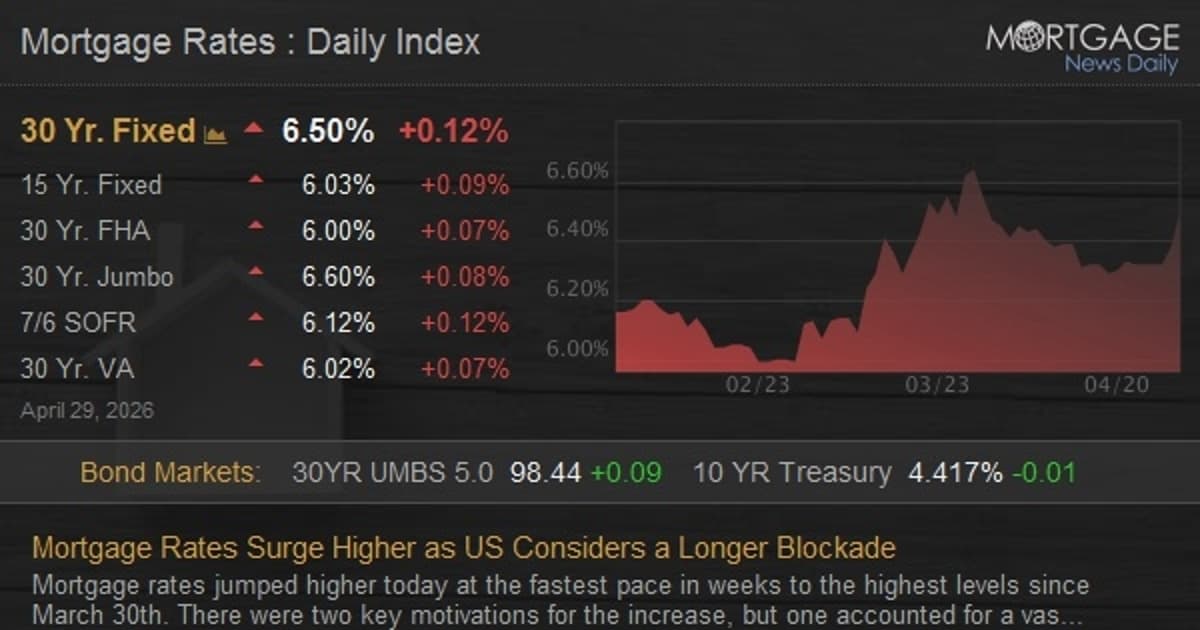
Mortgage Rates Surge Higher as US Considers a Longer Blockade
Key Takeaways
- •30‑year fixed mortgage rates rose to 6.50% after overnight jump
- •Rates spiked due to Strait of Hormuz blockade concerns affecting oil markets
- •Fed statement dissent added minor negative pressure, but 80% of rise pre‑Fed
- •Bond yields and oil prices climbed together, driving mortgage rate increase
- •Lenders adjusted rates upward mid‑day as Treasury yields kept rising
Pulse Analysis
The latest surge in mortgage rates underscores how quickly external shocks can ripple through the U.S. credit market. When news of a possible prolonged blockade of the Strait of Hormuz emerged, oil prices jumped, prompting a parallel rise in Treasury yields. Since bond yields are a benchmark for mortgage pricing, the 30‑year fixed rate climbed to 6.50%, a level not seen since late March. This episode illustrates the tight coupling between geopolitical risk, energy markets, and the cost of home financing.
Even though the Federal Reserve left policy unchanged, the tone of its statement sparked a modest market reaction. Three Fed voters publicly disagreed with language that suggested a bias toward future rate cuts, injecting uncertainty about the central bank’s path. Nonetheless, analysts estimate that more than four‑fifths of the rate spike had already materialized before the Fed comment, indicating that bond market dynamics—driven by oil‑price volatility—were the dominant force. The episode highlights how monetary‑policy signals can be quickly eclipsed by real‑time market stressors.
For borrowers, the immediate impact is higher monthly payments, which can dampen demand for new mortgages and refinance activity. Lenders responded by adjusting rates upward throughout the day, reflecting the continued upward pressure on Treasury yields. If oil‑price volatility persists or if the Fed adopts a more hawkish stance, mortgage rates could stay elevated, tightening credit conditions for homebuyers and potentially slowing the broader housing market recovery. Stakeholders should monitor both geopolitical developments and Fed communications as key drivers of future rate movements.
Mortgage Rates Surge Higher as US Considers a Longer Blockade
Comments
Want to join the conversation?