Builders Identify Key Long-Term Forces Shaping Housing Demand and Industry Health
•March 5, 2026
0
Why It Matters
The contrast between demographic headwinds and technology‑driven opportunities forces builders to rethink financing, product mix, and operational efficiency to remain profitable in a shifting market.
Key Takeaways
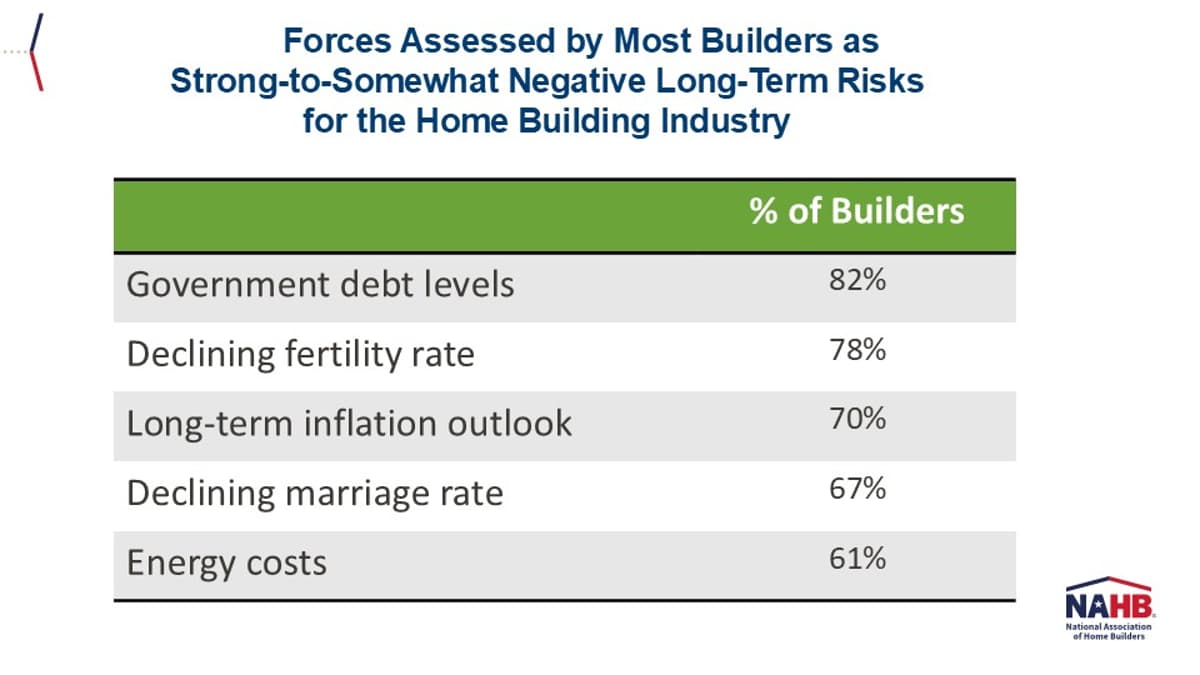
- •Government debt seen as top long-term risk
- •Declining fertility and marriage reduce future demand
- •Aging housing stock creates renovation opportunities
- •Remote work fuels demand for larger homes
- •AI and modular construction boost efficiency
Pulse Analysis
Builders are confronting a perfect storm of macroeconomic and demographic pressures that could suppress new‑home demand. High sovereign debt levels raise borrowing costs, while a sustained decline in fertility and marriage rates trims the pool of first‑time buyers. Long‑term inflation expectations and volatile energy prices further erode affordability, compelling developers to tighten margins and seek alternative financing structures. These headwinds underscore the need for strategic risk management and a focus on cost‑effective design.
At the opposite end of the spectrum, an aging housing inventory presents a sizable renovation market, especially as homeowners seek to modernize older properties. The work‑from‑home revolution has amplified demand for larger, flexible floor plans, driving suburban and ex‑urban growth. Builders that can pivot to retrofit projects and offer adaptable spaces stand to capture higher margins, while also addressing sustainability goals by extending the life of existing structures.
Technology is emerging as a decisive differentiator. Artificial intelligence tools are streamlining site selection, pricing models, and supply‑chain logistics, reducing time‑to‑market. Meanwhile, modular and panelized construction methods promise lower labor dependence and faster build cycles, mitigating the impact of skilled‑worker shortages. Companies that integrate AI‑driven analytics with off‑site manufacturing are poised to improve productivity, lower costs, and meet evolving consumer preferences, positioning themselves for long‑term resilience.
Builders Identify Key Long-Term Forces Shaping Housing Demand and Industry Health
0
Comments
Want to join the conversation?
Loading comments...