Chinese Curbs Risk Derailing Record Hong Kong Home-Buying Spree
Why It Matters
Stricter mainland capital controls could dampen a key source of demand, reshaping Hong Kong’s real‑estate dynamics and affecting price growth.
Key Takeaways
- •Mainland buyers spent HK$43 bn ($5.5 bn) in Q1 2026
- •Record Q1 spending eclipses previous Hong Kong home‑buying peaks
- •New capital controls tighten overseas cash transfers for wealthy mainlanders
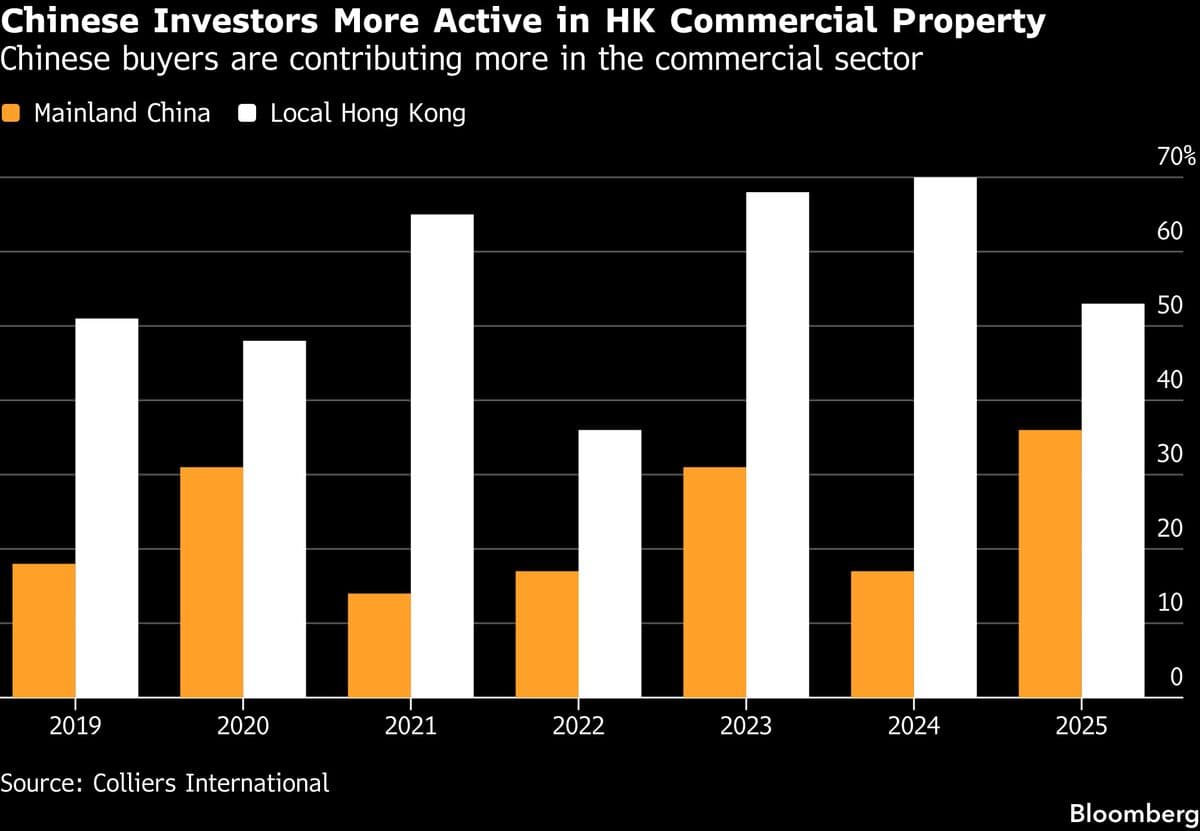
- •Buyers shift toward two‑bedroom units and office‑block shares
- •Potential slowdown could curb Hong Kong’s property price rally
Pulse Analysis
Hong Kong’s property market has long relied on affluent mainland buyers, and the first‑quarter surge to HK$43 billion ($5.5 billion) underscores that dependence. Data from Midland Realty show the cohort is no longer confined to luxury villas; they are diversifying into mid‑range two‑bedroom flats and even acquiring slices of office towers. This broadened appetite has helped sustain price gains across both residential and commercial segments, reinforcing Hong Kong’s reputation as a safe haven for cross‑border capital.
The Chinese government’s recent tightening of capital‑outflow rules targets high‑net‑worth individuals seeking to move large sums abroad. By imposing stricter reporting requirements and lowering thresholds for overseas transfers, Beijing aims to preserve foreign‑exchange reserves and curb speculative outflows. For mainland investors, the new regime adds compliance costs and uncertainty, making rapid, cash‑heavy purchases of Hong Kong assets less attractive. The policy shift arrives at a time when global investors are already cautious about geopolitical risk, potentially accelerating a slowdown in cross‑border real‑estate flows.
If mainland cash inflows recede, Hong Kong’s property market could face a dual‑edged challenge. Residential price growth may decelerate, especially in the mid‑tier segments that have benefited most from recent mainland demand. Commercial landlords could see reduced appetite for office‑block stakes, pressuring yields and prompting developers to reassess project pipelines. Market participants will be watching policy signals closely, as any prolonged restriction could reshape investment strategies and alter the city’s long‑standing real‑estate trajectory.
Chinese Curbs Risk Derailing Record Hong Kong Home-Buying Spree
Comments
Want to join the conversation?
Loading comments...