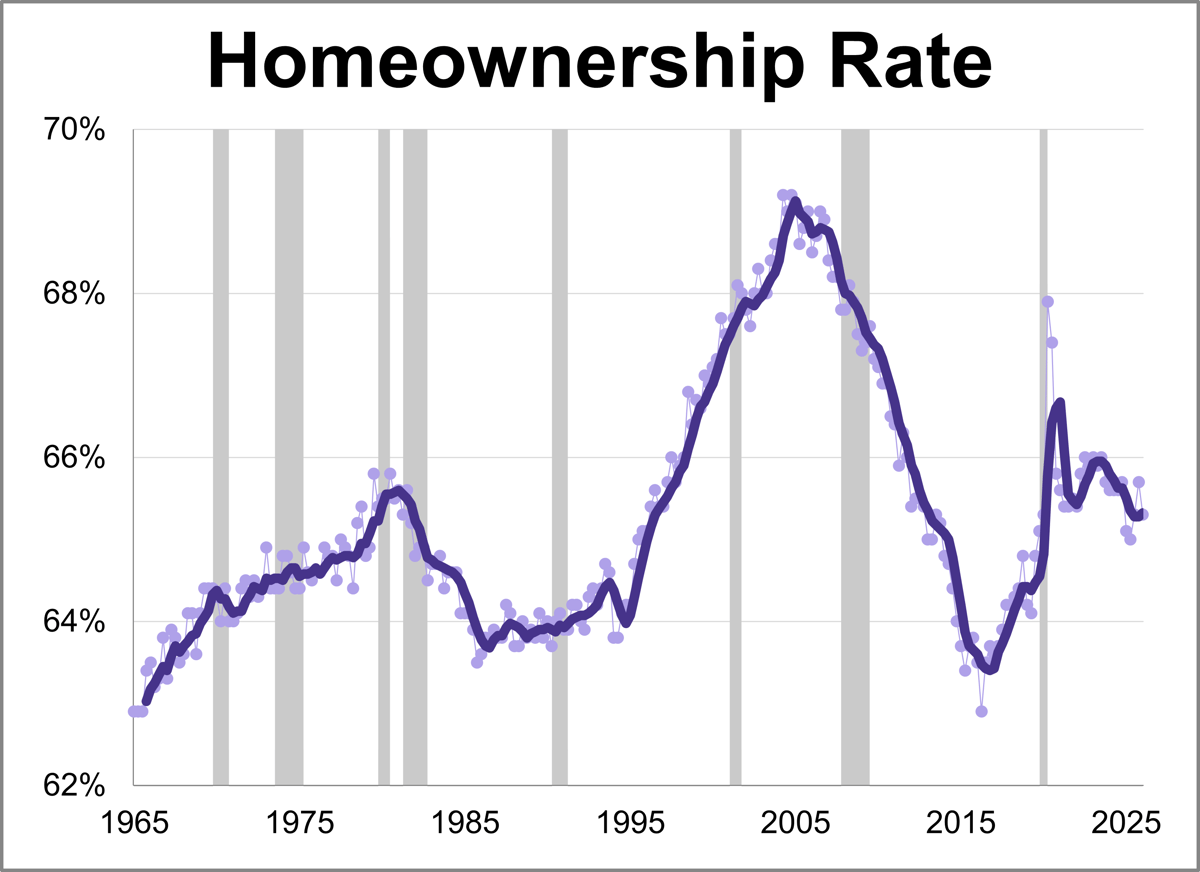
Home Ownership Rate at 65.3% in Q1 2026
Why It Matters
A slipping ownership rate signals tighter credit conditions and reduced demand for new construction, which can ripple through the housing‑related sectors and broader economy. Investors and policymakers watch these metrics to gauge affordability stress and potential shifts in consumer spending.
Key Takeaways
- •Homeownership rate fell to 65.3% in Q1 2026.
- •Rate down 0.4 percentage points from Q4 2025.
- •Rental vacancy stable at 7.3%; homeowner vacancy at 1.1%.
- •Elevated mortgage rates and limited entry‑level supply constrain buyers.
- •U.S. ownership sits between China’s 96% and Switzerland’s 42.3%.
Pulse Analysis
The latest Census Bureau figures show the U.S. homeownership rate edging lower to 65.3% in early 2026, a modest but notable retreat from the previous quarter. While the dip is statistically insignificant, the trend underscores a broader stabilization after the pandemic‑driven surge when low consumer spending briefly boosted ownership. Vacancy metrics suggest the rental market remains healthy, with a 7.3% vacancy rate, whereas owner‑occupied homes stay tightly occupied at just 1.1% vacancy, reflecting limited turnover.
Underlying the plateau are three macro forces. First, the Federal Reserve’s policy stance has kept mortgage rates elevated, squeezing monthly payments for prospective buyers. Second, home price appreciation outpaces wage growth, especially in entry‑level segments where supply constraints are most acute. Third, demographic shifts—aging baby boomers staying put and millennials delaying purchases—reduce the pool of first‑time buyers. Together, these dynamics dampen demand and keep the ownership rate anchored in the mid‑60s, a level that has persisted for several quarters.
For investors, the data signal a cautious outlook for residential real‑estate equities and related ETFs such as iShares REZ. Lower turnover can pressure rental yields, but steady vacancy rates keep cash flow stable for landlords. Policymakers may need to address supply bottlenecks through zoning reforms or incentives for affordable housing construction to revive ownership growth. Monitoring the homeownership metric will remain essential for gauging the health of the housing market and its spillover effects on consumer confidence and financial stability.
Home Ownership Rate at 65.3% in Q1 2026
Comments
Want to join the conversation?
Loading comments...