Mortgage Rates Climb as Inflation Rebounds and Yields Rise
Companies Mentioned
Why It Matters
Higher mortgage rates increase borrowing costs, pressuring the housing market, while the Fed’s policy stance and potential shift to trimmed‑mean inflation could reshape monetary guidance and market expectations.
Key Takeaways
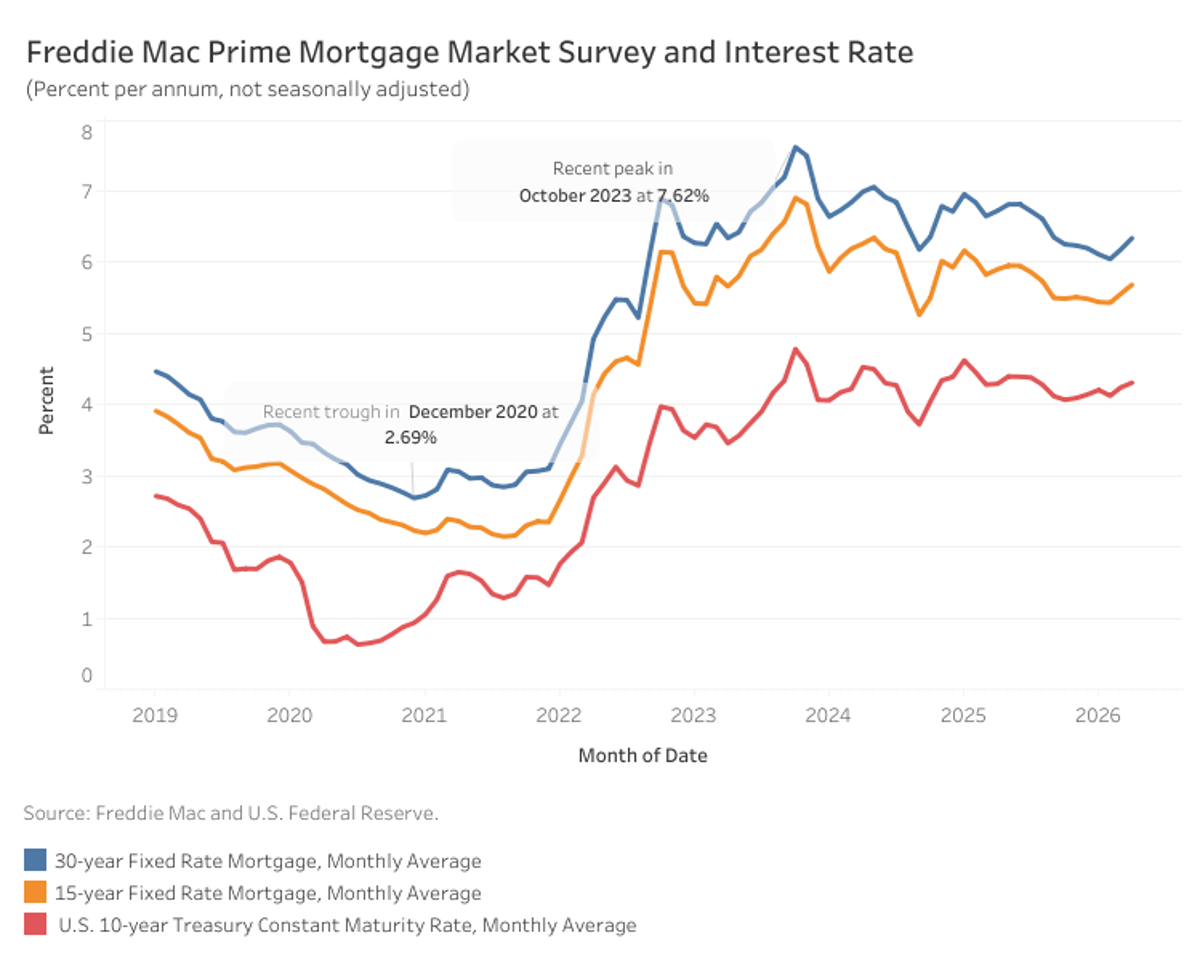
- •30‑yr mortgage hit 6.34%, up 16 bps from March.
- •10‑yr Treasury yield rose to 4.31%, supporting higher mortgage rates.
- •Inflation climbed to 3.3% as oil stays above $100 per barrel.
- •Fed funds steady at 3.5‑3.75% while chair transition looms.
- •Nominee Warsh prefers trimmed‑mean inflation metrics over headline rates.
Pulse Analysis
The latest rise in mortgage rates reflects a confluence of market forces. As the 10‑year Treasury yield edged higher to 4.31%, lenders adjusted pricing, pushing the 30‑year fixed‑rate mortgage above 6%. Borrowers now face steeper monthly payments, which could dampen demand for new homes and refinance activity. At the same time, persistent geopolitical risk in the Strait of Hormuz has kept crude oil above the $100 mark, feeding through to consumer‑price inflation and reinforcing upward pressure on rates.
Inflation’s rebound to 3.3% underscores the energy sector’s outsized influence, with fuel‑oil and gasoline surging over 30% and 20% respectively. The Federal Reserve, however, chose to leave its policy range unchanged at 3.5‑3.75%, signaling confidence that current rates are sufficient to temper price growth without derailing economic expansion. Jerome Powell’s imminent departure adds an element of uncertainty, but the market is already focusing on his successor, Kevin Warsh, who has advocated for trimmed‑mean inflation measures that strip out extreme price swings. This alternative gauge showed a 2.3% pace in February, well below the headline PCE readings.
Warsh’s emphasis on trimmed‑mean metrics could shift how the Fed communicates inflation risk, potentially leading to a more nuanced policy narrative. For mortgage borrowers and investors, such a shift may translate into a slower pace of rate hikes if trimmed‑mean data suggest underlying price stability. Nonetheless, the interplay between Treasury yields, oil‑driven inflation, and Fed policy will continue to dictate mortgage pricing, making close monitoring of both market and regulatory signals essential for stakeholders in the housing finance ecosystem.
Mortgage Rates Climb as Inflation Rebounds and Yields Rise
Comments
Want to join the conversation?
Loading comments...