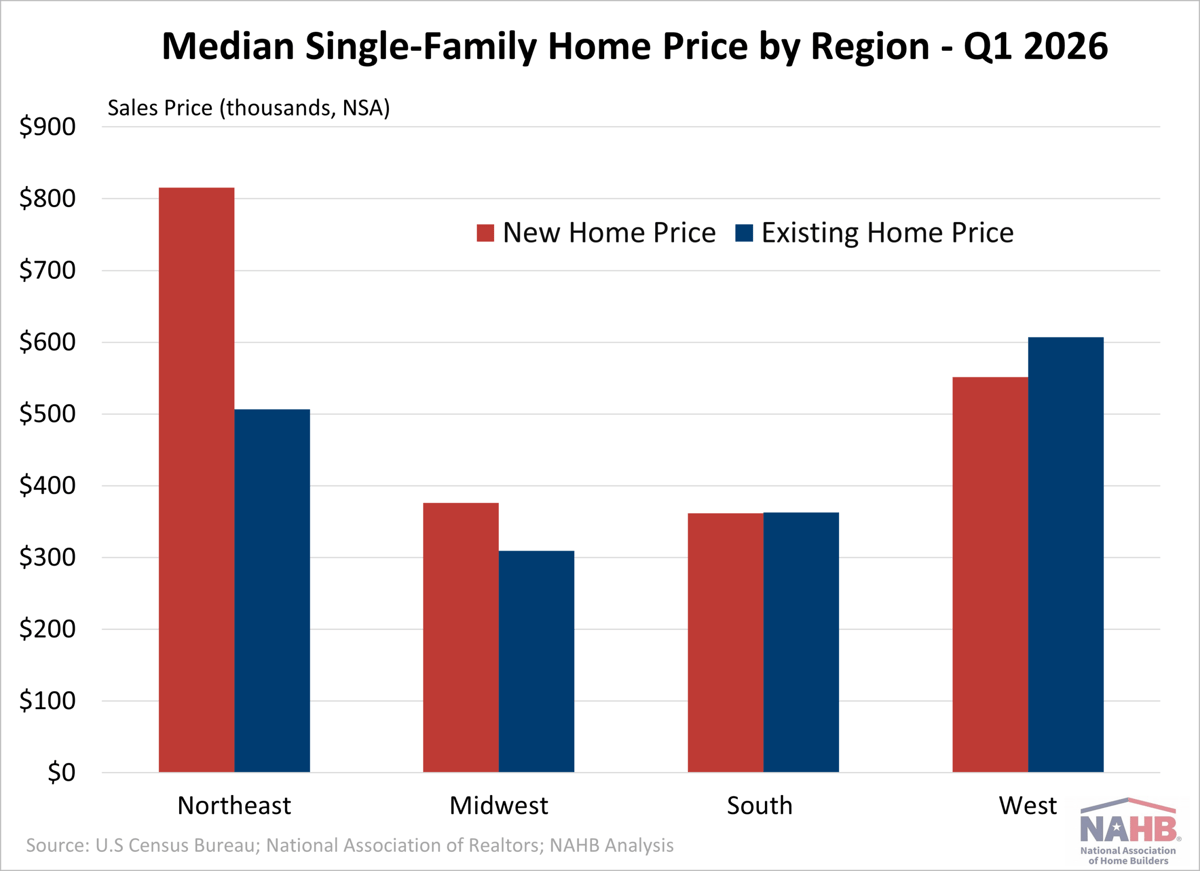
New Home Vs. Existing Home Prices in Q1 2026
Why It Matters
The narrowing gap signals shifting affordability dynamics and builder strategies, while persistent price strength in existing homes underscores tight inventory and rate‑lock effects, influencing buyer decisions and mortgage markets.
Key Takeaways
- •Existing home median price $404,600 exceeds new homes by $1,400.
- •New home price growth fell 4.7% YoY, lowest since 2023 Q2.
- •Builders cut lot sizes and offer incentives to curb affordability gap.
- •South remains cheapest region for new homes at $361,800 median.
Pulse Analysis
The latest Census and NAR data reveal a rare inversion in the traditional new‑home premium, with existing‑home prices now edging out new construction in most quarters. This shift stems from a combination of builder‑driven price moderation—smaller lots, reduced square footage, and targeted incentives—and a lingering scarcity of resale inventory as homeowners cling to pandemic‑era low rates. For lenders and investors, the convergence of price points suggests tighter margins for builders but a more resilient resale market that can sustain modest appreciation despite higher borrowing costs.
Regional disparities further illuminate the market’s complexity. The South continues to offer the most affordable new‑home options at a median of $361,800, driven by lower land costs and policy incentives that attract builders. Conversely, the Northeast commands a premium, with new homes averaging $815,600—over $300,000 above comparable existing homes—reflecting higher construction costs and limited developable land. The West and Midwest sit between these extremes, with the West leading resale prices at $607,000 while maintaining relatively lower new‑home costs, highlighting the role of geographic supply constraints.
Looking ahead, the trajectory of new‑home pricing will likely hinge on how builders balance cost pressures with consumer demand for affordability. Continued moderation in new‑home prices could keep the market accessible for first‑time buyers, but persistent inventory tightness in the resale sector may keep existing‑home values buoyant. Stakeholders—from developers to mortgage lenders—should monitor inventory trends, interest‑rate movements, and regional policy shifts, as these factors will shape the next cycle of price dynamics across the U.S. housing landscape.
New Home vs. Existing Home Prices in Q1 2026
Comments
Want to join the conversation?
Loading comments...