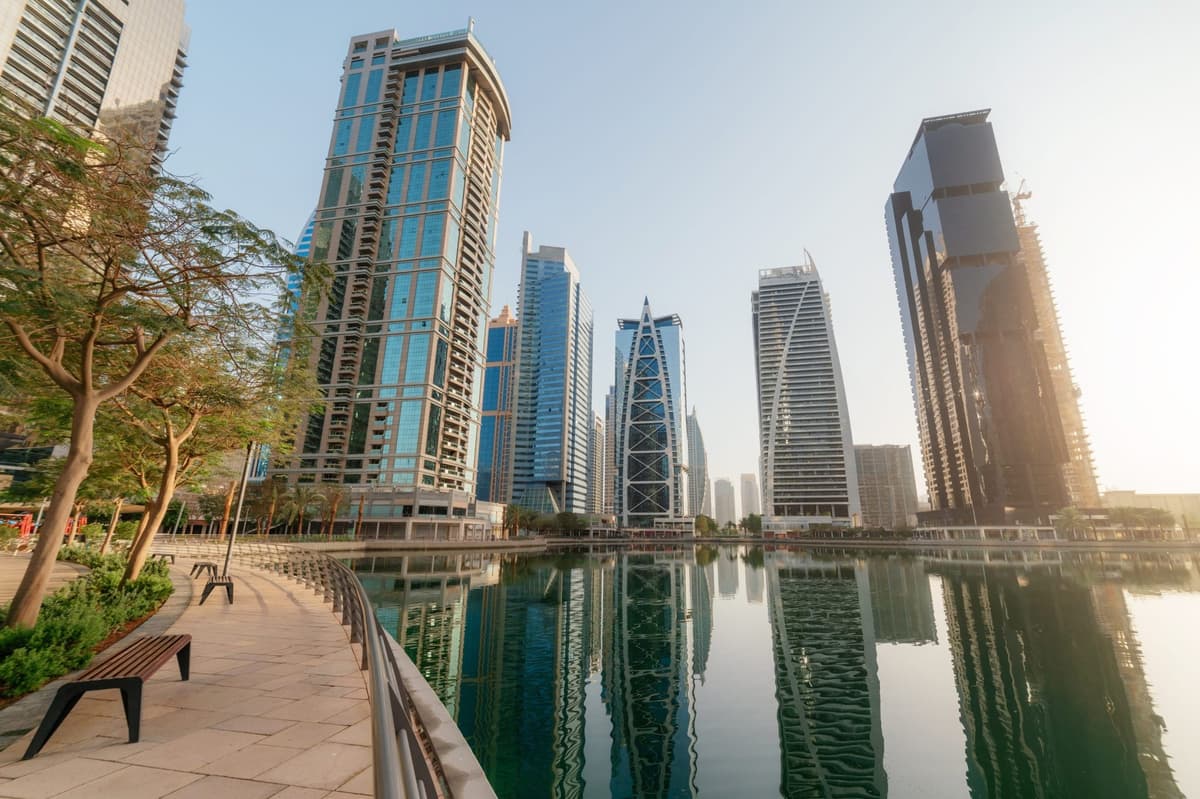
Property Prices Are Down in Dubai. Is It a War-Induced Blip, or Something More Serious?
Companies Mentioned

Why It Matters
The slowdown threatens the credit quality of UAE banks and could delay Dubai’s ambitious development pipeline, undermining the emirate’s growth model that relies on high‑net‑worth inflows and real‑estate‑linked visas.
Key Takeaways
- •Transaction volume fell 37% YoY and 49% MoM in early March.
- •Fitch now expects a correction larger than the previously forecast 15%.
- •Corporate real estate loans are 13% of UAE banks’ books, raising risk.
- •Off‑plan sales dropped 21% MoM, with secondary prices 10‑15% below original.
- •Dubai removed the AED750k minimum for residency visas to spur lower‑end demand.
Pulse Analysis
Dubai’s property boom—fuelled by tax‑free incentives, liberal visa rules and a flood of high‑net‑worth buyers—propelled residential prices up about 60% from 2022 to early 2025. That momentum hit a wall when the Iran conflict erupted, prompting daily missile alerts and a sharp 37% YoY, 49% MoM decline in transaction volumes during the first half of March. The market’s confidence dip was masked by a headline‑making AED 400 m ($100 m) land deal, but the underlying data signal a broader correction that could outpace earlier forecasts.
Credit analysts are now focused on the banking sector’s exposure to corporate real‑estate loans, which account for roughly 13% of UAE banks’ loan books. These loans often carry long tenors and balloon‑payment structures, making them vulnerable when property values slide. Fitch warns that, if the conflict endures, corporate real‑estate could generate the bulk of new Stage 3 (credit‑impaired) loans—mirroring patterns seen in the 2008 financial crisis and the pandemic. Meanwhile, the off‑plan segment, historically dominated by overseas investors, saw a 21% month‑on‑month drop, with secondary resale prices 10‑15% below original values, amplifying distress among speculative buyers.
Supply‑side pressures add another layer of risk. Dubai still has an estimated 65,000 apartments and 12,500 villas slated for delivery by year‑end, though many may be delayed to 2027 due to supply‑chain bottlenecks. To stimulate demand, authorities scrapped the AED 750,000 ($204,000) minimum property value required for a two‑year residency visa, aiming to attract lower‑end buyers. Yet the longer‑term outlook remains uncertain: reduced expatriate inflows, weaker tourism, and potential debt stress on government‑linked developers like Nakheel and Emaar could dampen growth. The market’s post‑2009 regulatory upgrades have improved transparency, but sustained geopolitical tension could still test Dubai’s resilience.
Property prices are down in Dubai. Is it a war-induced blip, or something more serious?
Comments
Want to join the conversation?
Loading comments...