Rent Prices Continue to Rise, While Absorption Remains Low
Why It Matters
The lagging short‑term absorption signals excess supply, pressuring rents and developers’ cash flow, while rising rents suggest demand resilience. Investors and builders must weigh slower leasing against higher price points when planning new projects.
Key Takeaways
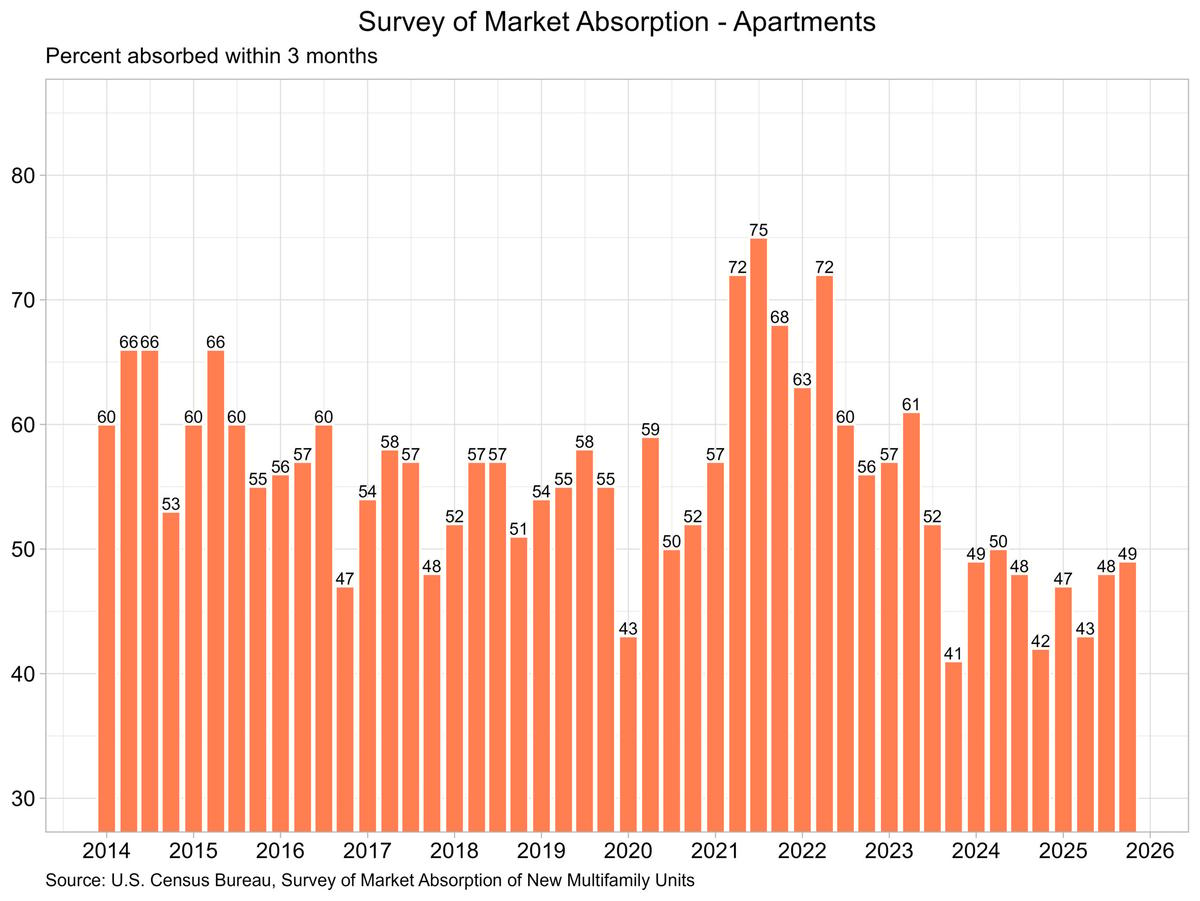
- •Apartment 3‑month absorption fell below 50% for sixth quarter
- •Median asking rent topped $2,000, up 4.5% YoY
- •New multifamily completions hit 77,380, lowest since Q2 2022
- •Six‑month absorption reached 68%, indicating slower leasing pace
- •Condos/co‑ops saw 70% three‑month absorption, higher than apartments
Pulse Analysis
The latest Census Bureau Survey of Market Absorption (SOMA) underscores a widening gap between unit supply and immediate demand. While 49% of Q4 2025 apartments were leased within three months—a six‑quarter streak below the 50% benchmark—longer‑term absorption remains robust, with 68% taken up after six months and 90% after a year. This pattern reflects developers’ aggressive pipeline that outpaces short‑term tenant appetite, especially as the market absorbs a modest 77,380 new multifamily units, the lowest quarterly finish since mid‑2022.
Rent dynamics add another layer of nuance. Median asking rent for newly completed apartments jumped 4.5% year‑over‑year to $2,034, breaking the psychological $2,000 barrier for the first time. Higher rents signal that underlying demand remains solid, but they also raise affordability concerns for renters, potentially nudging some households toward older stock or suburban alternatives. For investors, the rent uplift offsets some of the cash‑flow strain caused by slower initial leasing, yet the balance between rent growth and vacancy risk remains delicate.
Looking ahead, developers may recalibrate project timing and unit mix to align with evolving absorption trends. The stronger three‑month absorption rate for condominiums and co‑ops—70% on 4,831 completions—suggests that ownership‑oriented products are faring better in the near term. Policymakers monitoring housing affordability will likely keep an eye on these metrics, as prolonged low short‑term absorption could pressure municipal revenues tied to construction activity while higher rents intensify calls for affordable‑housing incentives. Stakeholders should therefore monitor both absorption timelines and rent trajectories to navigate the nuanced market landscape.
Rent Prices Continue to Rise, While Absorption Remains Low
Comments
Want to join the conversation?
Loading comments...