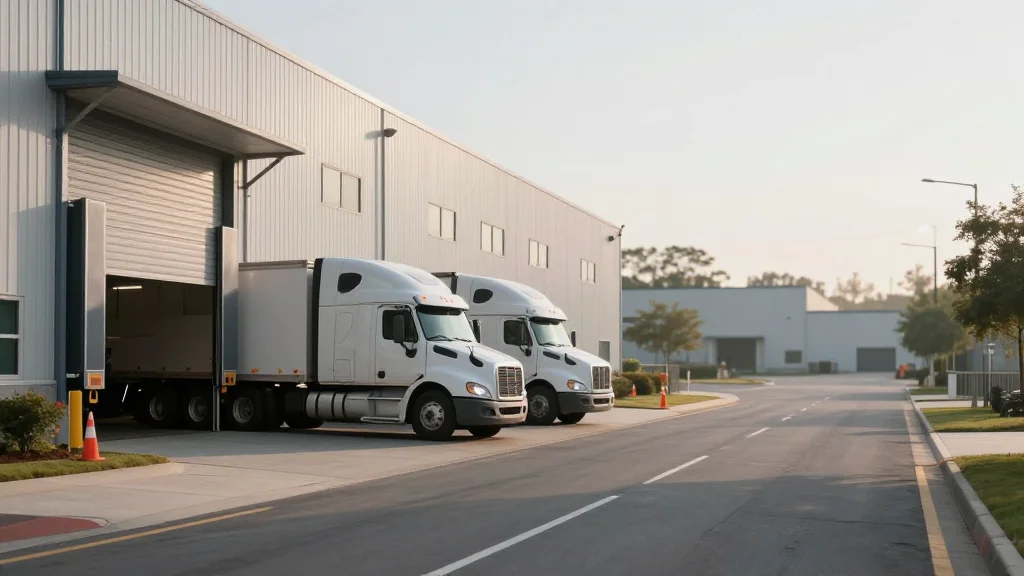
Safety Concerns Mount as Chicago Suburbs’ Warehouse Boom Spurs Truck Crashes

Companies Mentioned

Why It Matters
The safety and infrastructure challenges emerging in Chicago’s warehouse corridor illustrate a broader tension in industrial real‑estate development: rapid expansion can outpace public‑sector capacity to maintain roads and protect communities. If left unchecked, the mounting crash rates and repair costs could erode public support for future logistics projects, prompting stricter zoning rules or higher fees for developers. Conversely, proactive investment in road upgrades and safety programs could set a template for other fast‑growing logistics hubs across the United States. For investors, the situation signals that the profitability of warehouse assets may increasingly be linked to how well developers and tenants address externalities. Projects that incorporate dedicated truck routes, advanced traffic‑management technology, or community‑benefit agreements may gain a competitive edge, while those that ignore local impact could face regulatory headwinds and reputational risk.
Key Takeaways
- •146 million sq ft of warehouse space built near Chicago since 2000 (≈1,400 Home Depots).
- •≈20,000 trucks pass through Joliet daily; 6,400 use local roads, a >5× increase.
- •Truck‑related crashes rose 8% from 2021‑2024 versus 2016‑2019 baseline.
- •Average of 550 injuries per year and one fatality per month from truck crashes.
- •Local governments face millions in road‑repair costs tied to the warehouse boom.
Pulse Analysis
The Chicago warehouse surge is a textbook case of how logistics‑driven real‑estate can generate external costs that quickly become political flashpoints. Historically, industrial parks were sited on peripheral land with minimal residential exposure. Today, the “last‑mile” model pushes massive distribution centers into semi‑urban corridors, where existing road networks were never designed for constant semi‑truck traffic. The 8% rise in crashes, despite flat statewide truck‑accident trends, suggests that congestion and local‑road usage are the primary drivers, not driver behavior alone.
Investors should watch how municipalities respond. If counties begin to levy impact fees or require developers to fund dedicated truck lanes, the economics of new warehouse projects could shift, potentially slowing the pace of square‑foot growth. On the other hand, retailers may push for public‑private partnerships that spread costs, preserving the low‑cost land advantage that has made the Chicago suburbs so attractive. The outcome will likely influence capital allocation across the industrial REIT sector, with a premium placed on assets that demonstrate robust safety and infrastructure planning.
Finally, the human stories—like that of Ian Hunnicutt—serve as a reminder that data points translate into community trauma. As public sentiment hardens, developers that embed community‑benefit clauses, such as funding for local schools or traffic‑calming measures, could differentiate themselves in a crowded market. The Chicago case may become a bellwether for how the industry balances speed of delivery with the social license to operate.
Safety Concerns Mount as Chicago Suburbs’ Warehouse Boom Spurs Truck Crashes
Comments
Want to join the conversation?
Loading comments...