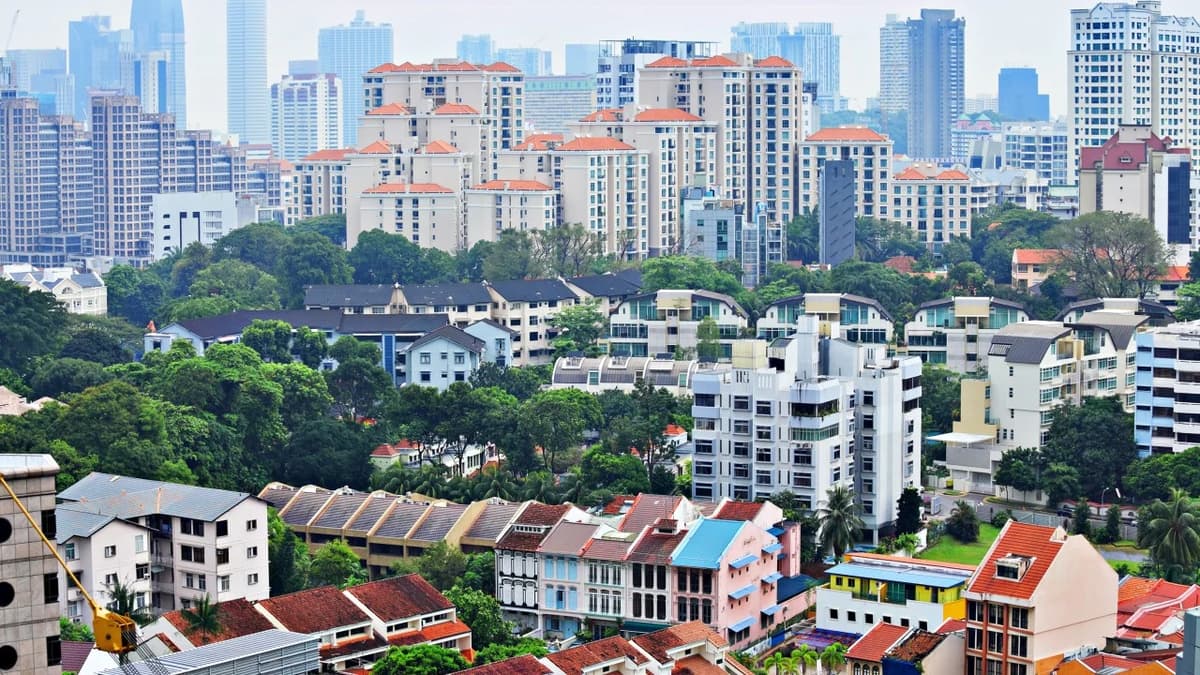
Singapore’s Safe-Haven Status Draws More Chinese Capital Into Property Sector
Companies Mentioned

Why It Matters
The influx of Chinese capital strengthens Singapore’s residential pipeline and underscores the city‑state’s role as a safe‑haven for distressed mainland developers, influencing both local housing supply and cross‑border financial risk management.
Key Takeaways
- •Chinese investors accounted for 21% of Singapore's 2025 fixed‑asset investment
- •Land‑banking bids rose to 5.35 per site in 2025
- •Major residential deals total over S$2.4 billion (~US$1.8 billion)
- •Chinese firms remain less active in Singapore's commercial property market
- •Overseas assets cushion Chinese developers but are tiny versus liabilities
Pulse Analysis
Singapore’s reputation as a stable, rule‑based market has turned it into a magnet for Chinese developers seeking to diversify away from a domestic slump. In 2025, mainland firms accounted for more than one‑fifth of all fixed‑asset investment, second only to Europe, while U.S. participation fell sharply. This shift reflects both macro‑economic pressures in China and the allure of Singapore’s transparent land‑sale process, which offers developers a predictable avenue to expand their land banks.
The residential sector has absorbed the bulk of Chinese interest, with marquee transactions such as the S$951 million (≈US$704 million) Dover Drive acquisition and the S$918 million (≈US$680 million) Telok Blangah purchase. These deals are expected to deliver over 1,200 new units, feeding a market that currently enjoys low vacancy rates and strong buyer demand. The heightened competition—average bidders per site climbing to 5.35—has pushed up land prices, prompting local developers to sharpen their bidding strategies and potentially accelerate project timelines to meet demand.
Beyond pure investment, Chinese developers view overseas assets as a strategic hedge against creditor actions at home. Holding property abroad can simplify asset seizure for international lenders, though the scale remains modest relative to the massive debt loads many Chinese builders carry. While offshore holdings provide a safety net, they also expose developers to execution risk in unfamiliar markets. As China’s real‑estate sector continues to grapple with liquidity challenges, the appetite for Singaporean land is likely to stay robust but measured, balancing the pursuit of stable returns with the realities of limited capital and tighter financing conditions.
Singapore’s safe-haven status draws more Chinese capital into property sector
Comments
Want to join the conversation?
Loading comments...