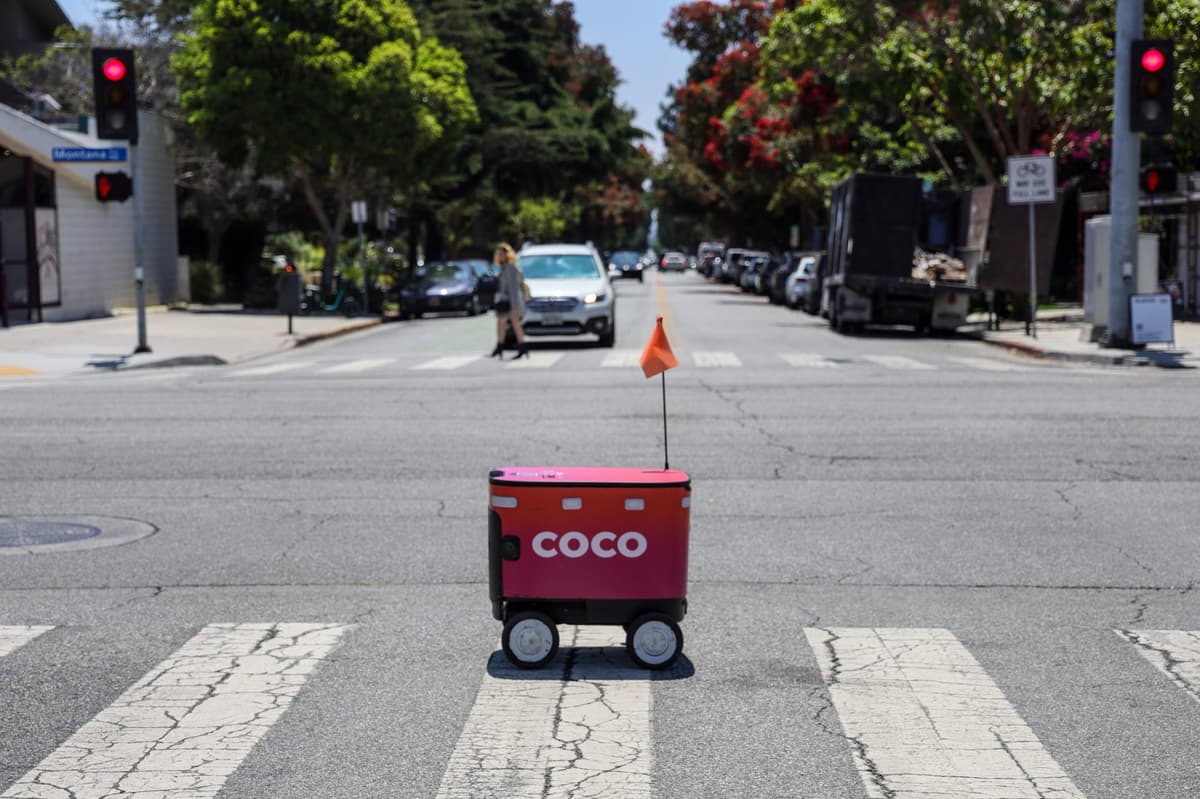
Exclusive: Your Delivery Robot Will Now Offer the Blind Real-Time, On-the-Ground Eyes Around Sidewalk Hazards
Companies Mentioned
Why It Matters
The partnership turns commercial delivery robots into a public‑benefit sensor network, dramatically improving navigation safety for blind pedestrians while giving cities fresher sidewalk data without additional infrastructure costs.
Key Takeaways
- •Coco operates ~10,000 delivery robots in US and Europe
- •Real‑time hazard data now feeds BlindSquare’s navigation app
- •Alerts warn blind users 10 m before obstacles in 26 languages
- •Two‑way data loop lets users confirm cleared hazards, improving maps
- •Cities gain up‑to‑date sidewalk maps without building new infrastructure
Pulse Analysis
The collaboration between Coco Robotics and BlindSquare marks a pivotal shift in how urban data is harvested and applied. By leveraging the constant stream of sensor inputs from thousands of autonomous delivery bots, BlindSquare can now deliver hyper‑local, spoken warnings about sidewalk hazards—ranging from toppled e‑scooters to missing curb cuts—to blind users in real time. This real‑world data feed, updated to the minute, expands the app’s existing open‑data foundation, offering a level of granularity that traditional municipal surveys simply cannot match.
Beyond immediate safety benefits, the partnership creates a dynamic, crowd‑sourced mapping ecosystem that municipalities can tap into without building costly sensor networks. Cities often rely on outdated GIS layers; Coco’s robot‑generated maps provide fresh, tiered persistence—temporary obstacles disappear after hours, while structural issues remain until resolved. The two‑way feedback loop, where BlindSquare users report cleared hazards, further refines routing algorithms for both pedestrians and robots, fostering a virtuous cycle of accuracy and accessibility that could set a new standard for smart‑city infrastructure.
Looking ahead, the model demonstrates how commercial autonomous fleets can serve broader public‑good functions, opening revenue streams through data licensing and partnership deals. As more delivery platforms scale, similar sensor‑sharing agreements could emerge, extending to wheelchair navigation, traffic management, and even emergency response. Regulators may soon view such data exchanges as essential components of urban planning, prompting policy frameworks that encourage private‑public collaborations while safeguarding privacy. For investors, the initiative signals a growing market for accessibility tech that leverages existing logistics assets, positioning both Coco and BlindSquare at the forefront of inclusive mobility innovation.
Exclusive: Your delivery robot will now offer the blind real-time, on-the-ground eyes around sidewalk hazards
Comments
Want to join the conversation?
Loading comments...