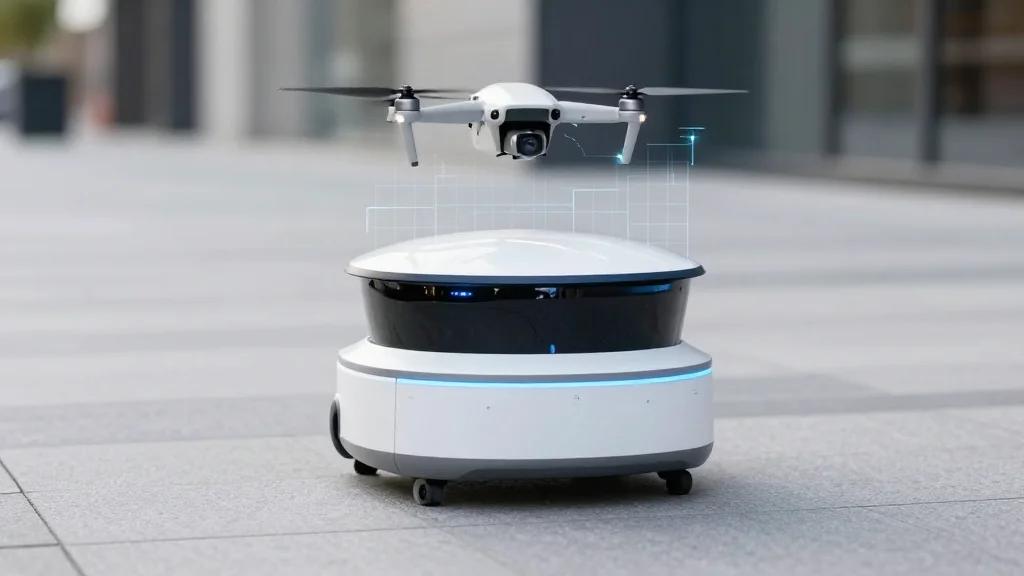
Fact of the Week – 4/20/2026
Why It Matters
The scale of physical AI deployment will reshape logistics, manufacturing and transportation, unlocking new efficiency gains and revenue streams while prompting fresh regulatory and supply‑chain considerations.
Key Takeaways
- •145M physical AI units projected 2025‑2035 globally
- •Drones account for ~59M of projected shipments
- •Robots expected to reach ~48M units
- •Autonomous vehicles forecast at ~38M units
- •Growth fueled by generative AI, edge computing, sensor advances
Pulse Analysis
Physical AI is no longer a futuristic concept; it is poised to become a mainstream component of the global technology ecosystem. Counterpoint Research’s forecast of 145 million devices shipped over the next decade underscores the magnitude of this transition. By bundling perception, decision‑making and actuation, embodied AI systems such as drones, industrial robots and self‑driving cars are set to move beyond data centers and enter factories, warehouses, hospitals and streets, creating a new layer of automation that directly interacts with the physical world.
The engine behind this expansion is a confluence of breakthroughs. Generative AI models now produce real‑time control policies, while ultra‑low‑latency edge computing ensures decisions happen locally, bypassing cloud delays. Meanwhile, sensor technology—high‑resolution LiDAR, advanced vision arrays and tactile feedback—delivers the situational awareness required for safe operation. These capabilities are unlocking use cases that were previously speculative: autonomous last‑mile delivery fleets, collaborative cobots that work side‑by‑side with human operators, and aerial drones that perform inventory audits in sprawling distribution centers. Industries ranging from logistics to healthcare are piloting pilots that promise cost reductions of 15‑30 % and productivity lifts that can redefine competitive advantage.
Investors and corporate strategists should view the physical AI surge as a multi‑year investment thesis. Supply chains for critical components—semiconductors, power‑dense batteries and precision actuators—will experience heightened demand, while standards bodies grapple with safety and liability frameworks. Companies that secure early partnerships with AI chip makers, sensor firms, and software platforms stand to capture market share as the ecosystem matures. In the coming years, the line between software‑only AI and embodied intelligence will blur, making physical AI a pivotal driver of the next wave of digital transformation.
Fact of the Week – 4/20/2026
Comments
Want to join the conversation?
Loading comments...