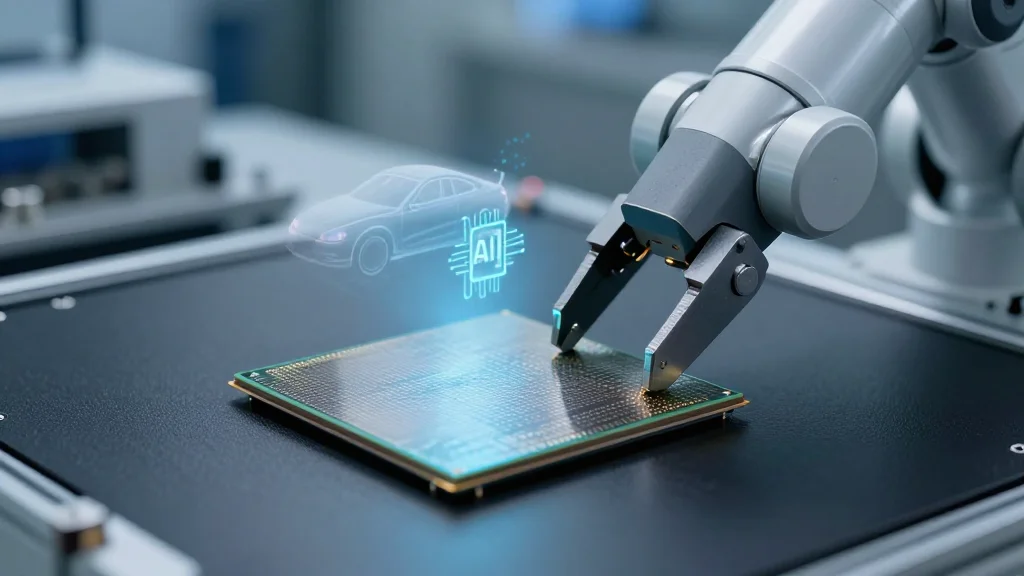
Samsung's Foundry Is Booming as TSMC Struggles with Demand – Bags Nvidia, Tesla, and Qualcomm as New Clients
Companies Mentioned
Why It Matters
Diversifying away from TSMC reduces supply risk for AI and automotive chipmakers and boosts Samsung’s revenue potential in the high‑margin advanced‑node market.
Key Takeaways
- •Samsung lands multiple AI and auto chip contracts on sub‑5nm nodes.
- •Google, Nvidia, and Tesla explore Samsung to hedge against TSMC shortages.
- •Samsung’s Texas fab will exclusively build Tesla’s A16 processor.
- •AMD partners with Samsung for 2nm Epyc server CPUs.
- •BYD in talks with Samsung for next‑gen autonomous‑driving SoCs.
Pulse Analysis
The semiconductor foundry landscape is undergoing a strategic realignment as TSMC, long the undisputed leader with over 70% market share, confronts capacity constraints at its most advanced nodes. Apple and Nvidia have already locked in TSMC’s 2nm and sub‑2nm slots, leaving a gap for customers seeking flexibility. This scarcity has accelerated a multi‑foundry approach, where companies like Google and Intel split production across TSMC, Intel and now Samsung, to mitigate risk and maintain design momentum.
Samsung’s recent wins underscore its ascent in the high‑performance segment. Contracts with Nvidia, Google’s Tensor Processing Units, and Tesla’s A16 chip signal confidence in Samsung’s 4nm, 3nm and emerging 2nm processes. The exclusive production of Tesla’s next‑gen automotive processor at Samsung’s Texas fab not only diversifies Tesla’s supply chain but also showcases Samsung’s ability to meet stringent automotive reliability standards. Meanwhile, AMD’s collaboration on 2nm Epyc CPUs and Qualcomm’s continued partnership broaden Samsung’s footprint in both data‑center and mobile markets, promising higher-margin revenue streams.
For investors and industry observers, the diversification trend reduces systemic supply‑chain fragility and introduces competitive pricing dynamics that could narrow Samsung’s historical gap with TSMC. Geopolitical tensions and the push for on‑shoring semiconductor capabilities further incentivize customers to spread risk across multiple foundries. As Samsung scales its advanced‑node capacity and expands its Texas manufacturing hub, it is poised to capture a larger slice of the AI‑driven, automotive‑centric chip demand that is set to dominate the next decade.
Samsung's foundry is booming as TSMC struggles with demand – bags Nvidia, Tesla, and Qualcomm as new clients
Comments
Want to join the conversation?
Loading comments...