Participants
Why It Matters
The IPO underscores how speculative investor enthusiasm can outpace actual technical and financial readiness in the nascent nuclear‑fission sector, raising red flags for capital markets and regulators.
Key Takeaways
- •Deep Fission filed a Nasdaq S‑1 seeking up to $1.66 B valuation.
- •Previous reverse merger never resulted in publicly traded shares.
- •Cash deficit grew to $88.1 M, a $32 M increase since December.
- •Company now prioritizes drilling test wells up to 6,000 ft deep.
- •IPO may mask technical and regulatory risks in emerging fission market.
Pulse Analysis
Deep Fission’s renewed public offering illustrates a broader trend of nuclear‑fission startups courting Wall Street amid a wave of climate‑tech optimism. While the company touts a $1.66 billion valuation, its operational history is marked by a reverse merger that never produced tradable stock and a series of funding gaps. Investors are drawn to the promise of subterranean reactors powering AI data centers, yet the market’s appetite often eclipses the hard realities of nuclear engineering, licensing, and capital intensity. This disconnect raises questions about valuation methodology and the adequacy of due‑diligence processes in a sector still defining its commercial pathways.
Financially, Deep Fission’s balance sheet tells a cautionary tale. The cash deficit ballooned from $56.2 million in December to $88.1 million by March, and a recent $6.4 million cash burn represents a 7 % decline in liquid assets over six weeks. Although an $80 million equity infusion—including $20 million from data‑center developer Blue Owl—temporarily shored up the balance sheet, the company still carries a going‑concern warning, indicating it could exhaust funding within a year if the IPO stalls. Such fiscal fragility, juxtaposed with a nine‑figure valuation, highlights the speculative premium investors are willing to pay for perceived first‑mover advantage in fission power.
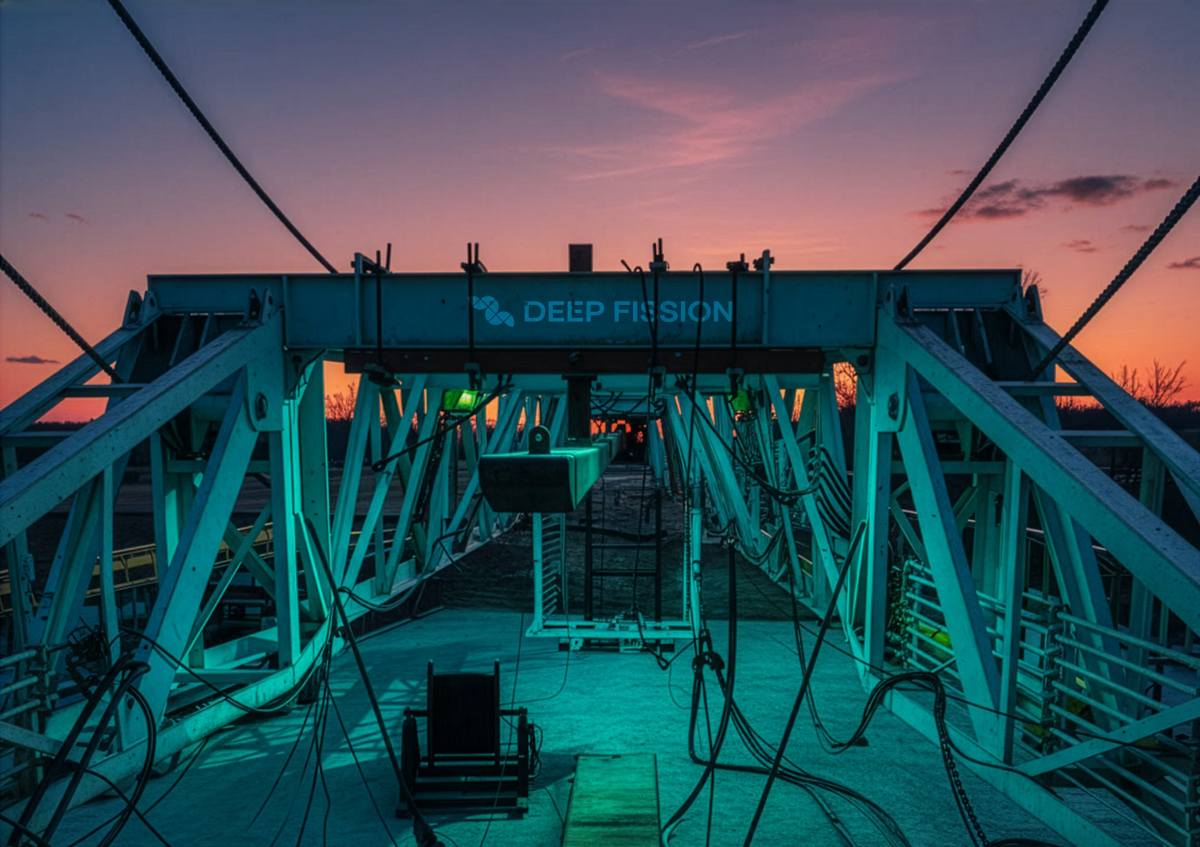
On the technical front, Deep Fission’s progress is confined to drilling a single test well to a depth of 6,000 feet, far short of the 30‑to‑50‑inch, mile‑deep boreholes required for commercial reactors. The lack of a clear timeline for achieving criticality—previously projected for July 2026—further erodes confidence. Compared with peer X‑energy, which has secured revenue streams and advanced through the Nuclear Regulatory Commission’s licensing phases, Deep Fission appears to be lagging both technologically and regulatorily. For investors, the key takeaway is that hype around fission energy must be weighed against tangible engineering milestones and realistic cash‑flow projections before committing capital.
Deal Summary
Deep Fission announced a Nasdaq IPO seeking to raise $157 million at $24‑$26 per share, valuing the company at up to $1.66 billion. The filing follows a prior reverse merger with Surfside Acquisition and an $80 million equity investment, including $20 million from Blue Owl. The company aims to fund its subterranean reactor development for AI data centers.
Comments
Want to join the conversation?
Loading comments...