Trapped-Ion Quantum Computer Startup Quantinuum Files to Go Public

Why It Matters
The IPO provides the capital needed for Quantinuum to scale hardware and software, positioning it as a leading contender in the fast‑growing quantum computing market. Investors gain exposure to a company that combines breakthrough technology with a clear path to high‑margin software monetization.
Key Takeaways
- •Quantinuum aims to raise up to $1.05 billion in IPO
- •Helios uses barium ions and visible‑light lasers, cutting costs
- •Nvidia Grace Hopper processor powers Helios error‑correction module
- •Future roadmap targets 192‑qubit SOL and 1,000‑qubit system by 2030
- •Software suite, including Python‑based Guppy, aims for high‑margin recurring revenue
Pulse Analysis
The quantum‑computing sector is entering a phase where commercial viability matters as much as scientific breakthroughs. Trapped‑ion technology, championed by Quantinuum, offers a compelling alternative to superconducting qubits by delivering longer coherence times and lower error rates. By filing for a public offering, Quantinuum joins a small but growing list of quantum firms seeking mainstream capital, signaling that investors now view quantum hardware as a scalable, revenue‑generating business rather than a pure research endeavor.
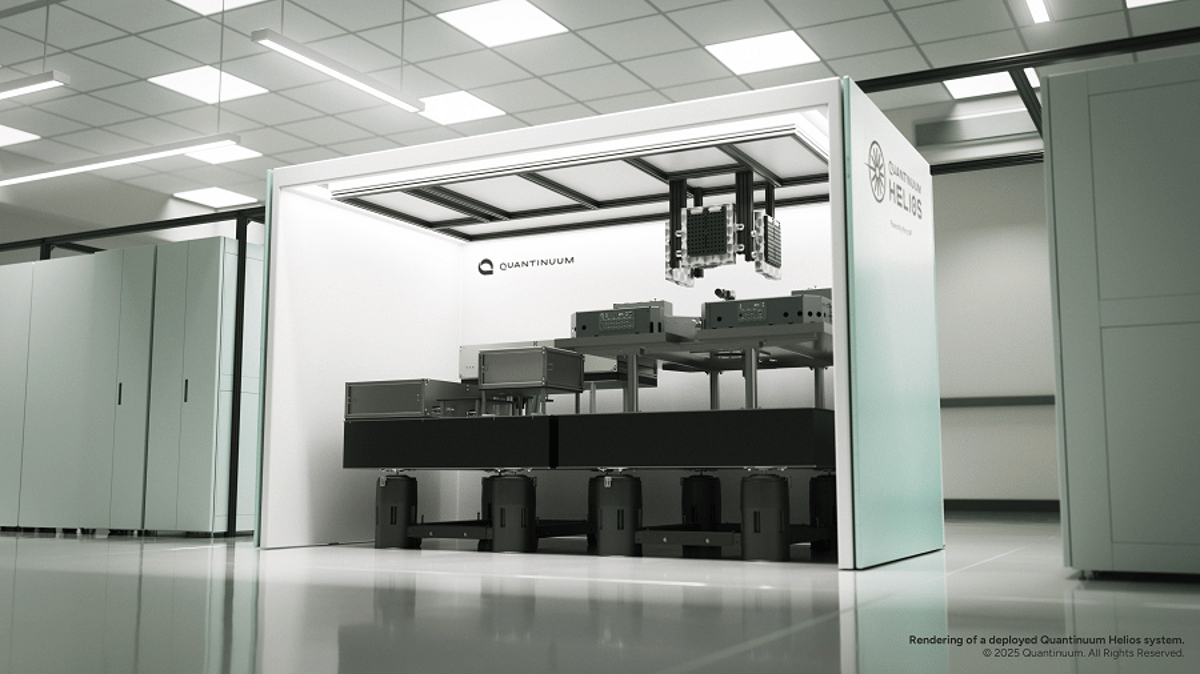
Helios, Quantinuum’s latest 98‑qubit system, marks a technical shift from costly ytterbium ions to barium ions that can be manipulated with affordable visible‑light lasers. This change eliminates the need for expensive ultraviolet equipment and the helium‑3 cooling supply chain, reducing both capital and operating expenditures. Coupled with Nvidia’s Grace Hopper architecture for error‑correction, Helios achieves the highest reported two‑qubit gate fidelity, a critical metric for practical quantum algorithms. The integrated cooling‑by‑laser approach also slashes power consumption, making the platform more attractive for enterprise data centers.
Beyond hardware, Quantinuum is betting on software to sustain long‑term growth. Its Guppy language, built on Python, lowers the barrier for developers to write quantum applications, while the broader toolkit can run on competing machines, creating a cross‑platform revenue stream. With revenue climbing to $30.9 million in 2024 and bookings at $79.3 million, the company is still loss‑making but shows a clear trajectory toward profitability. The roadmap toward a 192‑qubit SOL system next year and a 1,000‑qubit machine by decade’s end underscores an aggressive scaling plan that could cement Quantinuum’s position as a market leader in both quantum hardware and high‑margin software services.
Trapped-ion quantum computer startup Quantinuum files to go public
Comments
Want to join the conversation?
Loading comments...