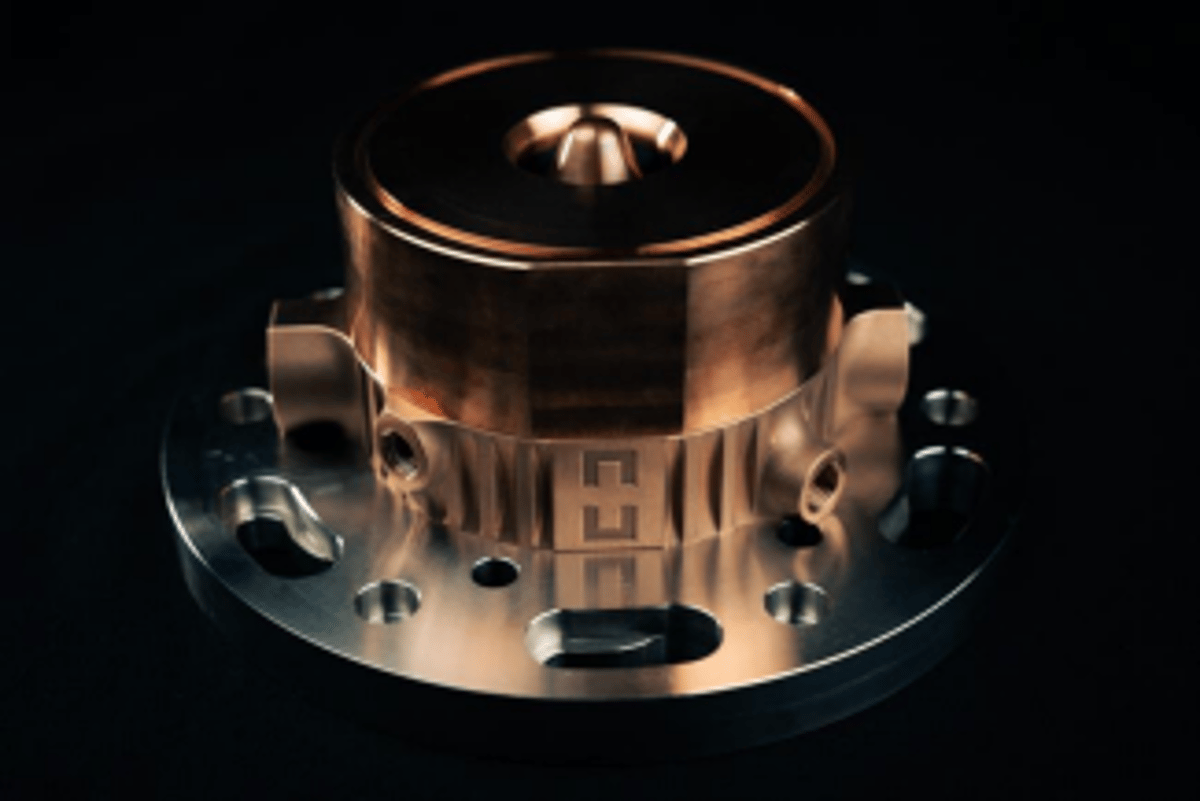
Stellar Alpina Secures $4.5M Pre-Seed Funding Led by Founderful
Why It Matters
RDREs could deliver higher efficiency and thrust‑to‑weight ratios, lowering launch costs and enabling more agile in‑space maneuvers, a strategic advantage for satellite operators and deep‑space missions.
Key Takeaways
- •Stellar Alpina raised CHF3.5 M ($4.5 M) pre‑seed funding.
- •Team hot‑fired a rotating detonation engine in 82 days.
- •Plans to test a new engine configuration bi‑weekly for a year.
- •Aims to deliver a spaceflight‑ready RDRE by 2028.
- •Europe joins Japan and US in RDRE commercialization race.
Pulse Analysis
Rotating detonation rocket engines (RDREs) have long promised higher thermodynamic efficiency and thrust‑to‑weight ratios than conventional chemical thrusters. By igniting fuel in a continuous detonation wave, they can extract more energy from each kilogram of propellant while occupying a smaller volume. Academic studies over the past two decades have validated the physics, but scaling the concept to reliable, flight‑ready hardware remains a hurdle. Recent demonstrations by Japanese universities, NASA‑backed Juno Propulsion, and Astrobotic have shown hot‑fire capability, yet commercial‑scale production is still unproven.
Swiss startup Stellar Alpina entered this nascent market with a CHF3.5 million ($4.5 million) pre‑seed round led by Founderful and LP&E. Founded by four engineers from the Academic Spaceflight Initiative, the team built and hot‑fired an RDRE in just 82 days, beating its 100‑day target. The fresh capital will fund a dozen new hires and a higher‑class test stand, enabling a new engine configuration every two weeks for the next twelve months. Stellar Alpina’s roadmap targets a spaceflight‑qualified RDRE by 2028, contingent on customer demand for high‑maneuverability propulsion beyond low‑Earth orbit.
The infusion of European capital signals that the RDRE race is no longer confined to Asia or the United States. If Stellar Alpina can demonstrate repeatable performance and integrate with satellite operators or lunar‑transport services, the technology could lower launch mass and reduce mission costs, reshaping orbital logistics and deep‑space exploration. Potential customers include constellations requiring rapid orbital adjustments and government programs seeking compact, high‑thrust stages. Success would also validate a new business model for niche propulsion startups, encouraging further venture investment and accelerating the transition from laboratory experiments to operational spacecraft.
Deal Summary
Swiss propulsion startup Stellar Alpina announced a CHF3.5M ($4.5M) pre‑seed round to develop rotating detonation rocket engines. The round was led by Founderful with participation from Swiss VC LP&E, and will fund hiring and engine testing ahead of a 2028 spaceflight‑ready target.
Comments
Want to join the conversation?
Loading comments...