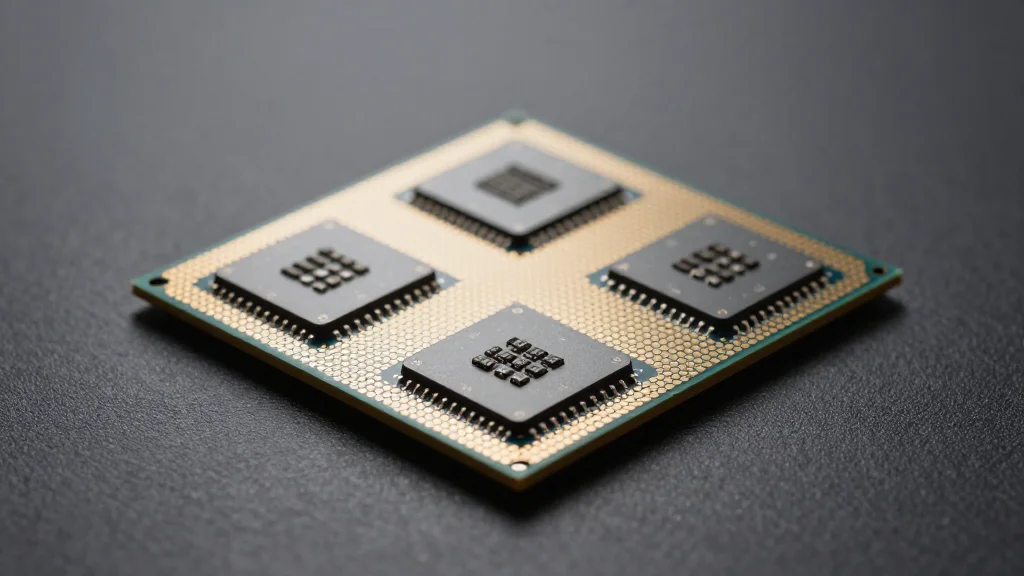
Intel Shares Jump 15% After Preliminary Apple Chip‑making Deal

Companies Mentioned
Why It Matters
The tentative Apple‑Intel pact signals a possible shift in the global semiconductor supply chain, moving a slice of high‑volume consumer‑electronics production back to the United States. For investors, the deal offers a new growth narrative for Intel, whose contract‑foundry business has lagged behind peers, while also introducing supply‑risk considerations for Apple, which has been heavily dependent on TSMC. If the agreement matures, it could accelerate U.S. policy goals of reducing reliance on overseas fabs, spur further capital investment in domestic chip plants, and intensify competition among foundries for marquee customers. The market’s reaction—sharp stock moves in both companies and related semiconductor equities—demonstrates how supply‑chain news can quickly translate into trading opportunities.
Key Takeaways
- •Intel stock rose 15% after the preliminary Apple chip‑making deal was reported.
- •Apple shares gained about 1.7% on the same news.
- •The agreement could give Intel a steady demand stream from a top consumer‑electronics brand.
- •U.S. government officials have been actively encouraging the partnership to boost domestic chip production.
- •Analysts see potential ripple effects for TSMC, AMD, Nvidia and semiconductor‑focused ETFs.
Pulse Analysis
The Apple‑Intel development arrives at a crossroads for both firms. Intel, under CEO Pat Gelsinger and with the U.S. government as its largest shareholder, has been on a redemption arc, seeking to revive its contract‑manufacturing arm after years of losing ground to TSMC. A high‑profile client like Apple would not only provide revenue but also a credibility boost that could attract other OEMs wary of outsourcing to Asian foundries. However, Intel faces a steep technical hurdle: matching TSMC’s advanced node capabilities while meeting Apple’s exacting performance and power‑efficiency standards. Any misstep could erode Apple’s confidence and limit the partnership to legacy‑process chips, which would blunt the upside for Intel.
For Apple, diversifying its fab base is a strategic hedge against the capacity crunch at TSMC, which is being stretched thin by AI‑chip demand. Yet Apple’s recent earnings call highlighted that supply constraints are already hurting iPhone sales, suggesting that the company is under pressure to secure additional capacity quickly. Partnering with Intel could provide a near‑term buffer, but the trade‑off is potentially higher costs and longer lead times compared with TSMC’s cutting‑edge processes. Investors will weigh whether the diversification benefit outweighs the risk of slower technology rollout.
From a market perspective, the news underscores how policy can catalyze corporate deals that ripple through equity prices. The U.S. administration’s push to bolster domestic semiconductor production—through equity stakes, subsidies, and diplomatic outreach—has already begun to influence trading sentiment. If the Apple‑Intel contract is finalized, we may see a broader re‑pricing of the semiconductor sector, with U.S.‑based fabs gaining a premium and Asian foundries facing renewed competitive pressure. Traders should monitor the timeline for a formal agreement, any disclosed product roadmaps, and subsequent earnings guidance from both companies for clues on the deal’s materiality.
Intel shares jump 15% after preliminary Apple chip‑making deal
Comments
Want to join the conversation?
Loading comments...