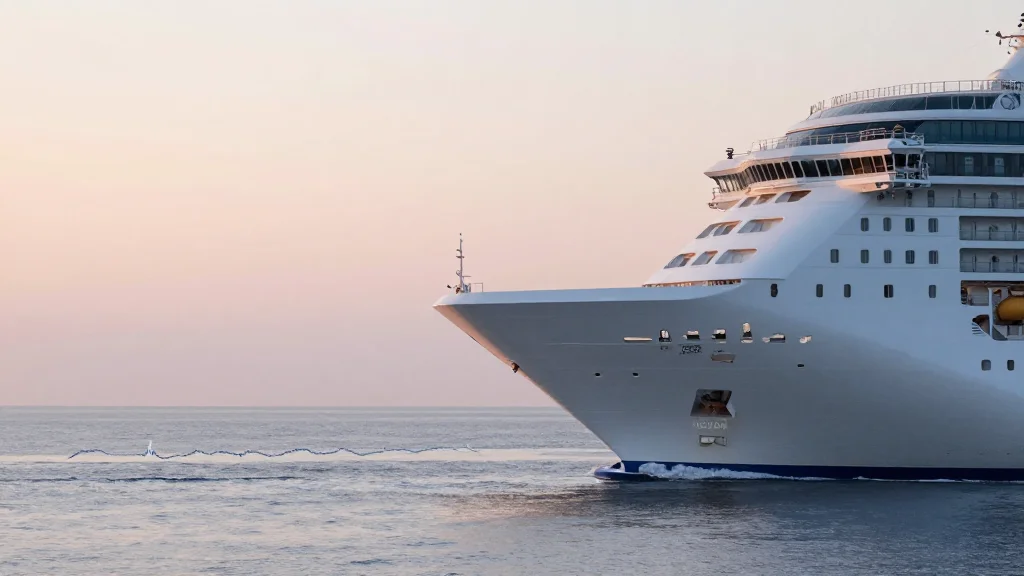
Norwegian Cruise Line Shares Drop 7% After Cutting 2026 Outlook Despite Q1 Profit

Why It Matters
The clash between solid quarterly earnings and a downgraded outlook highlights how external macro forces—geopolitical risk, fuel costs, and regional demand shifts—can outweigh operational performance in the travel sector. For stock traders, the episode underscores the importance of monitoring non‑financial variables that can trigger abrupt price moves, creating both risk and opportunity. Moreover, the guidance cut may pressure other cruise operators to reassess their forecasts, potentially amplifying volatility across the broader travel‑related equity space. For investors focused on earnings quality, Norwegian Cruise’s Q1 results demonstrate that the company can generate profit even amid headwinds, suggesting a resilient cost structure and effective pricing strategies. However, the guidance reduction signals that future profitability may be constrained, prompting a re‑evaluation of valuation multiples and risk premiums applied to the sector.
Key Takeaways
- •NCLH posted Q1 net income of $104.7 million, up from a $40.3 million loss a year earlier.
- •Adjusted EPS rose 121% to $0.23; revenue increased 9% to $2.33 billion.
- •Full‑year 2026 adjusted EPS guidance cut to $1.45‑$1.79, below consensus forecasts.
- •Shares fell 7%‑8.6% in pre‑market trading, hitting $17.73 on the NYSE.
- •CEO Leonard Fluxman cited geopolitical tensions and Europe demand softness as key risks.
Pulse Analysis
Norwegian Cruise’s earnings beat illustrates a classic case where strong operating metrics are eclipsed by macro‑level uncertainty. The company’s ability to generate a $104.7 million profit on a $2.33 billion revenue base shows that its pricing power and cost controls are effective, especially after a year of pandemic‑related losses. Yet the guidance cut reflects a prudent, albeit conservative, stance that acknowledges the volatility of fuel prices and the fragility of trans‑Atlantic leisure travel amid ongoing Middle‑East tensions.
From a market‑structure perspective, the episode reinforces the growing relevance of geopolitical risk as a driver of sector‑specific volatility. Traders who monitor oil‑price spikes and diplomatic developments can anticipate pressure points for fuel‑intensive industries like cruising. The sharp share decline also creates a classic short‑term arbitrage scenario: the stock’s price reaction may overshoot the fundamental impact of higher fuel costs, offering a window for contrarian buyers if the company’s underlying earnings trajectory remains intact.
Looking forward, the key determinant will be the evolution of the Strait of Hormuz situation. A de‑escalation could quickly lower bunker costs, improve margins, and restore confidence in European itineraries, potentially prompting a revision of the 2026 outlook. Conversely, prolonged tension could force further guidance reductions, widening the gap between NCLH and its peers. Investors and traders should therefore keep a close eye on oil‑price trends, travel‑demand data for Europe, and any forward‑looking commentary from the company’s management team during the upcoming Q2 earnings call.
Norwegian Cruise Line Shares Drop 7% After Cutting 2026 Outlook Despite Q1 Profit
Comments
Want to join the conversation?
Loading comments...