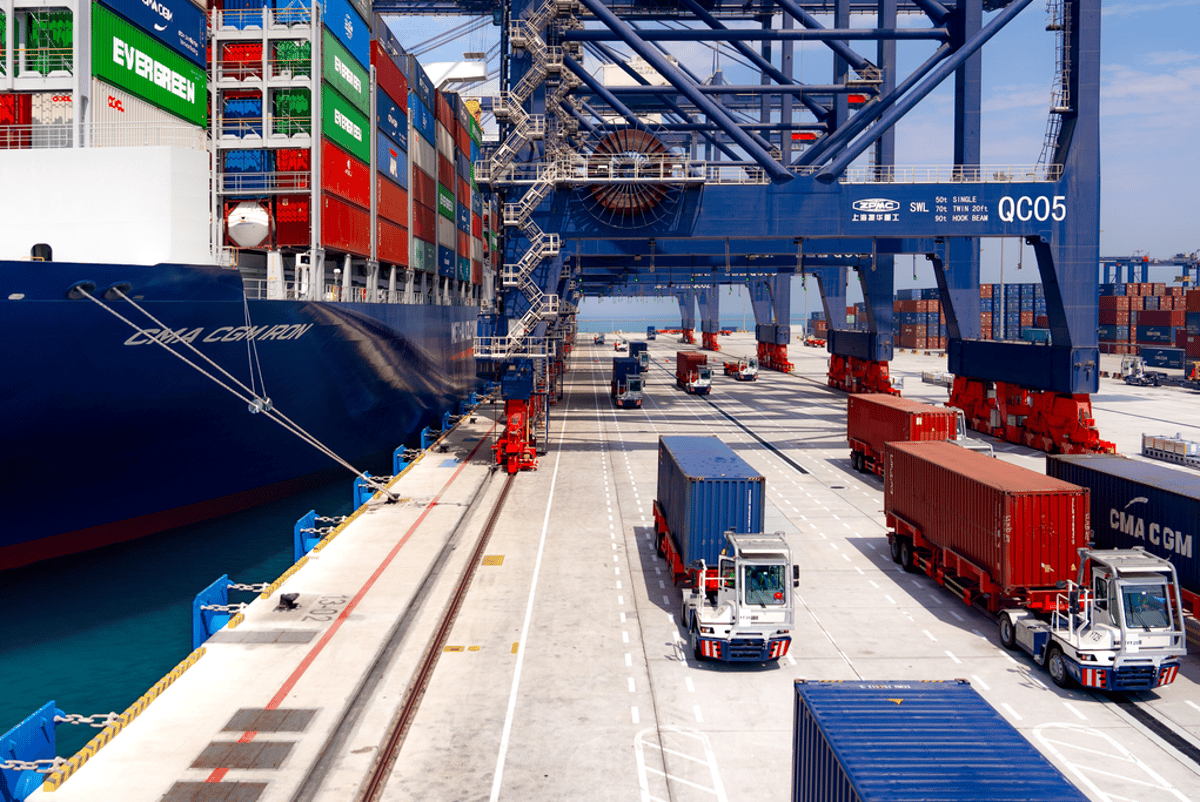
AD Ports Group Leverages Integrated Network to Keep Gulf Trade Flowing
Key Takeaways
- •Handled 54,000 TEUs at Fujairah and Khor Fakkan ports
- •Rerouted 22,000 containers via land logistics
- •Operated 24 vessels across eight feeder services
- •Air bridge moved 8,000 tonnes using 100 chartered flights
- •Warehousing capacity expanding to 188,000 sqm
Pulse Analysis
The Gulf’s strategic chokepoint at the Strait of Hormuz has long been a flashpoint for trade disruptions, prompting operators to seek resilient alternatives. AD Ports Group leveraged its five‑cluster network—spanning ports, rail, road and air—to create a flexible supply chain capable of absorbing shocks. By diversifying entry points through Fujairah, Khor Fakkan and the Oman corridor, the group mitigated the risk of bottlenecks and ensured a steady flow of food, medicine and strategic reserves.
Operationally, the group’s response has been multi‑modal and data‑driven. Over 54,000 TEUs were processed at its UAE terminals while 22,000 containers traversed a newly established land bridge supported by 800 trucks and four daily Etihad Rail services. The maritime side saw 24 vessels on eight feeder routes, and an air bridge dispatched more than 8,000 tonnes of cargo via 100 chartered flights. Digital freight platforms now provide real‑time visibility, optimizing container utilization and reducing empty‑move costs, which enhances overall efficiency.
For the regional economy, AD Ports’ swift redeployment underscores the importance of integrated logistics in maintaining trade continuity. The expanded warehousing footprint—rising to 188,000 sqm—signals a long‑term commitment to handling higher volumes and value‑added services. As global supply chains recalibrate to geopolitical risks, the group’s model offers a blueprint for other ports seeking to blend physical infrastructure with digital tools to deliver resilient, cost‑effective trade pathways.
AD Ports Group leverages integrated network to keep Gulf trade flowing
Comments
Want to join the conversation?