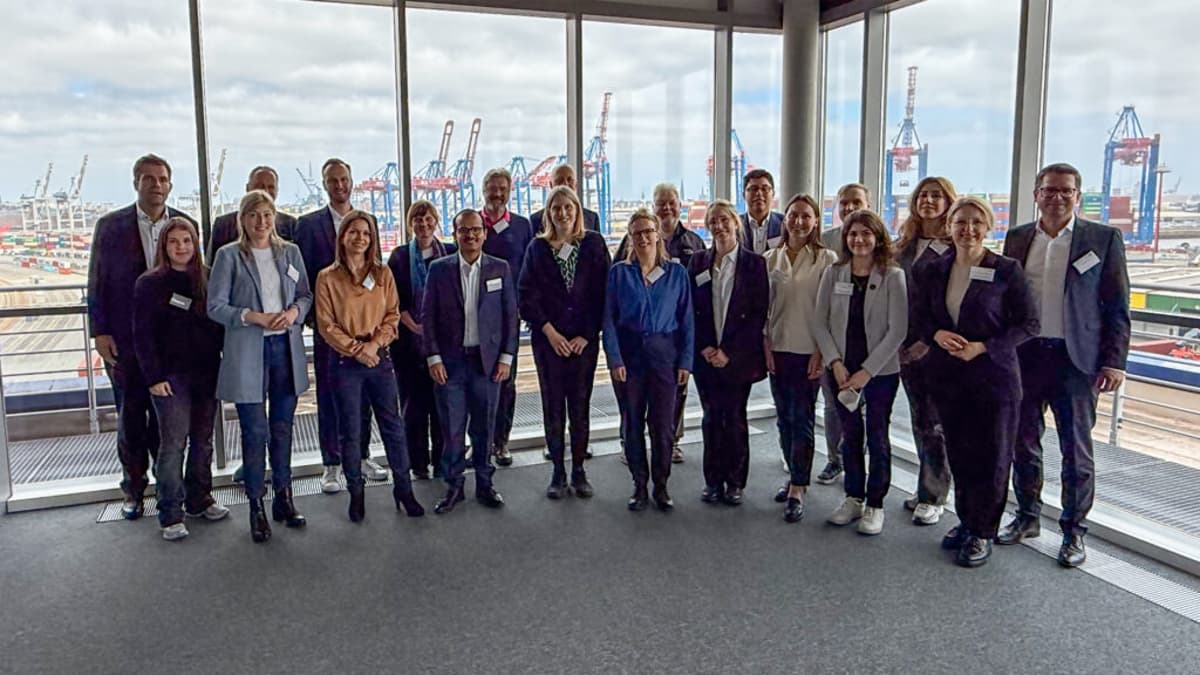
Baltic Sea Ports Convene in Hamburg to Advance Green Corridor
Key Takeaways
- •Regulators need long‑term stability to scale port decarbonisation.
- •Regional collaboration essential for shared investments and best‑practice exchange.
- •Funding for pilots and efficiency upgrades drives green corridor progress.
- •Emerging fuels—methanol, ammonia, hydrogen—gain market focus in Baltic.
- •Digital coordination boosts logistics efficiency across ports and hinterland.
Pulse Analysis
The Baltic Sea corridor is emerging as a linchpin in Europe’s push toward net‑zero shipping. Hamburg’s recent workshop gathered key stakeholders to map how ports can transition from carbon‑intensive operations to sustainable hubs. By positioning ports as geopolitical assets, the dialogue underscored their role in delivering clean energy, supporting offshore wind integration, and providing on‑shore power supply that eliminates bunker‑fuel use while ships are docked. This strategic framing aligns with the EU Strategy for the Baltic Sea Region, which seeks to harmonize environmental standards across member states.
Regulatory certainty and financing were identified as the twin engines of progress. Participants argued that without long‑term policy stability, investors hesitate to commit to costly infrastructure such as hydrogen bunkering or ammonia storage facilities. Pilot projects—ranging from electric‑driven cargo handling to rail‑linked hinterland logistics—require consistent public and private funding streams to move beyond proof‑of‑concept. The workshop also highlighted the market momentum behind emerging marine fuels; methanol, ammonia and hydrogen are gaining traction as viable alternatives, but their adoption hinges on coordinated standards and shared risk mitigation across the region.
Digital coordination emerged as a practical lever to accelerate efficiency gains. Integrated data platforms can synchronize vessel arrivals, power‑grid loads and rail schedules, reducing idle time and emissions. For shippers, a seamless green corridor promises predictable carbon footprints and potential cost savings, while policymakers gain clearer metrics to assess compliance. As the Baltic ports collectively invest in sustainable infrastructure, the region positions itself to become a benchmark for low‑carbon maritime trade, influencing global supply chains and reinforcing Europe’s climate leadership.
Baltic Sea Ports convene in Hamburg to advance green corridor
Comments
Want to join the conversation?