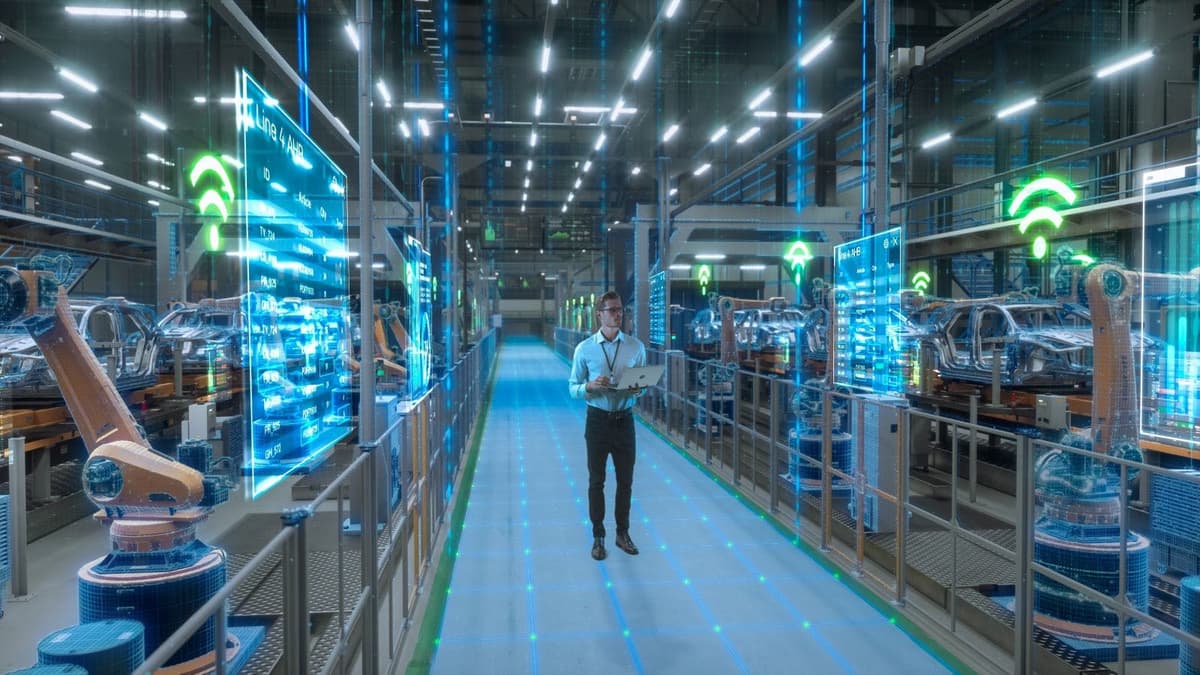
Digital Twins Key Prosperous Process Control
•March 6, 2026
0
Key Takeaways
- •Digital twins act as living operational assets
- •Layered models improve prediction and training
- •High‑fidelity twins reveal hidden surge dynamics
- •Early simulation cuts misalignment and project costs
- •Operator rehearsal boosts safety and confidence
Summary
Digital twins have evolved from simple simulations to comprehensive, living operational assets that mirror plant behavior in real time. By layering process dynamics, control logic, instrumentation, and scenario data, they enable predictive insights, safe rehearsal of high‑risk events, and continuous alignment among engineering, operations, and leadership. Pioneers like Greg McMillan and Edin Rakovic demonstrate how first‑principle models and customer‑driven deployments unlock faster PID tuning, root‑cause analysis, and cost reductions. The technology now underpins proactive decision‑making, operator training, and sustained process excellence across power, chemicals, and manufacturing sectors.
Pulse Analysis
The rise of digital twins marks a paradigm shift in process control, moving beyond static models to dynamic, first‑principle simulations that reflect every nuance of plant operation. Modern platforms integrate real‑time data, advanced PID algorithms, and scenario‑based testing, allowing engineers to evaluate control strategies before field implementation. This capability shortens development cycles, improves model fidelity, and provides a sandbox for testing innovations such as future‑value blocks and rapid modeler tools, which accelerate batch and continuous process optimization.
Operationally, digital twins serve as a common language for engineers, operators, and leadership, fostering alignment that eliminates costly rework and delays. By embedding control logic, instrumentation dynamics, and operator training modules, twins enable teams to rehearse high‑risk scenarios, identify root causes, and validate safety instrumented systems without disrupting production. The result is a measurable reduction in error rates, faster commissioning, and enhanced confidence across the organization, as teams experience a shared, realistic view of plant behavior.
Looking ahead, high‑fidelity twins will become indispensable for resilient, learning factories. As computational power and data integration improve, twins will support continuous improvement loops, predictive maintenance, and AI‑driven optimization. Companies that adopt fully layered digital twins can expect higher energy efficiency, increased throughput, and a competitive edge in an industry where operational certainty translates directly into profit. The strategic investment in these living models pays off through reduced capital expenditures, lower operational risk, and a faster path from innovation to production.
Comments
Want to join the conversation?