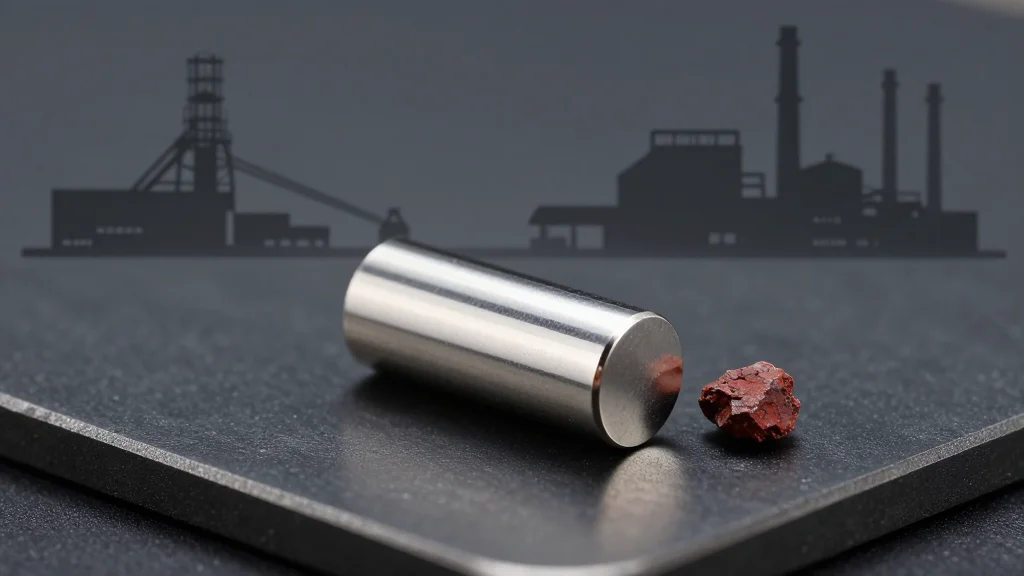
Energy Fuels and the Emergence of a Credible Magnet Competitor
Key Takeaways
- •Energy Fuels now controls mining, separation, alloying, and magnet production.
- •Vacuumschmelze acquisition gives Western firm sintered NdFeB expertise.
- •White Mesa is only North American plant with commercial rare‑earth separation.
- •Integrated chain cuts margins, reduces logistics, speeds delivery to OEMs.
- •Company aims to be largest low‑cost non‑Chinese magnet producer by 2030.
Pulse Analysis
The global market for neodymium‑iron‑boron (NdFeB) magnets is a linchpin of the clean‑energy transition and modern defense systems. Over 90 % of the world’s magnet output originates from China, where a vertically integrated mine‑to‑magnet ecosystem has been honed for decades. This concentration creates supply‑risk headaches for automakers, wind‑turbine makers, and military contractors that rely on high‑performance permanent magnets. In recent years, Western governments have poured billions into rare‑earth strategies, yet most projects stalled at a single stage of the value chain, leaving the continent dependent on Chinese imports.
Energy Fuels’ recent purchase of Vacuumschmelze stitches together the missing links in a Western supply chain. The company already operates rare‑earth mining assets and the White Mesa separation plant, the only commercial‑scale oxide facility in North America. Through Australian Strategic Materials, it now metallizes oxides into alloy feedstock, and Vacuumschmelze brings proven sintering technology and motor‑grade magnet designs. By internalizing each step, Energy Fuels can shave the typical 30‑40 % margin stacking seen in fragmented models, lower transportation costs, and accelerate time‑to‑market for OEMs.
If the integration proceeds on schedule, Energy Fuels could emerge as the largest non‑Chinese NdFeB producer by the end of the decade, offering a lower‑cost alternative for electric‑vehicle drivetrains, wind‑turbine generators, and defense applications. The move also signals a broader shift toward supply‑chain resilience, prompting other miners and processors to consider similar vertical strategies. However, scaling to volumes that meaningfully dent China’s market share will require sustained capital, regulatory support, and reliable feedstock quality. Investors and policymakers will watch closely as the first fully integrated Western magnet competitor tests its commercial viability.
Energy Fuels and the Emergence of a Credible Magnet Competitor
Comments
Want to join the conversation?