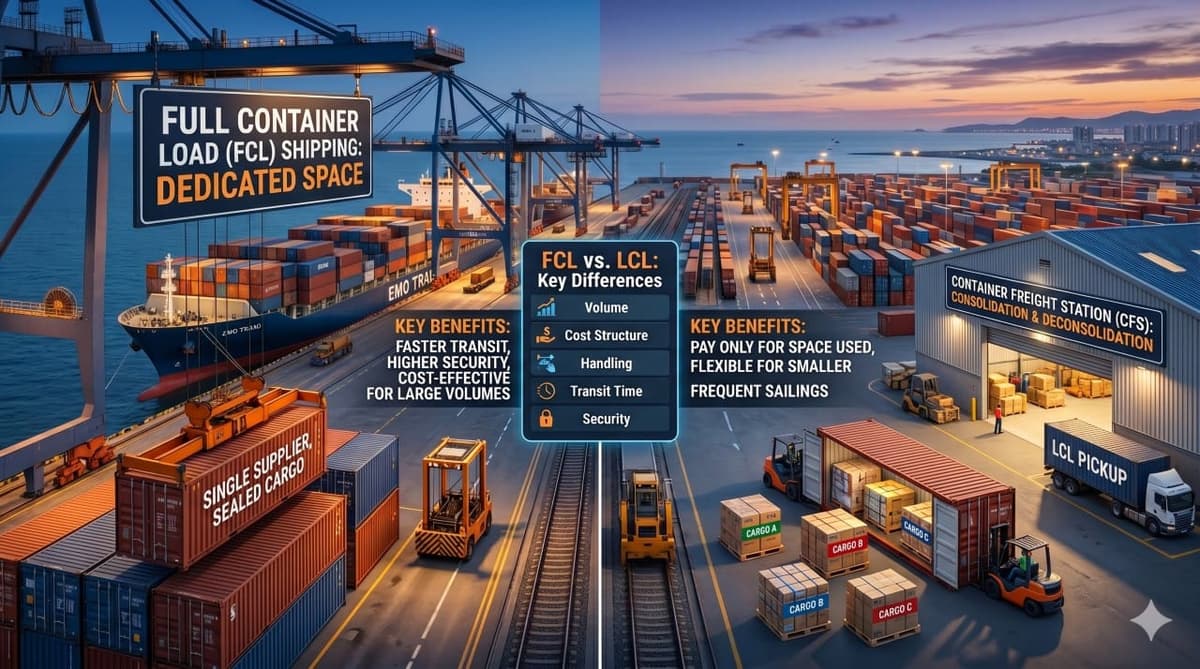
Exploring the Key Differences Between FCL and LCL Shipping
Key Takeaways
- •Break‑even volume for FCL vs LCL is roughly 12‑15 CBM.
- •LCL transit 14‑39 days, FCL 23‑42 days port‑to‑port.
- •FCL provides sealed‑container security, lowering theft and damage risk.
- •LCL best for shipments under 13 CBM or tight budgets.
- •Hybrid plans mix LCL small items with FCL high‑volume loads.
Pulse Analysis
The choice between FCL and LCL is more than a pricing decision; it reshapes the entire logistics workflow. FCL’s door‑to‑door simplicity eliminates the need for consolidation at origin and de‑consolidation at destination, cutting handling steps and reducing exposure to damage. For shippers moving high‑value or time‑sensitive goods, the sealed‑container model offers a predictable timeline and a lower risk profile, which can translate into fewer insurance claims and smoother customs clearance.
Cost dynamics hinge on volume. Industry data points to a break‑even range of 12‑15 cubic meters, though many forwarders now cite 15‑20 cubic meters as the new norm due to rising container utilization rates. Below this threshold, LCL’s per‑cubic‑meter pricing beats the flat rate of an empty container, but the added days for consolidation and de‑consolidation can erode savings for urgent shipments. Companies that regularly ship near the break‑even point benefit from running scenario analyses each season, factoring in surcharges, fuel adjustments and lane‑specific transit variations.
Strategically, many forwarders adopt a hybrid model, allocating small, low‑value items to LCL while bundling high‑density or high‑value cargo into FCL containers. This approach maximizes space efficiency and aligns cost structures with service level expectations. As e‑commerce volumes swell and supply‑chain resilience remains a priority, the ability to fluidly switch between FCL and LCL—or combine them—will be a differentiator for logistics providers and their customers alike.
Exploring the Key Differences Between FCL and LCL Shipping
Comments
Want to join the conversation?