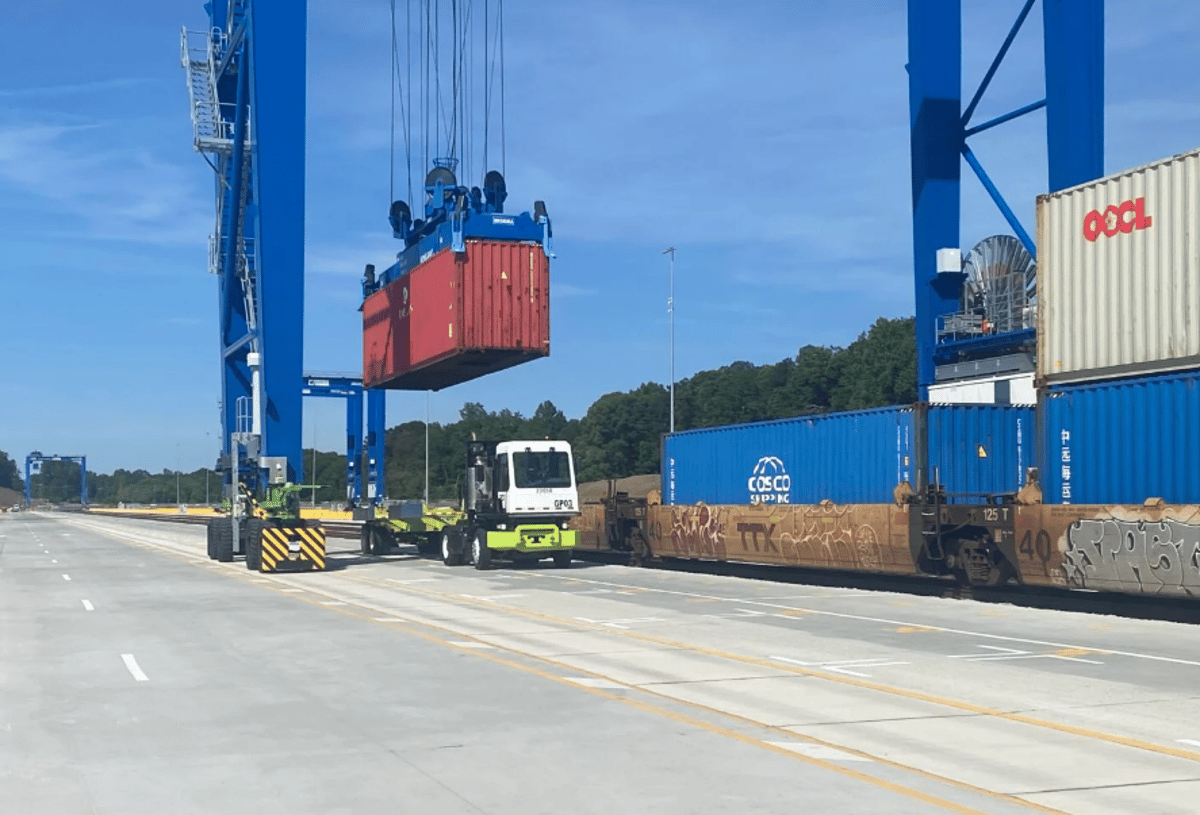
Gainesville Port Begins Operations with Daily Rail Service to Savannah
Key Takeaways
- •$134 M Gainesville inland port opens with daily Savannah rail link.
- •Capacity targets 200,000 containers annually; 26,000 shifted to rail first year.
- •Rail replaces 600‑mile truck roundtrip, lowering congestion and emissions.
- •$4.8 M road upgrades eliminate at‑grade crossing, improve local traffic flow.
- •Georgia Ports Authority leverages 42 weekly double‑stack trains for faster service.
Pulse Analysis
The Gainesville Inland Port marks a strategic expansion of Georgia’s logistics network, joining a growing cohort of inland facilities that bring ocean‑port connectivity closer to manufacturers. Built in partnership with Norfolk Southern, the $134 million hub links Northeast Georgia’s industrial corridor directly to Savannah’s deep‑water terminals, where more than 40 vessels call each week. By offering a seamless rail interface, the port reduces the need for the traditional 600‑mile round‑trip truck journey, delivering faster transit times and a more predictable supply chain for shippers.
Rail’s cost advantage becomes pronounced beyond 250 miles, especially as diesel prices climb. GPA’s projection of shifting 26,000 containers to rail in year one translates into measurable savings for carriers and lower freight rates for importers. Moreover, the modal shift cuts heavy‑truck traffic on Georgia’s highways, easing congestion around Atlanta and contributing to state‑wide emissions reduction goals. The facility’s design—supporting 200,000 containers annually and featuring industry‑leading rail dwell times under 20 hours—positions it to capture volume from the region’s robust manufacturing base.
Beyond immediate operational benefits, the Gainesville port reinforces Georgia’s competitive edge in the Southeast logistics arena. The $4.8 million investment in local road improvements, including the removal of an at‑grade crossing, demonstrates a holistic approach to community impact and infrastructure resilience. Coupled with Savannah’s existing 42 weekly double‑stack trains, the inland hub creates a high‑capacity, low‑delay corridor that can attract new investment and stimulate economic growth across the state. As global trade patterns evolve, such inland ports will be pivotal in delivering flexible, sustainable, and cost‑effective freight solutions.
Gainesville port begins operations with daily rail service to Savannah
Comments
Want to join the conversation?