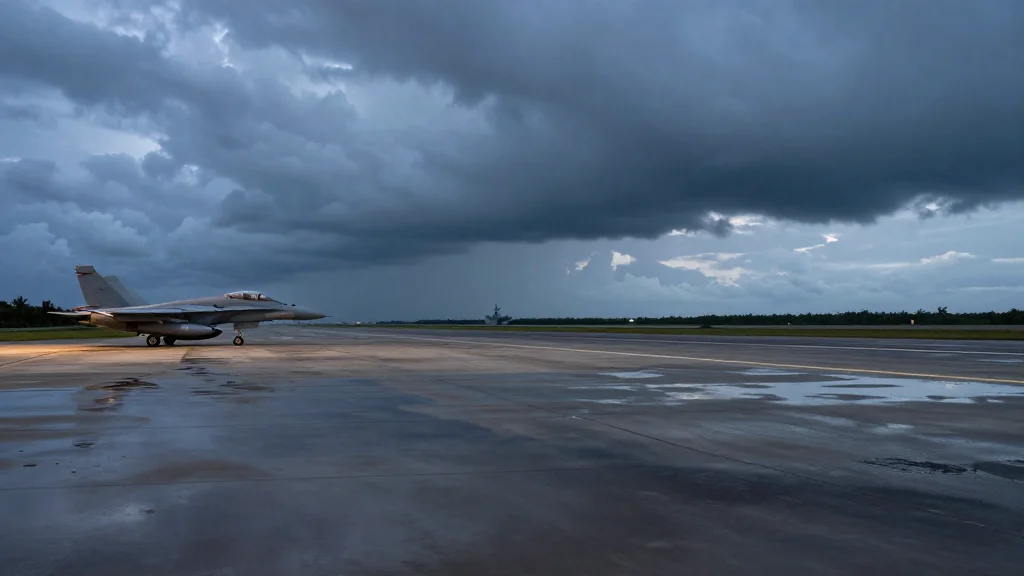
Guam and the Practical Impact of Climate Change
Key Takeaways
- •Super typhoons hit Guam twice in seven years, frequency rising
- •Guam hosts the only US forward base for Asia-Pacific power projection
- •Climate‑driven flooding could render the island militarily unusable
- •No nearby alternatives exist, forcing costly redesign of regional strategy
- •US must invest in resilient infrastructure or consider new maritime concepts
Pulse Analysis
The Pacific island of Guam has long been the linchpin of America’s forward‑deployed posture, offering a secure, U.S.‑controlled foothold for air, sea, and logistics operations across East Asia. Yet the climate crisis is reshaping that calculus. Scientific consensus shows that warming oceans boost both the intensity and frequency of tropical cyclones, and the recent class‑4/5 super‑typhoon that battered the Mariana Islands is a textbook example. As sea levels rise, even moderate storm surges can inundate runways, fuel depots, and communications hubs, turning a vital base into a liability.
For defense planners, the implications are stark. Guam’s isolation—thousands of miles from the continental United States—means rapid reinforcement is limited, and any prolonged outage could cripple U.S. response options in flashpoints like Taiwan or the South China Sea. The lack of comparable alternatives in the western Pacific forces a binary choice: pour billions into hardened, flood‑resistant infrastructure, or pivot to a more distributed, sea‑based concept that relies on mobile platforms such as amphibious assault ships and unmanned surface vessels. Both paths demand significant budget reallocations and a shift in doctrine.
Beyond the immediate military calculus, Guam’s vulnerability highlights a broader geopolitical trend: climate risk is becoming a strategic asset‑class factor. Nations that can anticipate and adapt to environmental disruptions will gain operational flexibility, while those that cling to legacy bases may find their influence eroding. For the United States, integrating climate resilience into force planning is no longer optional—it is essential to maintaining credibility and deterrence in a rapidly changing Indo‑Pacific theater.
Guam and the Practical Impact of Climate Change
Comments
Want to join the conversation?