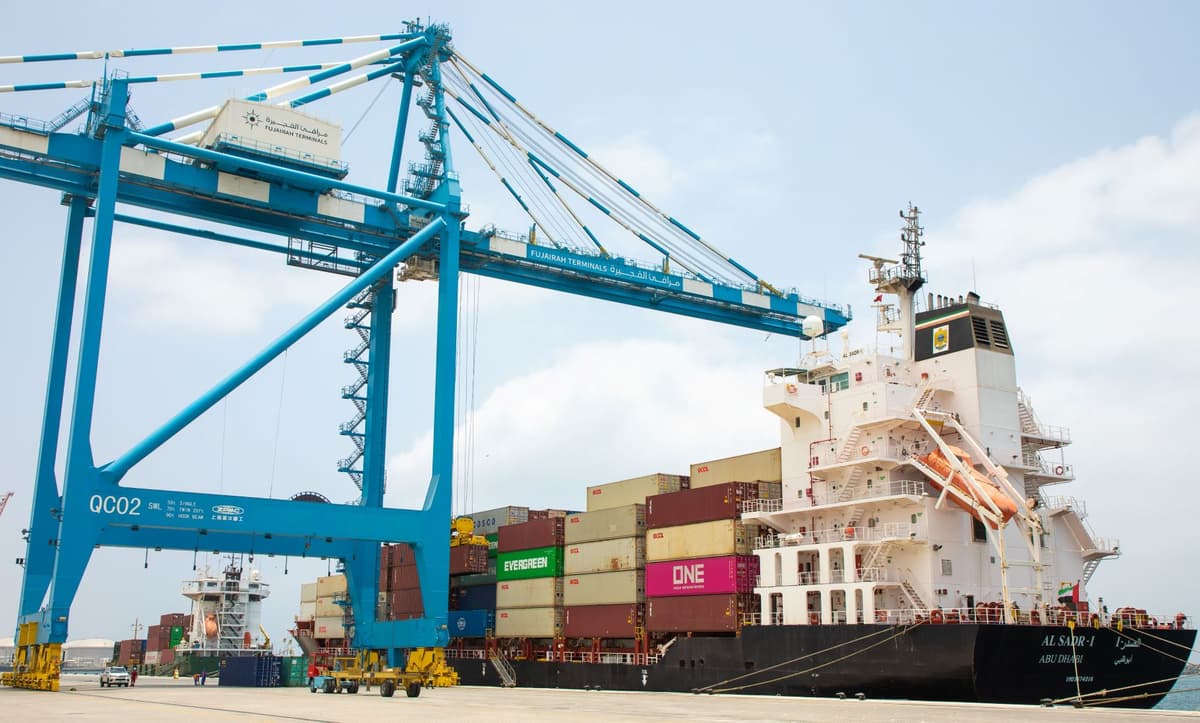
How Fujairah Is Redrawing the Gulf’s Trade Map
Key Takeaways
- •Fujairah port now handles over 5 million TEUs annually
- •New deep‑water berths allow ultra‑large container ships to dock
- •AD Ports invested $2 billion in terminal expansion and automation
- •Strategic location reduces transit time between Asia and Europe by 12 hours
- •Diversifies UAE’s logistics away from Jebel Ali’s congestion
Pulse Analysis
The Gulf’s maritime landscape has long been defined by Dubai’s Jebel Ali, the region’s flagship container hub. However, growing congestion, higher fees, and geopolitical considerations have prompted carriers to scout alternatives. Fujairah, situated on the UAE’s east coast, offers a natural deep‑water advantage that requires minimal dredging, making it an attractive contingency port. Recent policy support from AD Ports and the UAE government has accelerated its transformation from a modest backup facility into a primary gateway.
Investment has been the engine of Fujairah’s ascent. AD Ports allocated roughly $2 billion to construct new berths, install automated crane systems, and integrate digital traffic‑management platforms. These upgrades enable the terminal to handle ultra‑large container ships—vessels that previously could only dock at Jebel Ali—while maintaining turnaround times under 24 hours. The capacity boost to over 5 million TEU annually not only relieves pressure on Dubai’s congested yards but also offers shippers competitive pricing and more reliable schedules.
The strategic implications are profound. By shortening the Asia‑Europe sea lane by an estimated 12 hours, Fujairah improves supply‑chain efficiency for manufacturers and retailers worldwide. Its emergence also diversifies the UAE’s logistics portfolio, reducing systemic risk associated with a single dominant port. As global trade patterns evolve, carriers are likely to allocate a growing share of their Gulf calls to Fujairah, prompting further infrastructure upgrades and cementing the port’s role as a cornerstone of regional commerce.
How Fujairah is redrawing the Gulf’s trade map
Comments
Want to join the conversation?