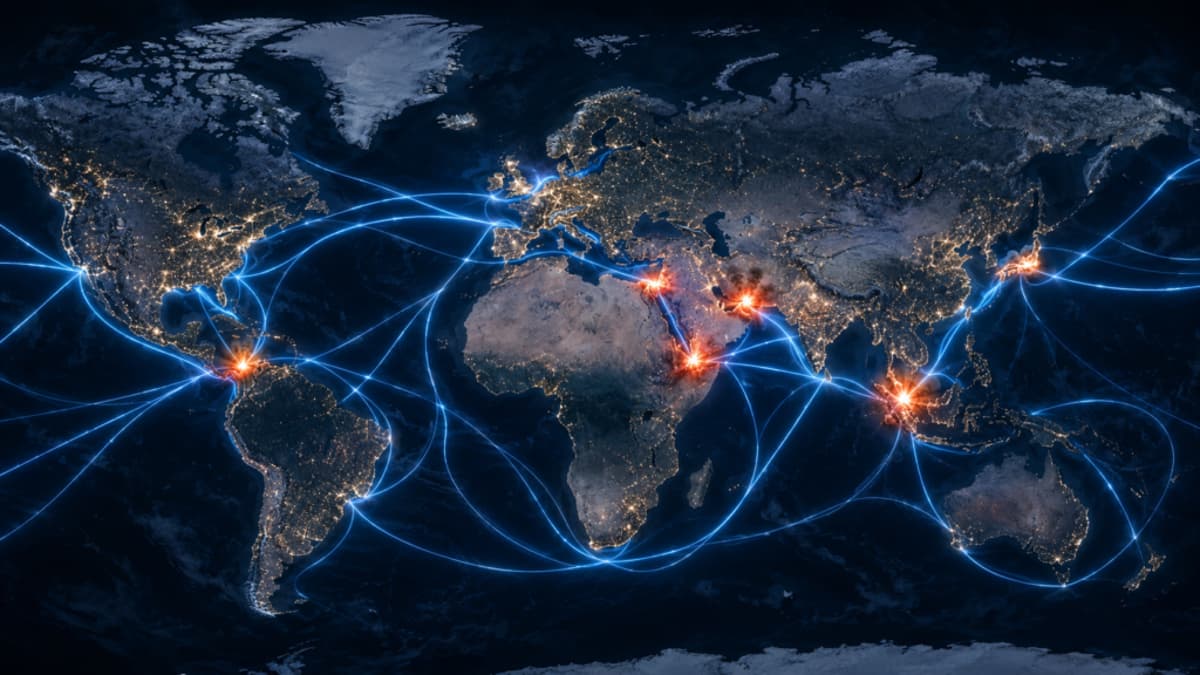
How Geopolitics Rewrote the Logic of Global Shipping
Key Takeaways
- •Red Sea attacks increased detour costs by up to 15%
- •Suez Canal disruptions added weeks to container transit times
- •Cape of Good Hope route raises fuel consumption by 20%
- •Northern Sea Route opens seasonally, cutting distance by 30%
- •Geopolitical sanctions force carriers to re‑evaluate fleet deployment
Pulse Analysis
Historically, maritime routing was a straightforward calculus: the shortest line between two ports minimized fuel consumption and transit time. This simplicity underpinned the design of container fleets, port infrastructure, and logistics contracts for decades. However, the last few years have seen a cascade of geopolitical events that have upended that logic. Houthi missile strikes in the Red Sea, the unprecedented grounding of the Ever Given in the Suez Canal, and broad sanctions on Russian and Chinese shipping entities have injected risk as a primary variable, compelling carriers to factor political stability, insurance premiums, and regulatory compliance into every voyage decision.
The immediate fallout has been a dramatic reshuffling of global trade lanes. When the Red Sea became a hostile corridor, many shippers rerouted via the Cape of Good Hope, adding roughly 3,500 nautical miles and increasing fuel burn by about 20 percent. Conversely, the thawing Arctic has revived interest in the Northern Sea Route, which can shave up to 30 percent off the distance between Europe and East Asia during the summer window, though it brings its own challenges of icebreaker support and Russian port fees. Meanwhile, the Suez Canal’s intermittent closures have spurred investment in larger, more versatile vessels capable of navigating alternative passages, and prompted ports worldwide to upgrade handling capacity to absorb delayed cargoes.
Looking ahead, the industry’s response will shape the next decade of global trade. Shipping lines are diversifying fleets with dual‑fuel and LNG‑capable ships to hedge against fuel price spikes and emissions regulations, while also building strategic alliances to share risk across routes. Digital navigation platforms are integrating real‑time geopolitical risk maps, allowing operators to dynamically adjust itineraries. For shippers and manufacturers, the new reality means higher freight rates, longer lead times, and a greater emphasis on supply‑chain resilience. Companies that invest in flexible logistics networks and monitor geopolitical trends closely will be better positioned to mitigate cost overruns and maintain competitive advantage.
How geopolitics rewrote the logic of global shipping
Comments
Want to join the conversation?